Syllabi in Environment and Society
Short profiles of university and course syllabi, and collaborative syllabi projects on Environment and Society.
Short profiles of university and course syllabi, and collaborative syllabi projects on Environment and Society.
Full book, Climate Crisis as a Challenge for the Humanities: A Reader, edited by Karin Esders.
Zelko expresses skepticism about the transformative potential of environmental history, arguing that it is often more useful to historians than to addressing global crises.
Claudia Leal reflects on her intellectual formation through childhood travels in Colombia and later work in education and biodiversity conservation.
Reflections on Amitav Ghosh’s Gun Island by Sabina Magagnoli.
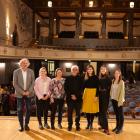
In the fall of 2024, Amitav Ghosh visited the Rachel Carson Center for Environment and Society as part of the project “One Book—Many Worlds: Munich Reads Gun Island by Amitav Ghosh.” This exhibition emerges from the multifaceted discussion of climate change and its challenges conducted in the “One Book—Many Worlds” project and grapples with the question of the role of literary fiction in interdisciplinary academic exchange and climate communication beyond academia. Taking Amitav Ghosh’s recent writings on the global climate crisis, in particular the novel Gun Island, as a vantage point, the chapters in this exhibition engage with various aspects Gun Island from different disciplinary perspectives, drawing on storylines and narrative elements that allow a multifocal engagement with different social and ecological repercussions of climate change. Additionally, pieces from the spring 2025 taumelnd trauen, verschlungen bleiben student exhibition and winning and honorable mentions from the 2025 “Tell the Untold!” writing competition take the provocation to think creatively about the past and future of our environment and world further. Thereby, the exhibition chapters create a web of diverse thoughts on and readings of the role of storytelling for the contemporary interlinked social and environmental crises from a number of perspectives.
About This Exhibition
Concluding remarks on the virtual exhibition Amitav Ghosh in Munich by Hanna Straß-Senol.
In the fall of 2024, Amitav Ghosh visited the Rachel Carson Center for Environment and Society as part of the project “One Book—Many Worlds: Munich Reads Gun Island by Amitav Ghosh.” This exhibition emerges from the multifaceted discussion of climate change and its challenges conducted in the “One Book—Many Worlds” project and grapples with the question of the role of literary fiction in interdisciplinary academic exchange and climate communication beyond academia. Taking Amitav Ghosh’s recent writings on the global climate crisis, in particular the novel Gun Island, as a vantage point, the chapters in this exhibition engage with various aspects Gun Island from different disciplinary perspectives, drawing on storylines and narrative elements that allow a multifocal engagement with different social and ecological repercussions of climate change. Additionally, pieces from the spring 2025 taumelnd trauen, verschlungen bleiben student exhibition and winning and honorable mentions from the 2025 “Tell the Untold!” writing competition take the provocation to think creatively about the past and future of our environment and world further. Thereby, the exhibition chapters create a web of diverse thoughts on and readings of the role of storytelling for the contemporary interlinked social and environmental crises from a number of perspectives.
About This Exhibition
Dive into a pivotal 1993 lecture by renowned Professor Bron Taylor as he unravels the complex tapestry of the American conservation movement. This insightful presentation offers a panoramic view, tracing the philosophical and spiritual roots that shaped environmental thought and action, particularly focusing on the rise of the deep ecology movement and what Taylor terms “pagan environmentalism.”
Is technology neutral, or is it the architect of our alienation? In this March 2005 lecture, anarcho-primitivist philosopher John Zerzan argued that civilization itself—defined by domestication, division of labor, and industrial technology—is the root cause of modernity’s ecological and psychological dysfunctions.
Experience Australian environmental activist John Seed’s powerful “Ecological Healing” lecture. Introduced by University of Florida professors Shaya Isenberg & Bron Taylor, Seed, a deep ecology pioneer, calls for reconnecting with our planet, challenging the anthropocentric worldview fueling environmental destruction.
Judi Bari’s lecture on Revolutionary Ecology, with two songs at the outset, which illuminates her nature spirituality and biocentrism, her critiques of capitalism as inherently antithetical to environmental sustainability, and her strategic efforts to forge alliances between workers and environmentalists in defense of the redwood biome in Northern California.