JUDAS DONKEY: After Deborah Bird Rose
Scree tumbles, dislodged by shuffling hooves, pinging into the canyon like coins dropped into a tin can, and the sound reverberates across the shimmering creek. The jenny pauses and looks down into the canyon, the brush at the end of her roped tail batting away the fast, fat march flies that alight on her hot flank like little drones to slip in their proboscis, her muscles twitching at the intrusions. She sends abrupt air through her gaping nostrils, and lowers her head to the red earth of the ground, to tear a small, lipid green plant from its loose footing, savoring its slight moisture on her big, dry tongue. The animal behind butts her gently, reminding her to move along with the river of the group, to not disturb its cohesion. She trots a little with sudden determination, asserting her will to follow her kin.
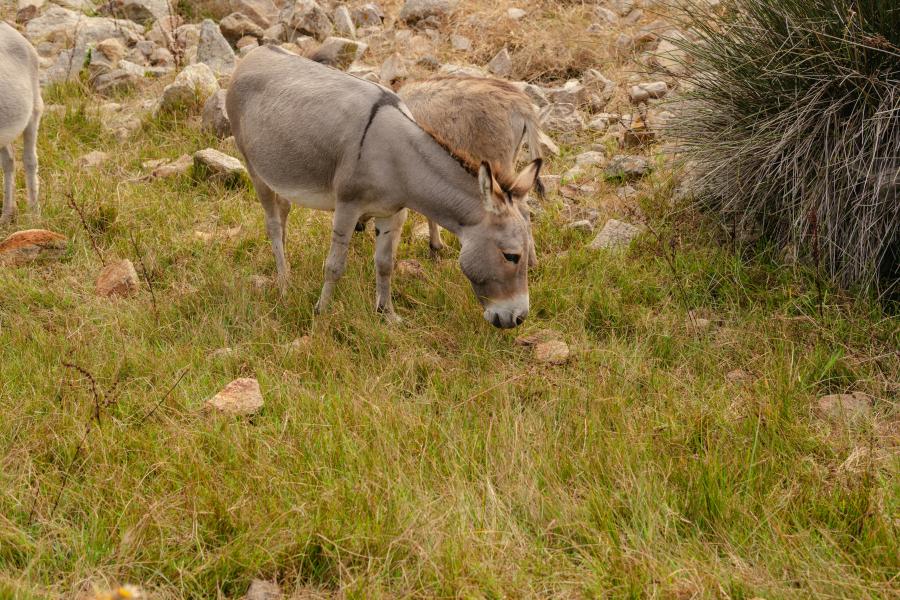
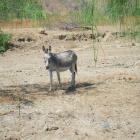
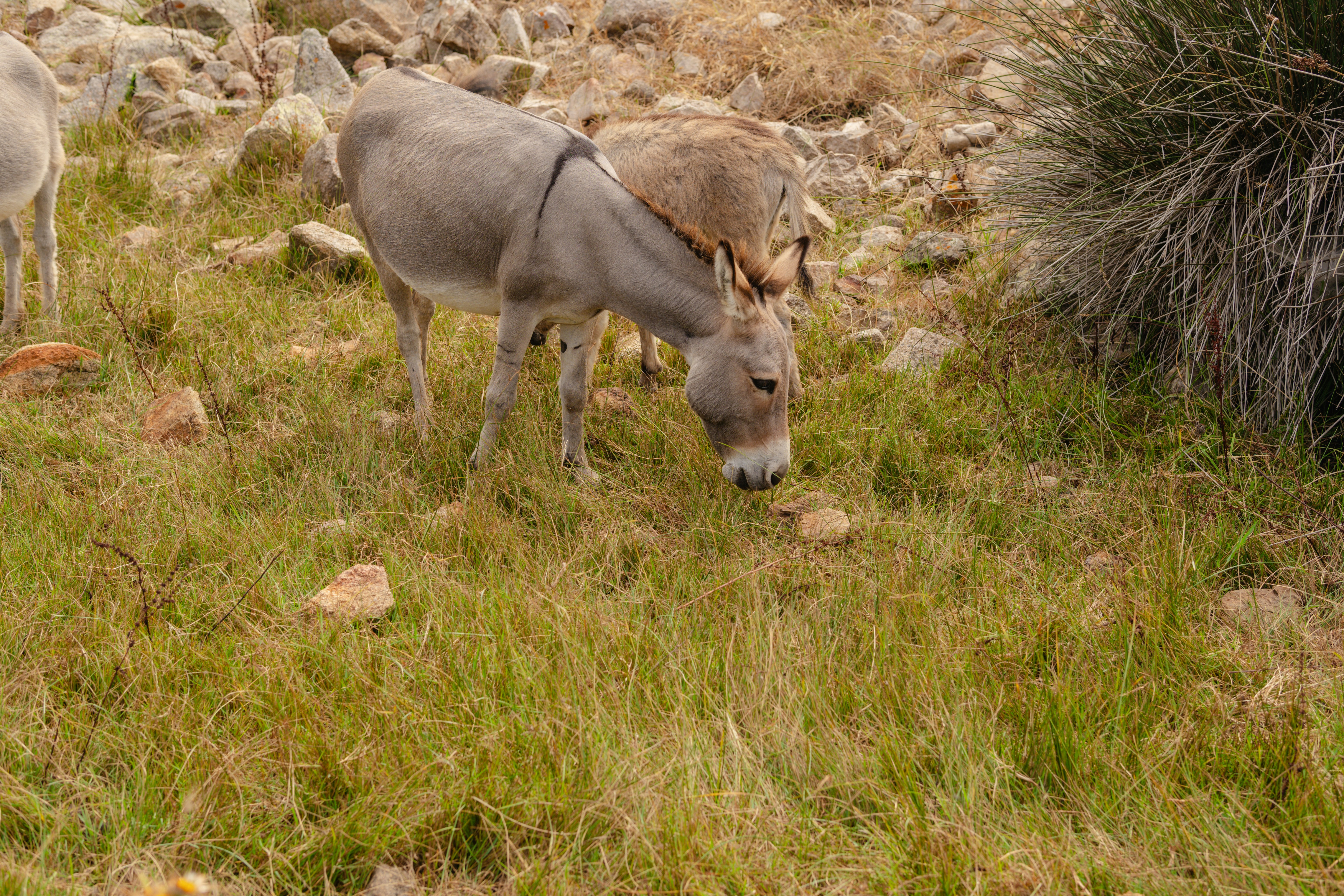
Grazing donkeys in Asinara National Park, Italy.
Grazing donkeys in Asinara National Park, Italy.
Photo by Antonio Vivace, 2025. Click here to view source.
This work is licensed under the Unsplash License.
The herd winds its way down into the cleft of the canyon, to the creek. The small birds are drinking; it is a favorable time to approach the water. But the nervousness that never leaves the prey animal ripples through the herd as it divides and widens like a crown spilling from a tree trunk, arriving at the waterside in cautious unison. Spreading its mass like this, each member of the herd offers their solidarity; the pressure to give oneself back to the fold of life is distributed. In staggered synchronicity wide lips are lowered to the cool water, sending drips and ripples out across the blue-bottle surface. Underwater, other minds notice. Their beaked mouth slightly agape, a platypus notes the disturbance as a buzzing vibration across the bars of the roof of their mouth. They shimmy deeper into the pool, seeking a quieter place to rummage in the shingles for little wriggling somebodies; other slight and ephemeral responses to life.
Above all of this, a great black eagle bares the white-barred underside of their wings to the backs of the herd, watching that their shadow does not fall on the herd and draw their attention to the eagle’s scrutiny. If the herd were to notice the eagle, they might grow restless and scatter, interpreting the eagle’s presence as a portent of hidden danger, the eagle’s lurking as anticipation of an attack that might gift it with carrion. Because the eagle has noticed something that they have not sensed yet.
Back overlooking the canyon, on the tableau, two men lie on their fronts hunched around black metal on shooting sticks, the wide grey rumps of individual members of the herd in the sights of their magnified viewfinders. Like the eagle, the men can see far, but unlike the eagle, their sights depend on miniscule mechanics and complicated processes that reverberate the world over, made invisible by the subterfuge of distance, and giving the men a destructive sense of their own canny. The men activate their enlightened tools and in the moment of a sound, their darts pierce the flanks of the jenny and one of her compatriots, and the herd unravels in a chaos of dust and whinnies and spittle and clicking hooves, and the jenny’s legs buckle until she is the image of the donkey at the manger, long ungulate chin resting on a rock as though gazing over the edge of a crib.
As the herd gallops away from a part of itself, to reconvene eventually shaped, once more, anew, as trampled grass that will still spring up again, the men pack up their instruments and follow the winding donkey path down the canyonside and into the bowl of the creek. They barter insults between themselves, on the misidentification of the male despite the visibility of his testicles, the waverability of historical shots, as one hoists the jenny’s heavy head up onto his bent knee, and the other fumbles beneath her and wraps the strap of a radio collar around her thick neck with some tenderness, like tying a ribbon into a bow. He pats her neck as her eyes flicker; because to the men she has now some elevated relation—she will be their accomplice. And so some of this tenderness spills over into the utility with which they stand over her, eat their packed lunches, and swig from their water bottles, dipping their wide-brimmed hats into the creek so that the hats sag and drip water down the napes of their dirty necks, as they eye the eagle and wait for the jenny to come back into consciousness, paying no notice to the twitching male.
The eagle, not needing difficult prey, pulls away from the fallen but not-yet-dead beasts and their jealous watchmen, and catches a current of air on which to be carried away, scanning the craggy terrain for movement between the lit stage of its surfaces and the deep folds of its shadows.
The clarity-wrenching ka-ka-ka trill of a kookaburra and after it the soft sound of the papery leaves of a river gum’s fricative dancing, the tang of water, a dull ache like the throb of an infected fly bite, the movement of the rivergum’s reaching shadows flickering between sharp sunlight. The crunching of a heavy body navigating itself from the ground, some scuffed steps, and a whinny. The whinny calls the jenny back, and she lifts her head unsteadily to see her herd mate take several faltering steps before an uncommon rupture of noise from behind her heralds his immediate collapse, a thin trail of blood breaking ground from underneath his ear like the first sliver of floodwater on a dry riverbed. Within moments blowflies have begun to burrow inside the hole in his skull.
The jenny is bewildered; alone in the world, without companion, something that a jenny should never be. Momentarily, all seems lost. Without a herd, she is not a jenny, and she does not know how to be, has no will to be animate. But then the light spills in again, the moving sounds of the canyon remind her of all else that is alive, and the discomfort of the rocks pressed into her side remind her of her body, which aches and needs to stand. She struggles up onto her legs, then turns to scope the danger behind her. Men, it was men who killed her companion with their death-making tools that are not part of them but follow them often. The tools are at their sides, and they are very still. She watches them for several minutes until, bolstered by their stillness, she backs away and turns, still bleary, following her own nodding head the way she knows, along the side of the creek, back to the way of the grasslands, the way of the others, who she can smell still faintly in the scuffed dirt. Passing the body of her companion, she pauses to bow her head and hold her nostrils over him in acknowledgment.
*
The jenny finds her herd, a lovely cloud of sociality at rest in the yellowing grasslands. They each touch noses to greet her and give wary snuffs and exploratory licks and nips to the belt around her neck, with its strange, winking firefly. She lowers her head and immediately begins to graze, slipping back into the fold of her familiars, glad for the comfort of their bodies and noises and musty smells, their gentle thumping of rumps and huffs and snorts, the sound of roots tearing from the ground, the smell of dung trodden into the earth, the soft dramas and mild rivalries of their roving, sequential lives, which is all she has ever known.
The belt is beginning to chafe on her neck after days of incessant knocking, when they come again. The herd are again inside the gorge, which channels them in only two directions, and as their ardent desire is to remain together, they will invariably choose only one direction to go. The gorge is the perfect arena for this death of the eradicative kind. A helicopter hones in on the jenny’s tracking signal, and the men lean out to begin their meticulous chase. They do not rain bullets, because in order for the program to work, they must kill as many donkeys as they can bar one.
She is running, running, running. The clatter of hooves around her. The zip of something, the crash of a body falling. The thump of one body hitting another. The awful whinny that a mother makes only for her foal in danger. Above it all, some chopping, pulsing sound, like the flutter of a thousand cicadas in flight. The chase goes on and on. There is nowhere they can hide in this vast, open landscape. Barely a thicket taller than the shoulder of a donkey for shelter.
When, as quickly as it came, the thing in the sky disappears, the jenny takes stock around her. She had stuck to the side of a younger, fleet-footed female, and catching them up, a straggling juvenile male settles next to them. They bow and elongate their necks in soundless expression, again and again for minutes, as though lost of anything else to say. They wander in the gorge for several hours, going the same direction but somehow aimlessly, unwilling to return the way of the destruction.
Eventually the particles of flurry settle into stillness; they will do the only thing they know is right. They will break the usual sequence of their roving and find another herd.
*
She will always return to the herd. When it is gone, she will always seek a new one. It is this clairvoyance that the men rely on. A betrayal of her sociality; a jenny can’t be alone.
And yet, everywhere she goes now, there is a feeling, always, of something that follows. The strange clicking and churring sounds and their beings always return. They are horrific. Not of this place. Like stone that has become in some way animate and malevolent. Like the small sharp scree has assembled into strange and otherworldly creatures, and now these hunt her down. Because it is her that seems to link together all of these disparate herds and their fates. None of the others anticipate what will come, they always welcome her; it is their way.
Sometimes they are in the sky, huge and horrifying, screaming and kicking up a tornado on the herd, then zipping metal wasps from up there. Sometimes, big growling beasts that appear over the horizon and chase them down, then the same clouds of wasps that want to embed themselves inside the body. When they come by ground, she has seen that inside these vulgar assemblages are men, and it instills in her a sickening understanding; men are the only creatures she knows that do not kill bodily, that do not have something of their body at stake in their violent ambush.
It does not take a pedestalized level of intelligence to notice that belligerently, she is always the only donkey left. It does not take many times of this for her spirit to be shattered. At first she may have tested it, in her shock continued down the slipstream of habit. But she could not ignore that wherever she goes, her deep need for companionship only brings death to those she seeks comfort and safety with. It is a betrayal that breaks the goodness of the earth, of a donkey’s fundamental sociality. She can’t know why, but she does begin to understand something. She understands that where she goes they follow. Perhaps she understands that the heavy pendant on her neck now in some way links her to them. She is no longer a jenny, but a strange were-creature, of donkey and this possessed material.
And so she takes herself off, faraway outback, to eke out a life of loneliness. When she catches the smell of her kind, she works against her best instincts and carries herself away from them. She lives in fear, with no presence of others to cloak her as she travels. When she finally dies, taken by a pack of dingoes, she doesn’t try to flee. The bones of her skeleton push up through her decaying body, make a spiked, tented image of a donkey, lay on their side, collar around the vertebrae, still winking.
*
Sam Mungnari, a young Aboriginal man and a ranger, is sent to retrieve the collar. He takes pride in his work, in his practice of his cultural knowledge, but when he finds the jenny, lying there on her side, without her countrymen, he finds himself very still. They call her the Judas donkey, because of the way she will betray the herd. It is taken from their own origin myths. It is a method for the eradication of feral herd animals. Eventually the Judas will give in, learn to avoid others, and display trauma. His learned ecological knowledge—that is, the kind he got from their school—tells him that the feral animals disrupt the ecosystem, that they must be managed. This he understands, it is part of his job as a ranger. There are Judas goats, Judas horses.
But there is something, to Sam, that is particularly bereft about the naming of the Judas donkey. Makes him feel quite disturbed—not the killing but their glee in words, their disenchantment. And are they not wrong? Are those that plant the collars not the Judases? Not these gentle beasts who had carried the lord, their own sacred creature that carried the flesh internment of their god. What disturbs him is their disavowal of kinship. They had also arrived, bringing their donkeys with them; where was their solidarity with their kin? With the creatures of their own dreaming?
Amitav Ghosh in Munich: Inspirations, Insights, and Storytelling
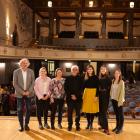
In the fall of 2024, Amitav Ghosh visited the Rachel Carson Center for Environment and Society as part of the project “One Book—Many Worlds: Munich Reads Gun Island by Amitav Ghosh.” This exhibition emerges from the multifaceted discussion of climate change and its challenges conducted in the “One Book—Many Worlds” project and grapples with the question of the role of literary fiction in interdisciplinary academic exchange and climate communication beyond academia. Taking Amitav Ghosh’s recent writings on the global climate crisis, in particular the novel Gun Island, as a vantage point, the chapters in this exhibition engage with various aspects Gun Island from different disciplinary perspectives, drawing on storylines and narrative elements that allow a multifocal engagement with different social and ecological repercussions of climate change. Additionally, pieces from the spring 2025 taumelnd trauen, verschlungen bleiben student exhibition and winning and honorable mentions from the 2025 “Tell the Untold!” writing competition take the provocation to think creatively about the past and future of our environment and world further. Thereby, the exhibition chapters create a web of diverse thoughts on and readings of the role of storytelling for the contemporary interlinked social and environmental crises from a number of perspectives.
About This ExhibitionAbout the author