In Flux
At first glance, the arrival of young migrants at the European Union’s external borders and the arrival of—and response to—harmful algal blooms in the Caribbean seem like two unrelated phenomena. In 2019, when I shifted from studying forced migration from sub-Saharan Africa to Malta toward researching ecological crises involving algae in the Caribbean, many colleagues and friends raised their eyebrows. How could these seemingly disparate topics be connected? Aren’t they worlds apart, both geographically and thematically?
The answer lies in water—not just as a backdrop, but as a forceful and agentic actor that links land and sea, enabling both forms of “arrival.” Whether it is boats of refugees or waves of algae washing ashore, water acts as a carrier, a connector, and a disruptor. It exposes the fragility of political borders, ecological systems, and categories of belonging. Though politically and ethically distinct, the arrivals of refugees and algae both unsettle assumptions about who or what belongs, who is responsible, and how crisis is defined and managed. These arrivals take place in coastal waterscapes, which are not simply geographic margins but dynamic contact zones (Pratt 1991), where human and more-than-human actors meet—often in asymmetrical, unpredictable, and transformative ways (Tsing 2015; Haraway 2007). Water, in this sense, is not passive—it shapes encounters, amplifies inequalities, and destabilizes distinctions between nature and culture, rural and urban, land and sea. I read Gun Island as a novel offering a lens through which to understand how the political, the ecological, and the existential are entangled through the agencies of water.
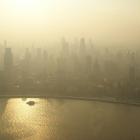
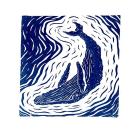
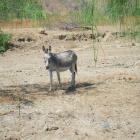
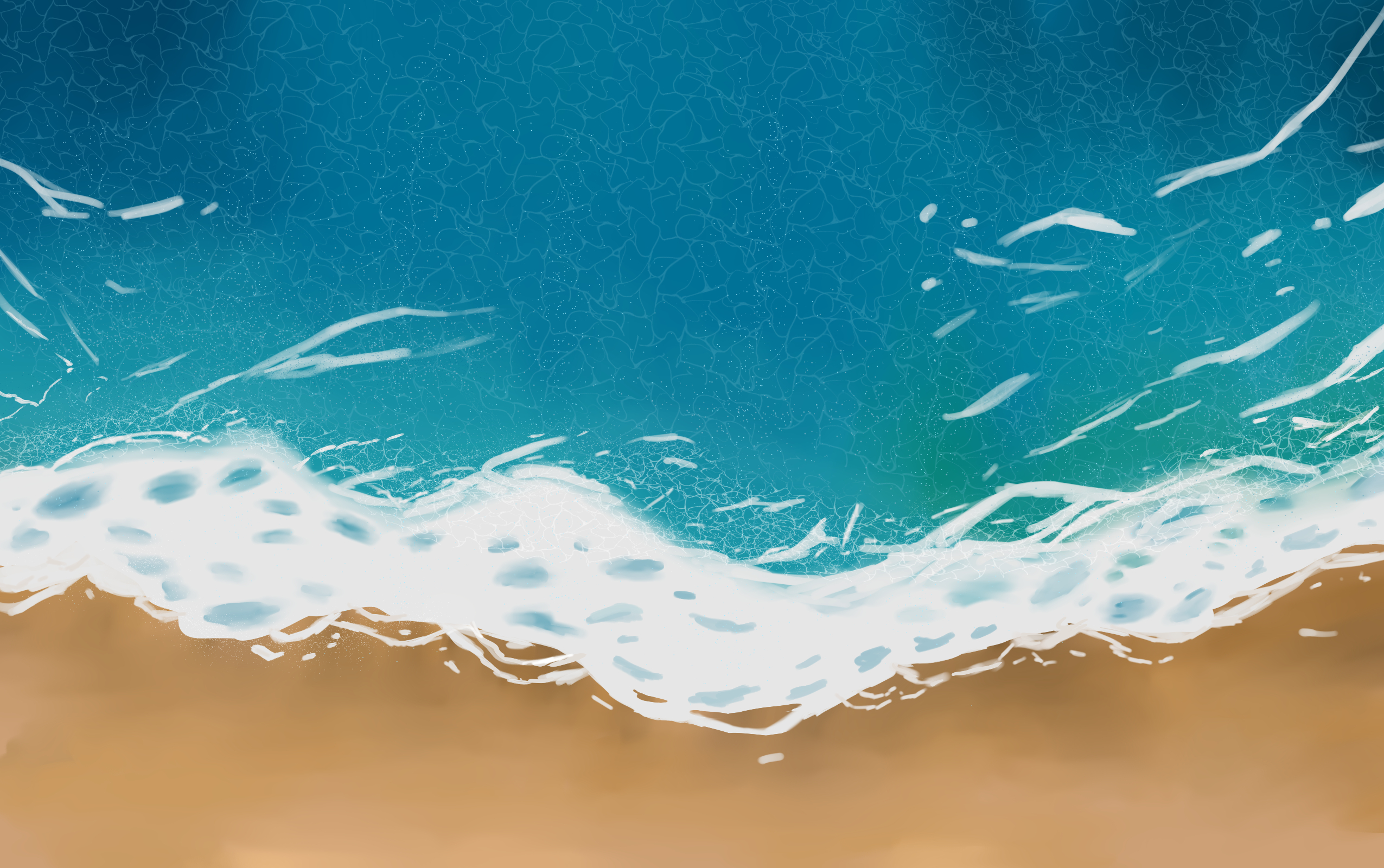
Blurring Lines
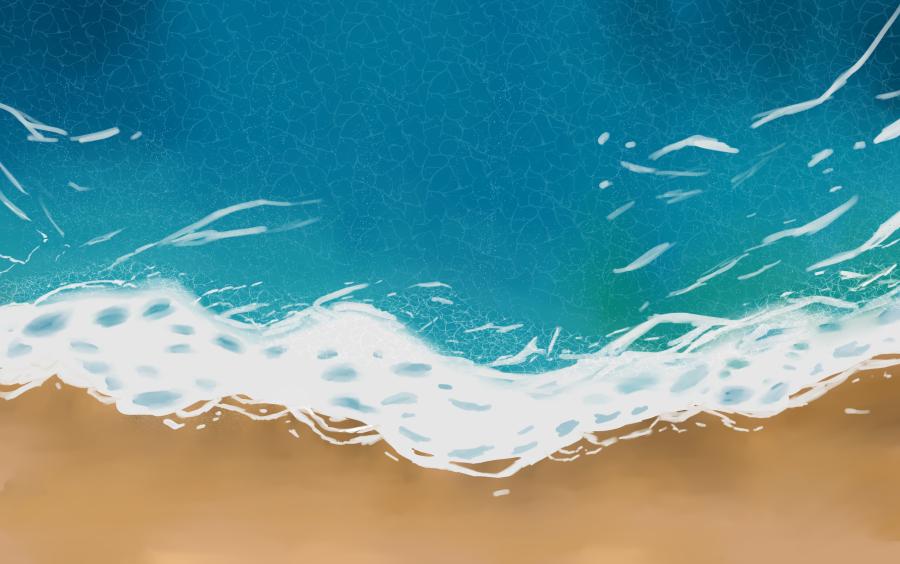
Marvin Bauersfeld, Blurring Lines,
June 2025, illustration for Laura Otto’s “In Flux.”
The sea, with its force and its waves, can render things visible and invisible—and themes of (in)visibility run throughout Gun Island. The sea plays a crucial role in the novel as both a symbolic and literal embodiment of fluidity. It connects disparate geographies—such as the Sundarbans, Venice, and Los Angeles—highlighting global interdependencies while simultaneously serving as a site of danger and fragility. As rising seas and storm surges threaten communities worldwide in both my actual research and in the novel, Ghosh’s work underscores how water, as both an actor and a metaphor, dissolves boundaries between the local and global, between Asia, Europe, and the United States, and between land and sea. The novel portrays water as a force that highlights the entanglement of human and nonhuman fates. In Gun Island, water is not portrayed as a passive object, but rather as an actor, challenging identities and once-established categories. Ghosh writes that—considering rising sea levels, degrading water quality, and rising ocean temperatures—“no one knows where they belong anymore, neither humans nor animals” (2019, 106). By thinking with water, belonging becomes a transient concept, tied not to fixed places but to the shared experiences of exclusion and adaptation. Water and its agencies also emphasize the fragility of human constructs such as borders, the divides between nature and culture, as well as sociocultural hierarchies. For example, Moyna’s lament about the Sundarbans—“Sometimes, said Moyna, it seemed as though both land and water were turning against those who lived in the Sundarbans. When people tried to dig wells, an arsenic-laced brew gushed out of the soil; when they tried to shore up embankments the tides rose higher and pulled them down again” (53)—reveals the relentless capacity of water in reshaping lives and landscapes. Not least, water repeatedly reminds us of the limitations and restrictions of human action in our attempts to tame nature.
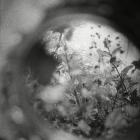
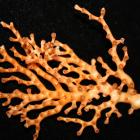
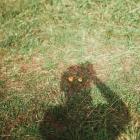
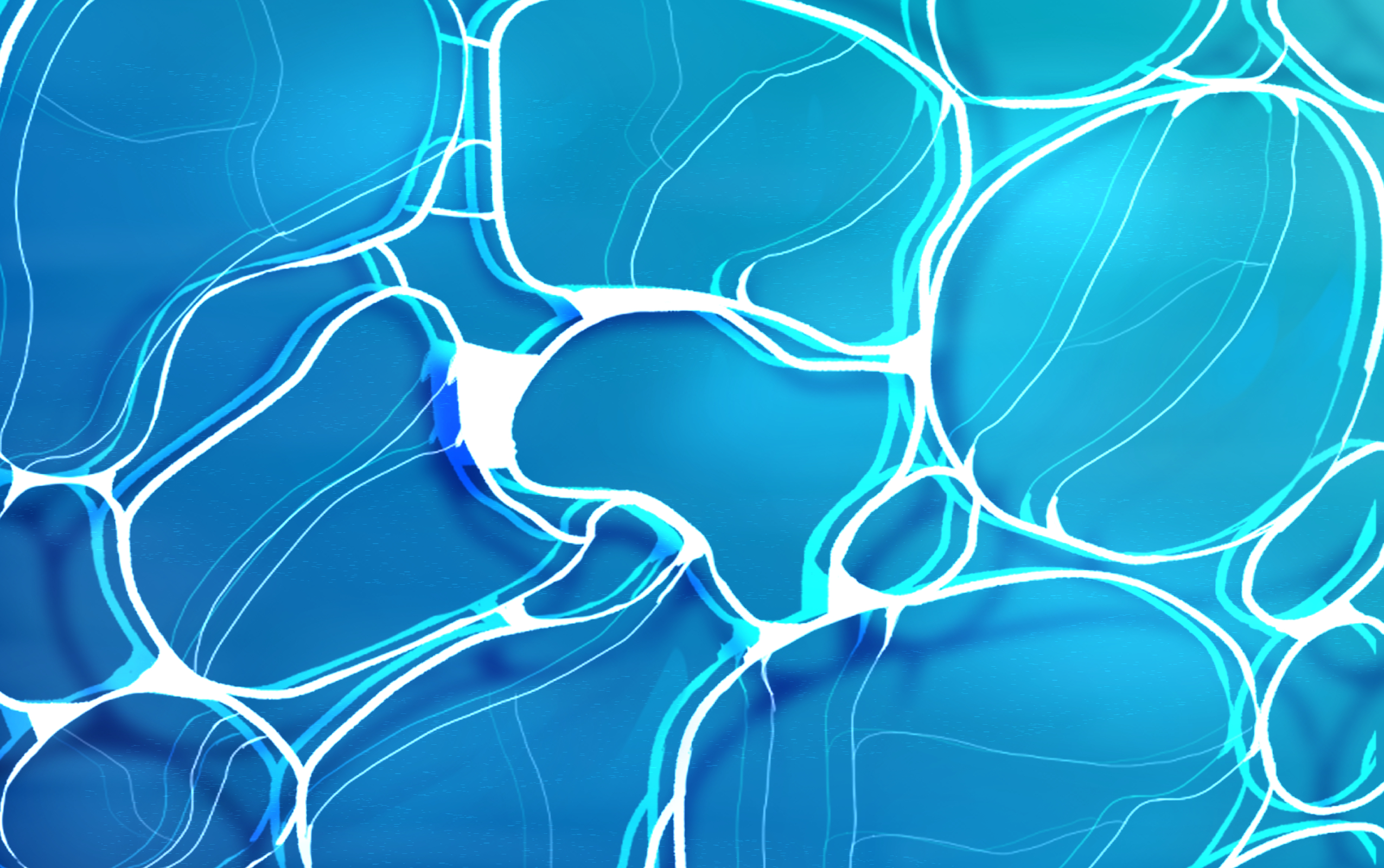
Fluid Belongings
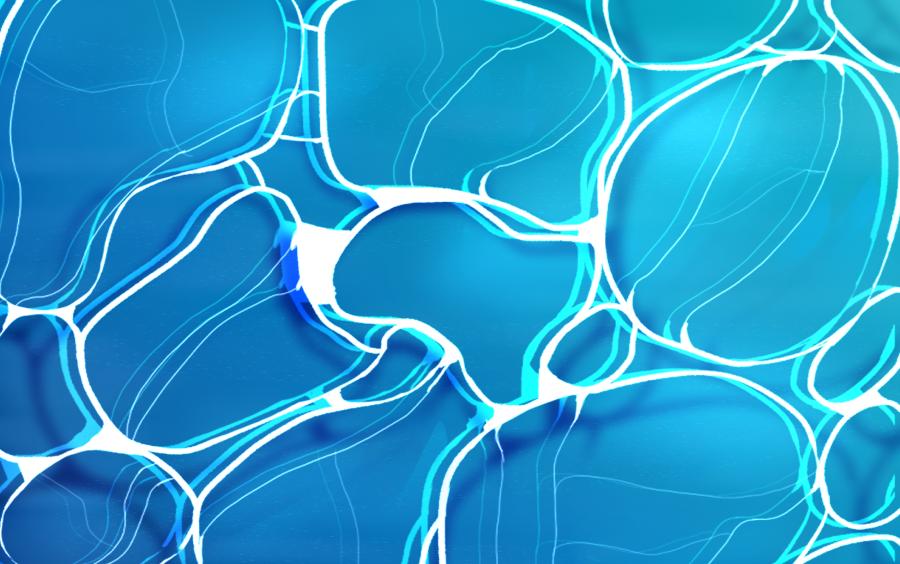
Marvin Bauersfeld, Fluid Belongings,
June 2025, illustration for Laura Otto’s “In Flux.”
Water binds the rural and the urban in Gun Island. It is water—flooding, contamination, sea-level rise—that drives people from villages in the Sundurbans to cities like Venice, forcing migration as both ecological necessity and political act. The fluidity of water finds its parallel in the flow of people, reshaping urban spaces and challenging the presumed stability of metropolitan life. Throughout the novel, Ghosh juxtaposes flood-prone rural deltas with cosmopolitan hubs like Venice and Los Angeles, illustrating that neither sphere is insulated from the cascading effects of ecological disruption, and that water has the capacity to reshape places no matter where they are located. Through water, the assumption that cities are secure havens in contrast to vulnerable rural spaces is challenged, and, instead, urban centers are seen as both hubs of global interconnectedness and sites of ecological vulnerability, exposing the fragility of urban life. Water also exposes the narratives required to navigate displacement and belonging. In one moment, a character reflects bitterly that asylum seekers must perform acceptable stories for Western bureaucracies: “Suppose the guy was starving because his land was flooded, or suppose his whole village was sick from the arsenic in their ground water … none of that shit matters to the Swedes” (Ghosh 2019, 67). Water-induced suffering does not fit easily into dominant humanitarian categories. It is rendered illegible in systems that privilege certain forms of violence over others in order to be granted protection. Moreover, the bureaucratic infrastructure meant to manage human movement—passports, visas, permits—fails in the face of water’s unruliness. Ghosh critiques this illusion of control through a character’s realization: “I did indeed believe in passports . . . they possessed a certain kind of sacredness” (64). Water disrespects such sacred objects. It leaks through the seams of geopolitics and legality, undoing the divisions between citizen and refugee, land and sea, home and exile.
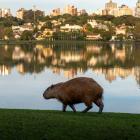
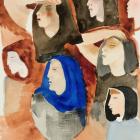
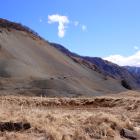
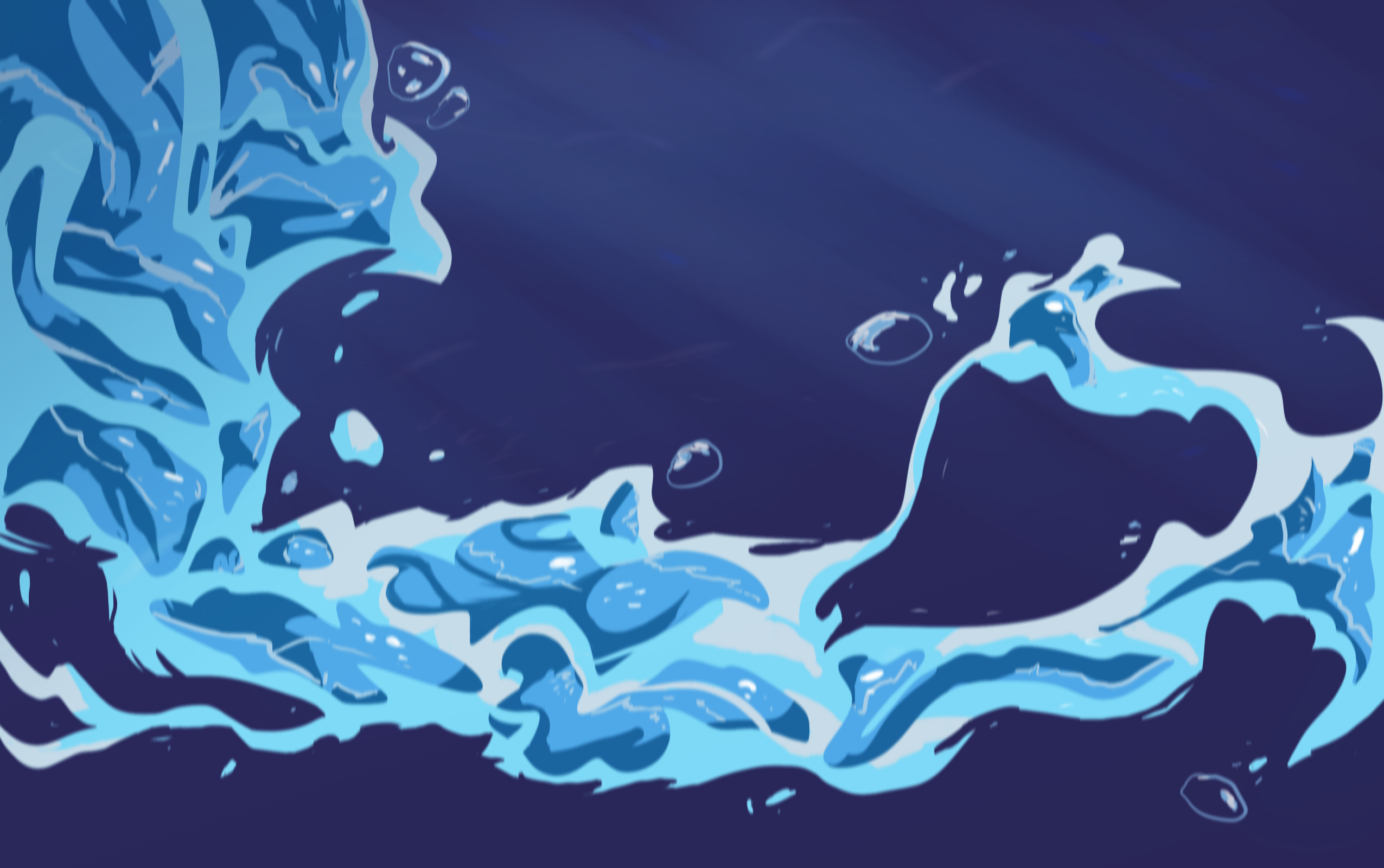
With Water
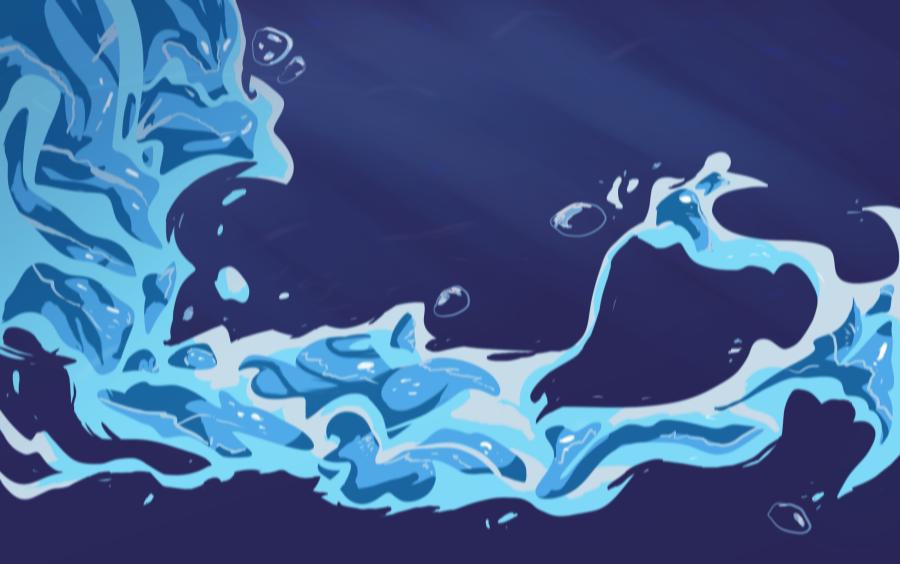
Marvin Bauersfeld, With Water,
June 2025, illustration for Laura Otto’s “In Flux.”
If Gun Island is a story about water, it indeed is also a story about the more-than-human agencies that emerge through and with water, challenging anthropocentric narratives about climate change. The inclusion of snakes, dolphins, and other nonhuman agents emphasizes the interconnectedness of human and nonhuman lives. The animals are not passive entities in the novel but active, aquatic participants in the narrative. Ghosh’s aquatic storytelling challenges human exceptionalism and confronts us with the limits of control. This resonates with my own research on Sargassum blooms in the Caribbean. The algae—another aquatic actor—defies efforts to contain or remove it. Coastal communities erect barriers, hire workers, and even relocate hotels inland to keep the invasive bloom from tourists’ view. Still, the algae return, reclaiming the beachscape and revealing the futility of human domination over marine life. In Gun Island, similar attempts to obscure ecological crisis are rendered absurd. When hotel staff reconfigure dining rooms to shield guests from “waves of flame” (133), they perform the same gesture as those who try to hide seaweed: a spatial denial of environmental collapse. Later, a conference organizer proclaims: “We’ve got to show Mother Nature that we’re not quitters!” (138)—a declaration of faith in human persistence that borders on delusion. In this sense, Gun Island offers a blueprint for rethinking the Anthropocene—not as a human-centered epoch, but as one shaped by hydrological entanglements and aquatic insurgencies. Water is both the medium and the message: It is the carrier of migration of both humans and nonhumans, the enforcer of planetary limits, and the collaborator, or opponent, in multispecies world-making.
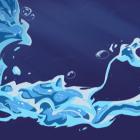
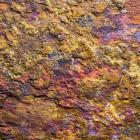
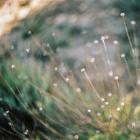
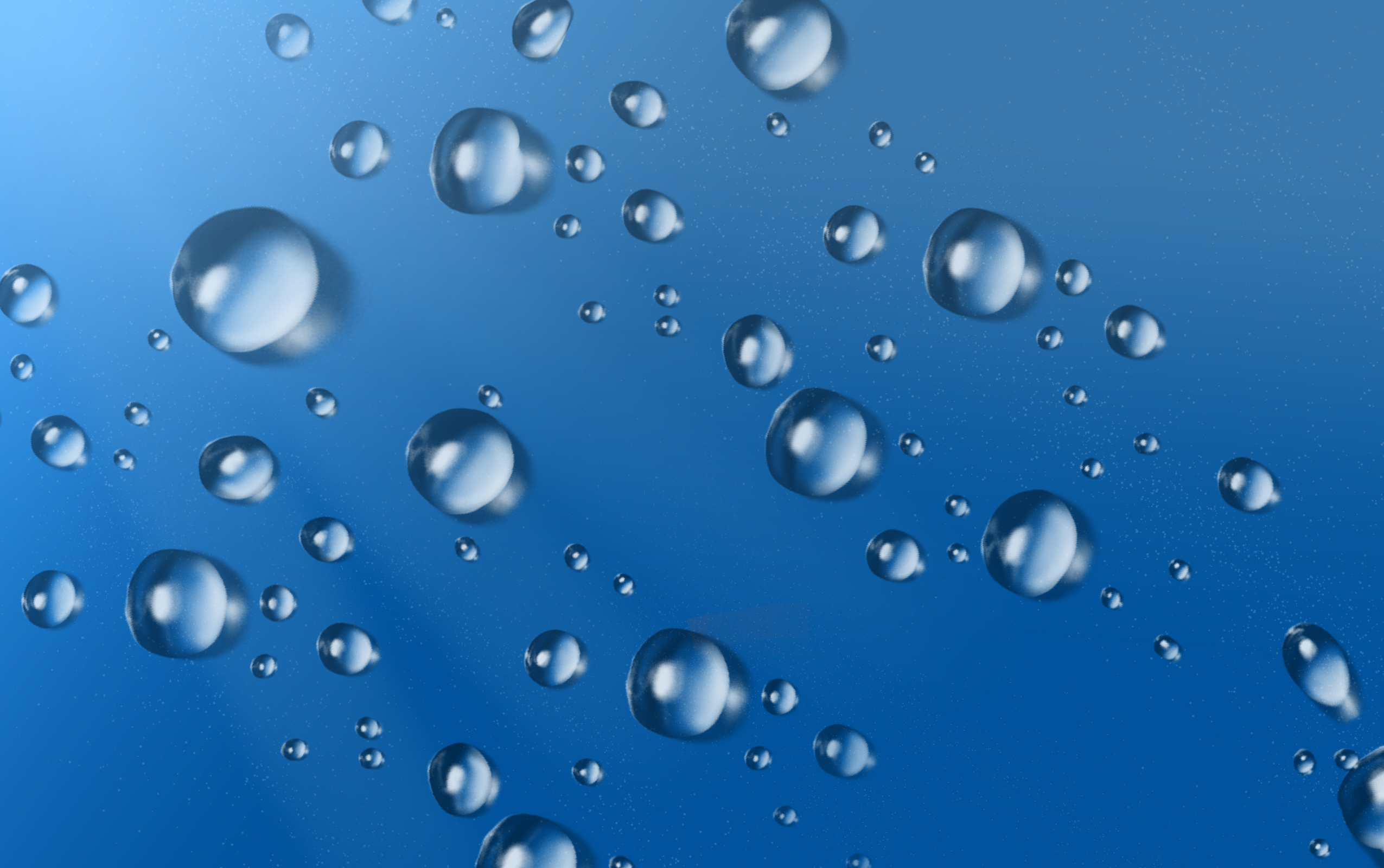
Aquatic Lens
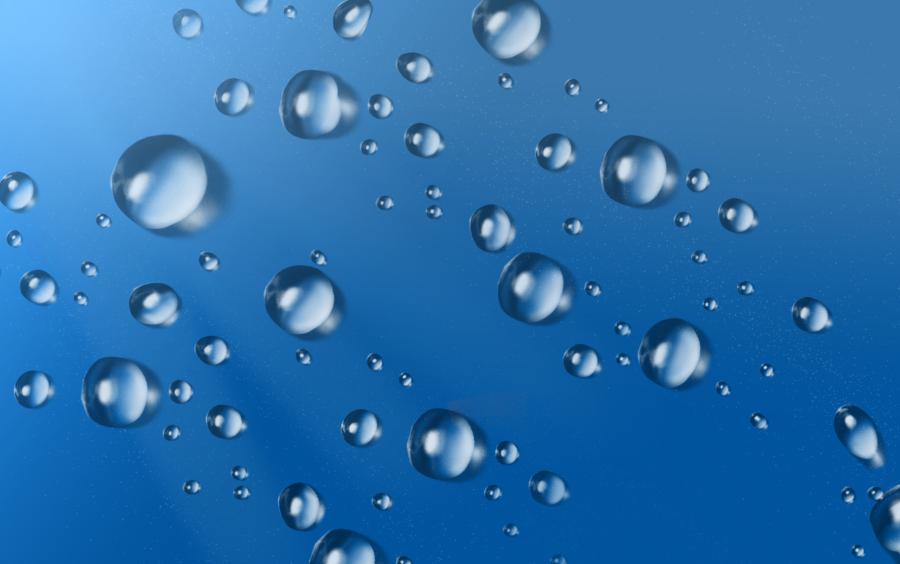
Marvin Bauersfeld, Aquatic Lens,
June 2025, illustration for Laura Otto’s “In Flux.”
Gun Island insists on the centrality of water—not only as setting or theme but as actor and agent. Water moves the plot, connects the characters, disrupts the cities, and speaks back to the systems that attempt to control it. Through Ghosh’s aquatic lens, we are invited to ask not simply what is happening to the planet, but what water is doing—and how we might listen.
Bibliography
Ghosh, Amitav. Gun Island. John Murray, 2019.
Haraway, Donna. When Species Meet. University of Minnesota Press, 2007.
Pratt, Mary Louise. “Arts of the Contact Zone.” Profession, 1991, 33–40. http://www.jstor.org/stable/25595469.
Tsing, Anna Lowenhaupt. The Mushroom at the End of the World: On the Possibility of Life in Capitalist Ruins. Princeton University Press, 2015. doi:10.2307/j.ctvc77bcc.
- Previous chapter
- Next chapter
Amitav Ghosh in Munich: Inspirations, Insights, and Storytelling
In the fall of 2024, Amitav Ghosh visited the Rachel Carson Center for Environment and Society as part of the project “One Book—Many Worlds: Munich Reads Gun Island by Amitav Ghosh.” This exhibition emerges from the multifaceted discussion of climate change and its challenges conducted in the “One Book—Many Worlds” project and grapples with the question of the role of literary fiction in interdisciplinary academic exchange and climate communication beyond academia. Taking Amitav Ghosh’s recent writings on the global climate crisis, in particular the novel Gun Island, as a vantage point, the chapters in this exhibition engage with various aspects Gun Island from different disciplinary perspectives, drawing on storylines and narrative elements that allow a multifocal engagement with different social and ecological repercussions of climate change. Additionally, pieces from the spring 2025 taumelnd trauen, verschlungen bleiben student exhibition and winning and honorable mentions from the 2025 “Tell the Untold!” writing competition take the provocation to think creatively about the past and future of our environment and world further. Thereby, the exhibition chapters create a web of diverse thoughts on and readings of the role of storytelling for the contemporary interlinked social and environmental crises from a number of perspectives.
About This ExhibitionAbout the author