About This Exhibition
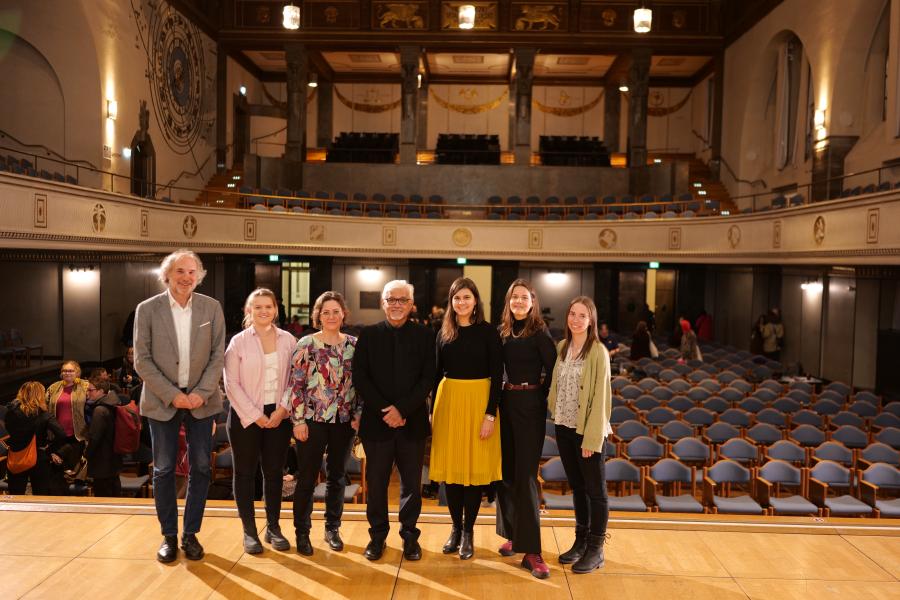
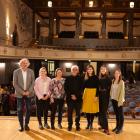
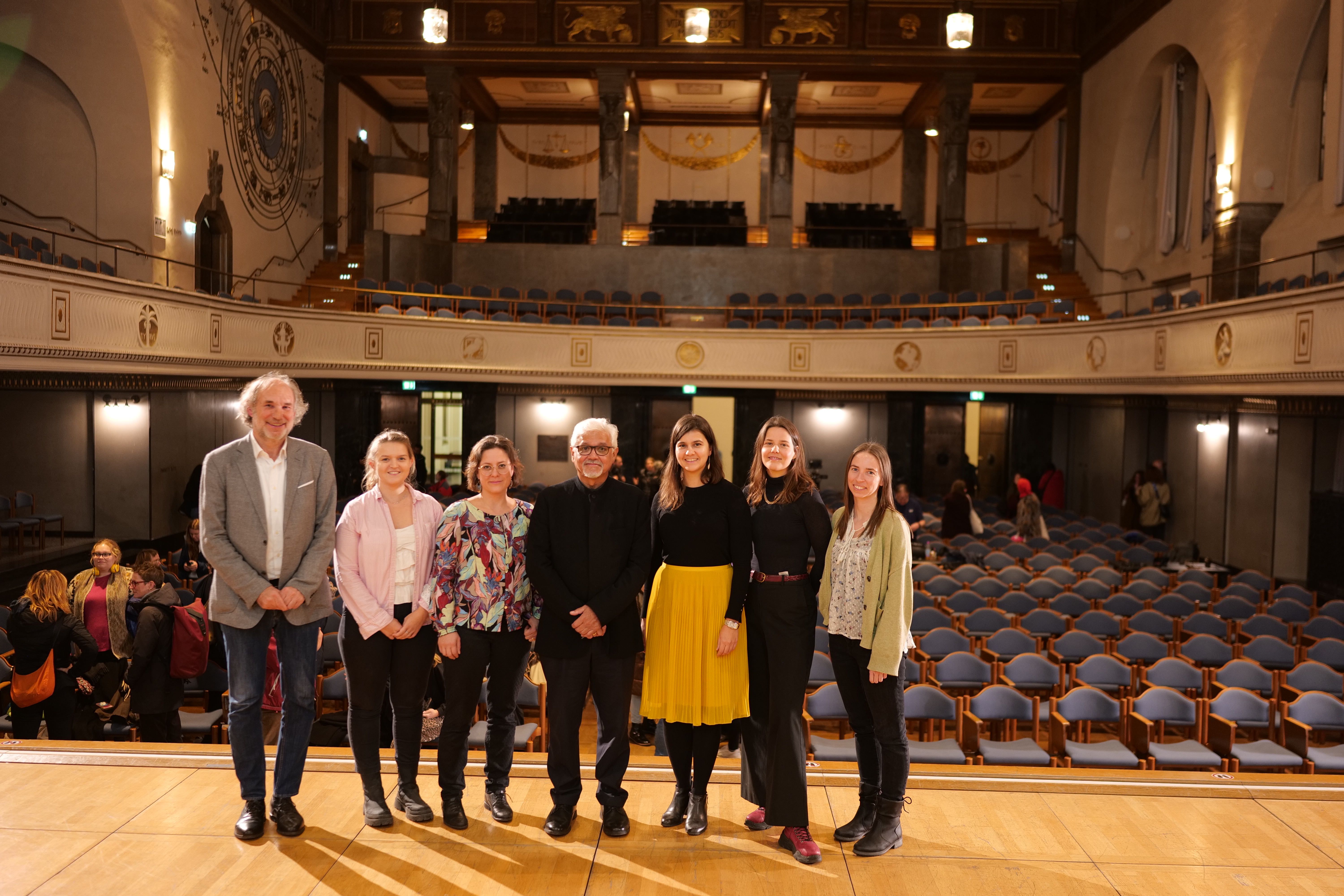
Amitav Ghosh in Munich, Große Aula of LMU Munich, 20 November 2024. From left to right: Christof Mauch, Theresa Hilz, Hanna Straß-Senol, Amitav Ghosh, Anna Antonova, Franziska Bax, and Lena Engel.
Amitav Ghosh in Munich, Große Aula of LMU Munich, 20 November 2024. From left to right: Christof Mauch, Theresa Hilz, Hanna Straß-Senol, Amitav Ghosh, Anna Antonova, Franziska Bax, and Lena Engel.
© Swantje Furtak. Used by permission.
The copyright holder reserves, or holds for their own use, all the rights provided by copyright law, such as distribution, performance, and creation of derivative works.
In fall 2024, Amitav Ghosh visited the Rachel Carson Center for Environment and Society as part of the project “One Book—Many Worlds: Munich Reads Gun Island by Amitav Ghosh.” This exhibition results from the multifaceted discussion of climate change and its challenges conducted in the One Book—Many Worlds project and grapples with the question of the role of literary fiction in interdisciplinary academic exchange and climate communication beyond academia. Taking Amitav Ghosh’s recent writing on the global climate crisis, in particular the novel Gun Island, as a vantage point, the chapters in this exhibition engage with various aspects of the novel from different disciplinary perspectives, drawing on storylines and narrative elements that allow a multifocal engagement with different social and ecological repercussions of climate change. Thereby, the exhibition chapters create a web of diverse thoughts on and readings of Ghosh’s novel from a number of perspectives.
Some of these chapters present the personal engagement with Gun Island by authors from different academic backgrounds, all of whom took an active part in discussions provoked by Ghosh’s book and visit during the fall and winter of 2024–2025. These contributions include “On Opium and Imperialism” by Nakul Heroor, “In Flux” by Laura Otto, “Ten Theses on Climate Justice and Migration” by Markus Vogt, “Using Climate Fiction for Community Engagement” by Julia Ludewig, “Climate Communication in Education Beyond Academia” by Sabina Magagnoli, and “Coda: Narrating the ‘Everthing Crisis’” by Hanna Straß-Senol.
A number of chapters in the exhibition represent the winning contributions and honorary mentions of “Tell the Untold! An Environmental Writing Competition of the Rachel Carson Center,” held in 2025. The competition aimed for submissions in three categories (short fiction, creative nonfiction, and reflective essays) that would take seriously the invitation to rethink the role of storytelling and the nonhuman, like Ghosh has promoted in several of his fiction and nonfiction books. The winning pieces were “The Mangrove Doesn’t Forget” by Rachel Desiree Felix (short fiction), “Whale Fall” by Michaela Vieser (creative nonfiction), and “Time After the Hero—Or, in Proposing the Age of the Anthropoiescene” by Zana Fraillon (reflective essay).
The honorable mentions were “JUDAS DONKEY” by Abi Andrews and “Tales from Coral Country” by Isaac Yuen (short fiction); “A Few Hazy Anthropocenes” by Tathagat Bhatia and “What Cannot Be Unearthed” by Wan Yin Kim Fung (creative nonfiction); and “How to Reimagine Our Doomed Futures Through Ursula K. Le Guin’s Lens” by Vera Krause and “The Story of Geology” by Sonji Shah (reflective essays).
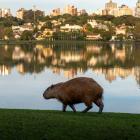
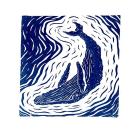
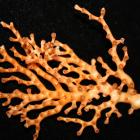
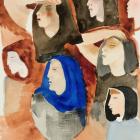
Interspersed among the contributions are art pieces created for the student exhibition taumelnd trauen, verschlungen bleiben (loosely translated, “to dare to trust tumbling while drawing strength from unending entanglements”) in the winter semester of 2024–25. Like the creative and academic texts, the students’ works were inspired by Gun Island. The student exhibition is introduced in more detail by its lead curator, Franziska Bax, in the “On Curating a Student Exhibition” chapter.
Altogether, Ghosh’s novel Gun Island can be understood as the rhizome that connects the different chapters and contributions of this exhibition, feeding into them and holding them together.
The exhibition has been curated and edited by Anna Antonova, Franziska Bax, and Hanna Straß-Senol, with the invaluable help of the Environment and Society Portal team, in particular Pauline Kargruber.
Dr. Anna Antonova
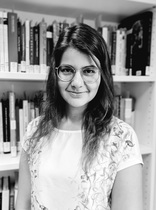
Since 2020, I have been directing the “Strengthening the Environmental Humanities” project at the Rachel Carson Center together with Hanna Straß-Senol. Simultaneously, I conduct research on environmental and societal transitions on Europe’s coastlines, which combines approaches from critical policy studies, environmental humanities, and marine social science.
Franziska Bax, MA
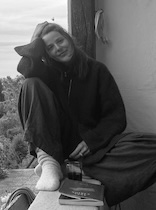
I am studying in the MA program of the Rachel Carson Center and joined the “Strengthening the Environmental Humanities” project in April 2024 as a student assistant. I am currently weaving together my background in artistic research, my curiosity for curation as a knowledge-making practice, and my interests in decolonial land relations, cultural narratives, and peatlands.
Dr. Hanna Straß-Senol
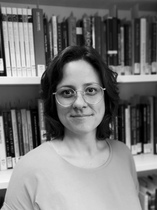
I joined the Rachel Carson Center as codirector of the project “Strengthening the Environmental Humanities” in 2020. I am passionate about literature, the ocean, and eight-armed marine creatures. My research interests and teaching foci in the environmental humanities include environmental literary and cultural studies (specifically postcolonial ecocriticism and environmental justice), sea literature, and theories of globalization and migration.
Amitav Ghosh in Munich: Inspirations, Insights, and Storytelling
In the fall of 2024, Amitav Ghosh visited the Rachel Carson Center for Environment and Society as part of the project “One Book—Many Worlds: Munich Reads Gun Island by Amitav Ghosh.” This exhibition emerges from the multifaceted discussion of climate change and its challenges conducted in the “One Book—Many Worlds” project and grapples with the question of the role of literary fiction in interdisciplinary academic exchange and climate communication beyond academia. Taking Amitav Ghosh’s recent writings on the global climate crisis, in particular the novel Gun Island, as a vantage point, the chapters in this exhibition engage with various aspects Gun Island from different disciplinary perspectives, drawing on storylines and narrative elements that allow a multifocal engagement with different social and ecological repercussions of climate change. Additionally, pieces from the spring 2025 taumelnd trauen, verschlungen bleiben student exhibition and winning and honorable mentions from the 2025 “Tell the Untold!” writing competition take the provocation to think creatively about the past and future of our environment and world further. Thereby, the exhibition chapters create a web of diverse thoughts on and readings of the role of storytelling for the contemporary interlinked social and environmental crises from a number of perspectives.
About This ExhibitionAbout the author