Syllabi in Environment and Society
Short profiles of university and course syllabi, and collaborative syllabi projects on Environment and Society.
Short profiles of university and course syllabi, and collaborative syllabi projects on Environment and Society.
In this essay (updated in 2019), Bron Taylor offers background about the events that gave rise to the Earth First! movement and reviews some of the watershed moments in its history, including its print publications.
Sometimes the link between environmental issues and creative action is a matter of personal expression. In “One Woman’s Waste Is Another Woman’s Treasure,” Regina M. Bichler, a waste and sustainability researcher, interviews the artist Kim Curtis on using environmental struggles and successes as artistic inspiration. Their conversation spans Curtis’s multimedia artworks, political strategies for minimizing environmental harms, and the roles that individuals must play in crafting ecological futures.
In “Mapped Futures, Vanishing Places,” literary scholar Kumiko Kiuchi portrays the simple act of walking as an opportunity to inherit shared memory. Her writing takes off from Tokyo’s artificial waterfront into a creative space stretching from past generations into imagined futures, reminding us to remain “attentive to what cannot be fully possessed or understood.”
Full article titled “To Delight and Misinstruct: Strategic Environmental Narratives in New Yorker Fiction” by Matthew Schneider-Mayerson, Christopher A. Walker, Veronica Romero, Kiara McCellon, Claire Campbell, Moya Stringer, et al.
A reflection on how environmental history emerged in Sweden.
Sonji Shah’s “The Story of Geology” is a clever take on the “lithic imaginary” in Bjornerud, Jemisin, and Macfarlane, showing how underground worlds can excite new thoughts on what it means to belong to the earth. It was one of the two honorable mentions in the reflective essay category of the RCC environmental writing competition “Tell the Untold!”
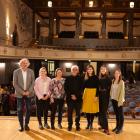
In the fall of 2024, Amitav Ghosh visited the Rachel Carson Center for Environment and Society as part of the project “One Book—Many Worlds: Munich Reads Gun Island by Amitav Ghosh.” This exhibition emerges from the multifaceted discussion of climate change and its challenges conducted in the “One Book—Many Worlds” project and grapples with the question of the role of literary fiction in interdisciplinary academic exchange and climate communication beyond academia. Taking Amitav Ghosh’s recent writings on the global climate crisis, in particular the novel Gun Island, as a vantage point, the chapters in this exhibition engage with various aspects Gun Island from different disciplinary perspectives, drawing on storylines and narrative elements that allow a multifocal engagement with different social and ecological repercussions of climate change. Additionally, pieces from the spring 2025 taumelnd trauen, verschlungen bleiben student exhibition and winning and honorable mentions from the 2025 “Tell the Untold!” writing competition take the provocation to think creatively about the past and future of our environment and world further. Thereby, the exhibition chapters create a web of diverse thoughts on and readings of the role of storytelling for the contemporary interlinked social and environmental crises from a number of perspectives.
About This Exhibition
The Age of the Anthropoiescene is a time of sympoietic tanglings with the human and more-than-human ghosts of deep time.
In the fall of 2024, Amitav Ghosh visited the Rachel Carson Center for Environment and Society as part of the project “One Book—Many Worlds: Munich Reads Gun Island by Amitav Ghosh.” This exhibition emerges from the multifaceted discussion of climate change and its challenges conducted in the “One Book—Many Worlds” project and grapples with the question of the role of literary fiction in interdisciplinary academic exchange and climate communication beyond academia. Taking Amitav Ghosh’s recent writings on the global climate crisis, in particular the novel Gun Island, as a vantage point, the chapters in this exhibition engage with various aspects Gun Island from different disciplinary perspectives, drawing on storylines and narrative elements that allow a multifocal engagement with different social and ecological repercussions of climate change. Additionally, pieces from the spring 2025 taumelnd trauen, verschlungen bleiben student exhibition and winning and honorable mentions from the 2025 “Tell the Untold!” writing competition take the provocation to think creatively about the past and future of our environment and world further. Thereby, the exhibition chapters create a web of diverse thoughts on and readings of the role of storytelling for the contemporary interlinked social and environmental crises from a number of perspectives.
About This Exhibition
Reflections on Amitav Ghosh’s Gun Island by Markus Vogt.
In the fall of 2024, Amitav Ghosh visited the Rachel Carson Center for Environment and Society as part of the project “One Book—Many Worlds: Munich Reads Gun Island by Amitav Ghosh.” This exhibition emerges from the multifaceted discussion of climate change and its challenges conducted in the “One Book—Many Worlds” project and grapples with the question of the role of literary fiction in interdisciplinary academic exchange and climate communication beyond academia. Taking Amitav Ghosh’s recent writings on the global climate crisis, in particular the novel Gun Island, as a vantage point, the chapters in this exhibition engage with various aspects Gun Island from different disciplinary perspectives, drawing on storylines and narrative elements that allow a multifocal engagement with different social and ecological repercussions of climate change. Additionally, pieces from the spring 2025 taumelnd trauen, verschlungen bleiben student exhibition and winning and honorable mentions from the 2025 “Tell the Untold!” writing competition take the provocation to think creatively about the past and future of our environment and world further. Thereby, the exhibition chapters create a web of diverse thoughts on and readings of the role of storytelling for the contemporary interlinked social and environmental crises from a number of perspectives.
About This Exhibition
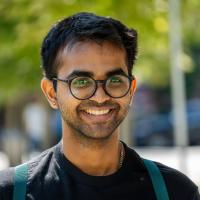
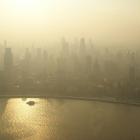
Tathagat Bhatia’s “A Few Hazy Anthropocenes” is a skilfully controlled reflection on haze as both a form of air pollution and a metaphor for the uncertainty of our times. It was one of the two honorable mentions in the nonfiction category of the RCC environmental writing competition “Tell the Untold!”
In the fall of 2024, Amitav Ghosh visited the Rachel Carson Center for Environment and Society as part of the project “One Book—Many Worlds: Munich Reads Gun Island by Amitav Ghosh.” This exhibition emerges from the multifaceted discussion of climate change and its challenges conducted in the “One Book—Many Worlds” project and grapples with the question of the role of literary fiction in interdisciplinary academic exchange and climate communication beyond academia. Taking Amitav Ghosh’s recent writings on the global climate crisis, in particular the novel Gun Island, as a vantage point, the chapters in this exhibition engage with various aspects Gun Island from different disciplinary perspectives, drawing on storylines and narrative elements that allow a multifocal engagement with different social and ecological repercussions of climate change. Additionally, pieces from the spring 2025 taumelnd trauen, verschlungen bleiben student exhibition and winning and honorable mentions from the 2025 “Tell the Untold!” writing competition take the provocation to think creatively about the past and future of our environment and world further. Thereby, the exhibition chapters create a web of diverse thoughts on and readings of the role of storytelling for the contemporary interlinked social and environmental crises from a number of perspectives.
About This Exhibition