A Fable for Bloomington
Lisa Sideris uses the unusually warm 2012 spring in Bloomington to highlight public complacency toward climate change, echoing themes from Silent Spring.
Lisa Sideris uses the unusually warm 2012 spring in Bloomington to highlight public complacency toward climate change, echoing themes from Silent Spring.
Lawrence Culver argues that no book has matched the impact of Rachel Carson’s Silent Spring and urges modern environmentalists to emulate her clear, compelling communication to reach broad audiences.
Jenny Price critiques Rachel Carson’s Silent Spring for reinforcing a human–nature divide that shifted environmental responsibility onto individuals while obscuring systemic and institutional accountability.
The essay acquaints readers with an ecocritical approach to comics by close reading three recent “ecocomics” with an emphasis on thematic and formal features.
Kata Beilin’s short story narrates of a scholar’s Amazonian journey, which awakens her from ambition’s illusion to the deeper truth of the interbeing in the forest.
Further Readings for “Wetland Times.”
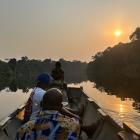
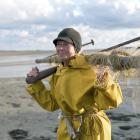
Wetlands are ecologically dynamic and vulnerable landscapes where multiple temporalities, human and nonhuman, intersect and challenge one another. This virtual exhibition explores the dynamic temporalities of wetlands and their complex relationships—the temporal imaginaries, narratives, structures, flows, (a)synchronicities, and ruptures they contain—framed by a conceptual vocabulary that reveals the role of language in understanding wetland times and temporalities. Our examples draw on case studies from three wetlands: the Wadden Sea in Northern Europe; Morecambe Bay, in the northwest of the United Kingdom; and the Dja-et-Lobo region in southern Cameroon, focusing specifically on wetland areas near settlements of the Baka People.
About the Exhibition

A reflection on borderlands by Nicholas Allen.
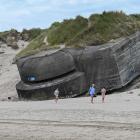
In April 2024, during a workshop at the School of Arts and Humanities of the University of Lisbon, specialists from different countries and backgrounds talked about dunes. In addition to the scientific topics presented, we discussed how to make our work more compelling and accessible to a wider audience. We wanted to share our plural views on coastal issues and the importance of taking this diversity into account when managing for the future, because beaches are made up of sea and sand, but also of people’s expectations and choices. This exhibition is our way to do this. Each of us has chosen an image/object that represents our personal connection with the coast. We do not want to present results or conclusions; as in a museum or art gallery, it is up to you to find meaning and to write your own script based on your impressions.
About the Exhibition
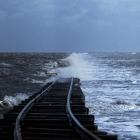
Katie Ritson reflects on the changing North Sea coast, linking its geological history and literature to the bigger picture of time and hope.
Novelist Catherine Bush walks the streets of Venice, seeking art that engages with Rachel Carson at the Biennale Arte 2024.