On Curating a Student Exhibition

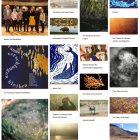
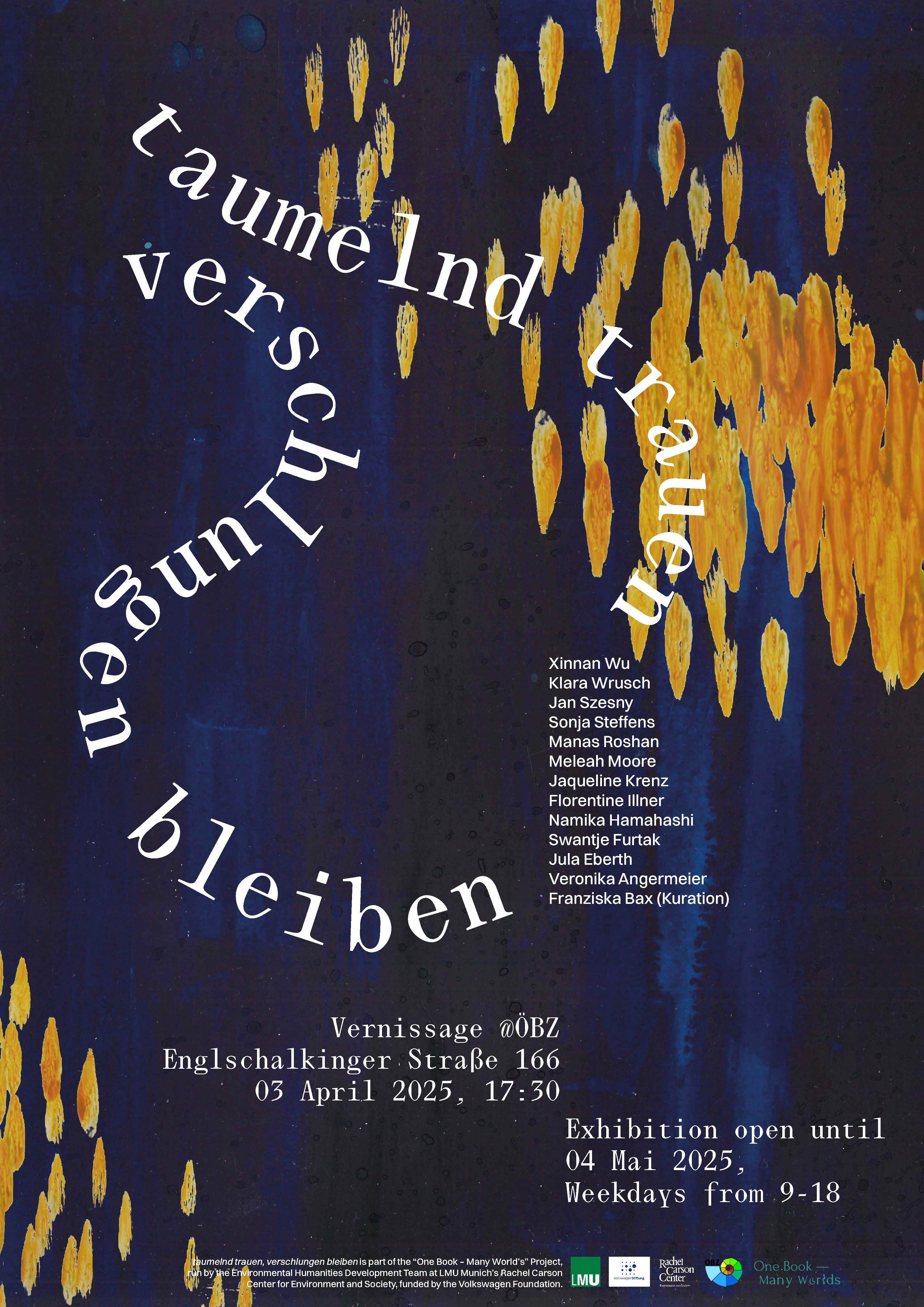
Exhibition Poster. Designed by Namika Hamahashi, Meleah Moore, and Franziska Bax.
Exhibition Poster. Designed by Namika Hamahashi, Meleah Moore, and Franziska Bax.
© Namika Hamahashi, Meleah Moore, and Franziska Bax. Used by permission.
The copyright holder reserves, or holds for their own use, all the rights provided by copyright law, such as distribution, performance, and creation of derivative works.
You may have already come across individual works created within the student-led exhibition taumelnd trauen, verschlungen bleiben,1 originally exhibited at Ökologisches Bildungszentrum Munich (ÖBZ) in April 2025,2 when reading the other chapters of this virtual exhibition. Guided by the question of how to stay hopeful in times of uncertain change and multiple crises, the group behind these works experimented with artistic methods and expression in addressing the themes addressed in Gun Island. As many of the emergent pieces ask and deepen questions rather than answering them, we frame taumelnd trauen, verschlungen bleiben itself as a thinking space3 rather than as a presentation of finalized objects and ideas. Extending this understanding into this virtual exhibition, we chose to weave the students’ works into the other chapters, as voices that tie in with the other texts and may open, extend, or complement lines of thought that are presented in the writing.
What unites the students’ works is a shared sense of refusing to give up hope, a stubborn yet proudly vulnerable attitude, and an admittedly fragile yet relentless commitment to working toward a possible “otherwise.” It was my task as curator to accompany the group on this journey.
The works that were created and brought together in the exhibition space of ÖBZ turned out to be incredibly sensible and brave pieces: a textured soundscape imagining the journey of a refugee from Bangladesh to Venice crafted from found snippets of sound4; a deeply emotional and erratic large-scale installation contemplating how Manasa Devi, the snake goddess in the myth woven into Gun Island, would tell her own story5; oral retellings of the novel’s story paired with conversations and diary-like sequences that were recorded while walking through locations in Venice where the book is set.6
For most of the students, this was their first time engaging in artistic expression for a larger audience, and it was beautiful to see how they chose many different material approaches. These included a burned curtain with the fire still fragrant, telling of ignorance’s fragility7; a boat, built from driftwood, referencing the precariousness and mercilessness of passages on water throughout history8; an etymological reflection on shells coming together in a material collage9; a video essay seeking care that does not halt at aesthetic lines of defining nature10; a flowing collage evoking interwovenness and the dependencies in a globalized world.11
I am deeply impressed by how gently the works found ways to address the violence and injustices marking our times, as, for example, the collage of photographs depicting livelihoods on water, printed on a flowing fabric screen, asking if one ever fully arrives after a migratory journey12; a mobile evoking strength yet fragility, questioning why the dream of a better life is a privilege only granted to a few13; an installation weaving diapositives, a tree’s protective bark, and spoken text, probing how grieving the personal can be a teacher for living through a rapidly changing world.14
We hope that the works serve as nodes, as moments to halt, to let an emergent line of thought flow freely, to weave together the various takes in this virtual exhibition and your own perspectives. If you wish to visit the exhibition taumelnd trauen, verschlungen bleiben by itself, you can find the exhibition website here.
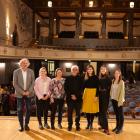
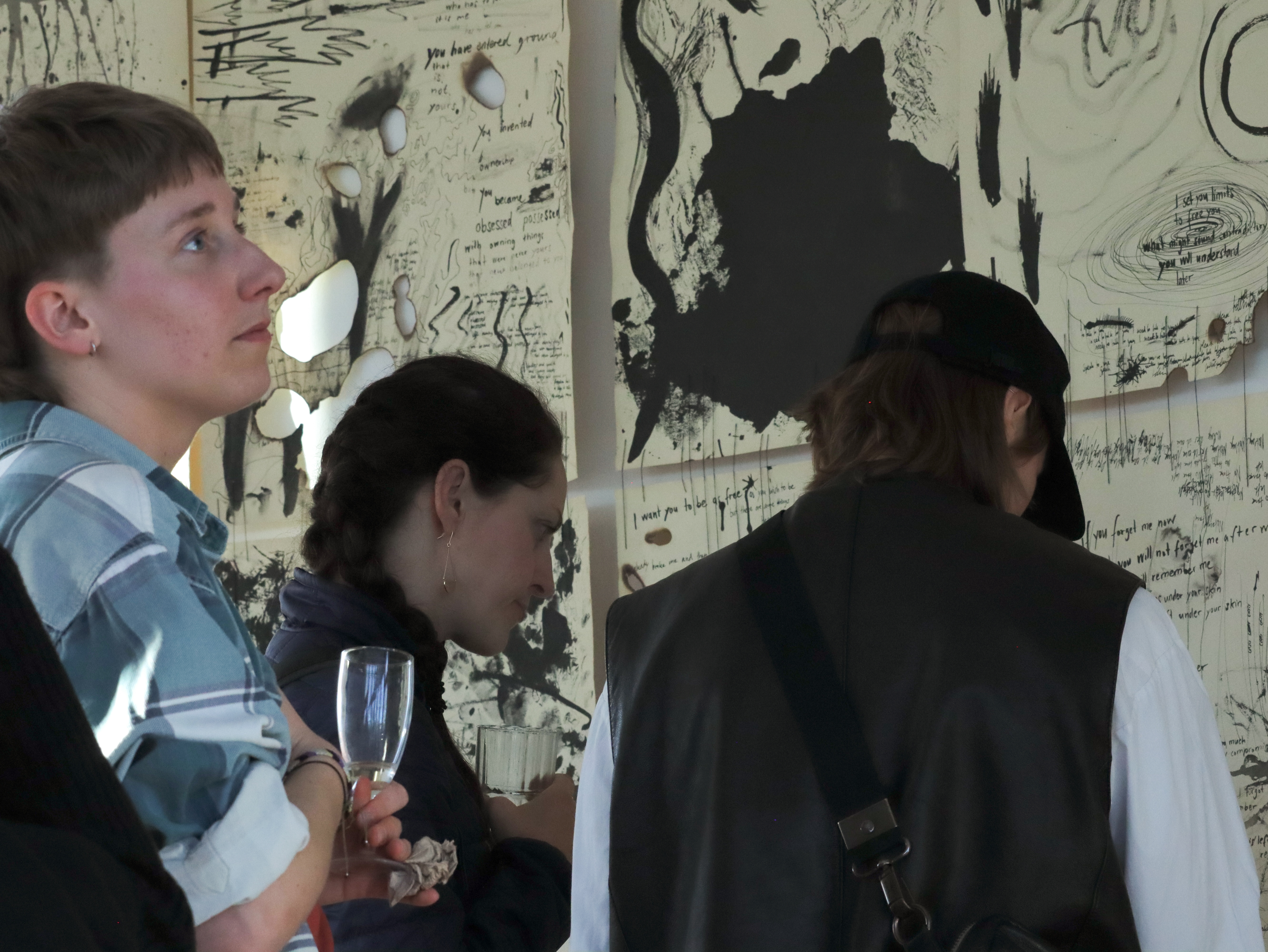
Vernissage at ÖBZ, April 2025, with artwork by Florentine Illner.
Vernissage at ÖBZ, April 2025, with artwork by Florentine Illner.
Artwork © Florentine Illner. All rights reserved. Photo © Julia Wyrott. Used by permission.
The copyright holder reserves, or holds for their own use, all the rights provided by copyright law, such as distribution, performance, and creation of derivative works.
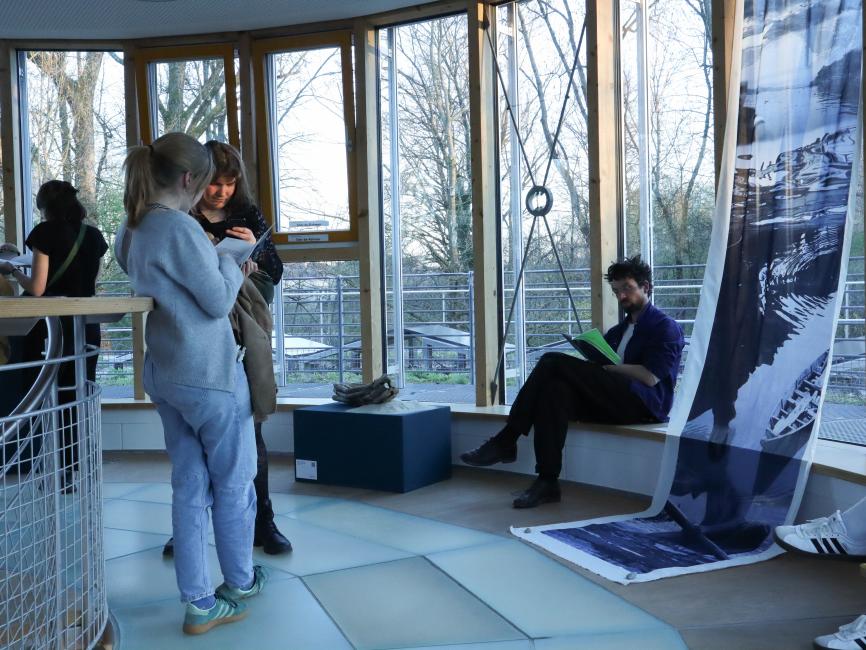
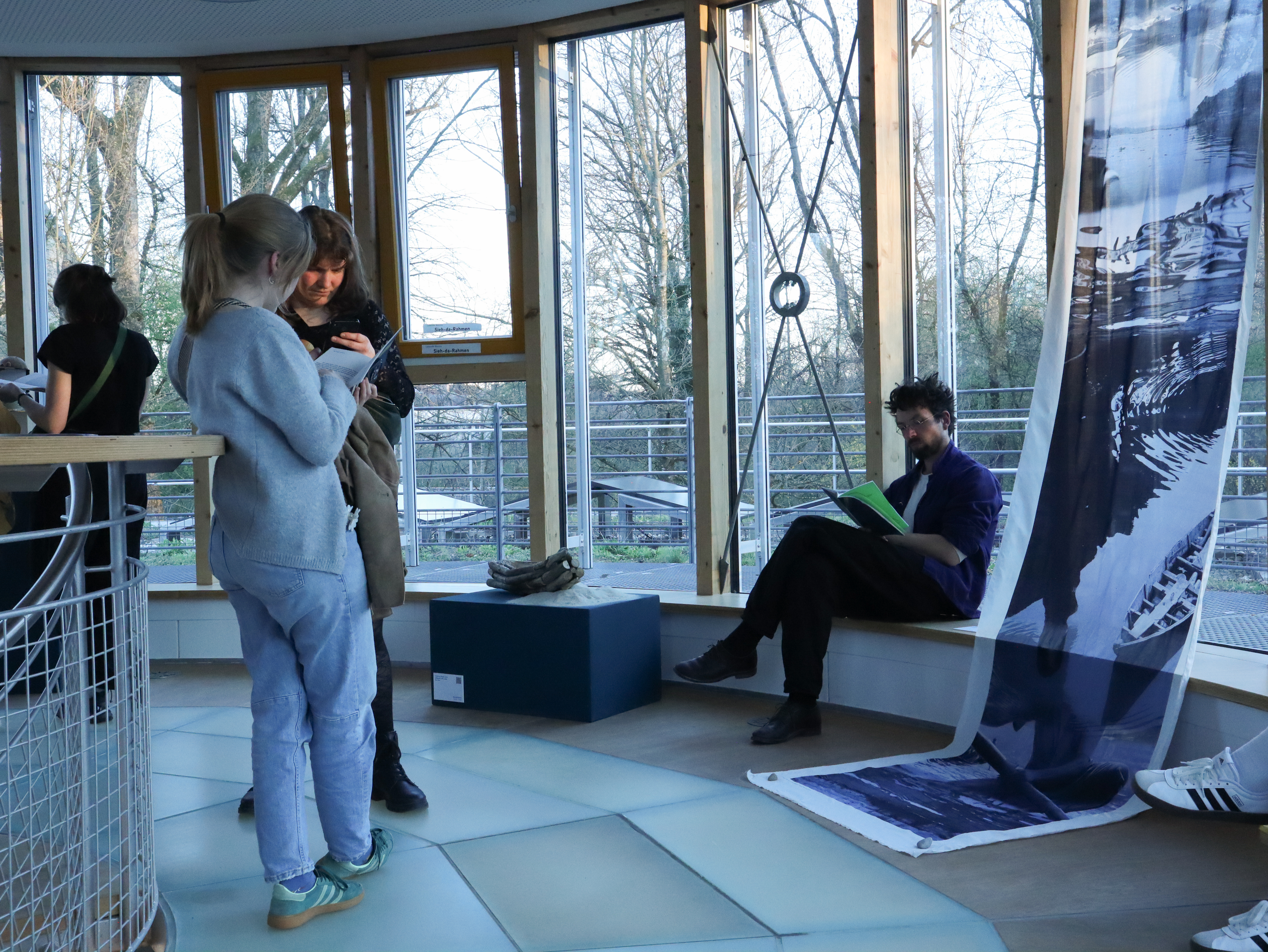
Vernissage at ÖBZ, April 2025, with artworks by Meleah Moore and Manas Roshan.
Vernissage at ÖBZ, April 2025, with artworks by Meleah Moore and Manas Roshan.
Artwork © Maleah Moore and Manas Roshan. All rights reserved. Photo © Julia Wyrott. Used by permission.
The copyright holder reserves, or holds for their own use, all the rights provided by copyright law, such as distribution, performance, and creation of derivative works.
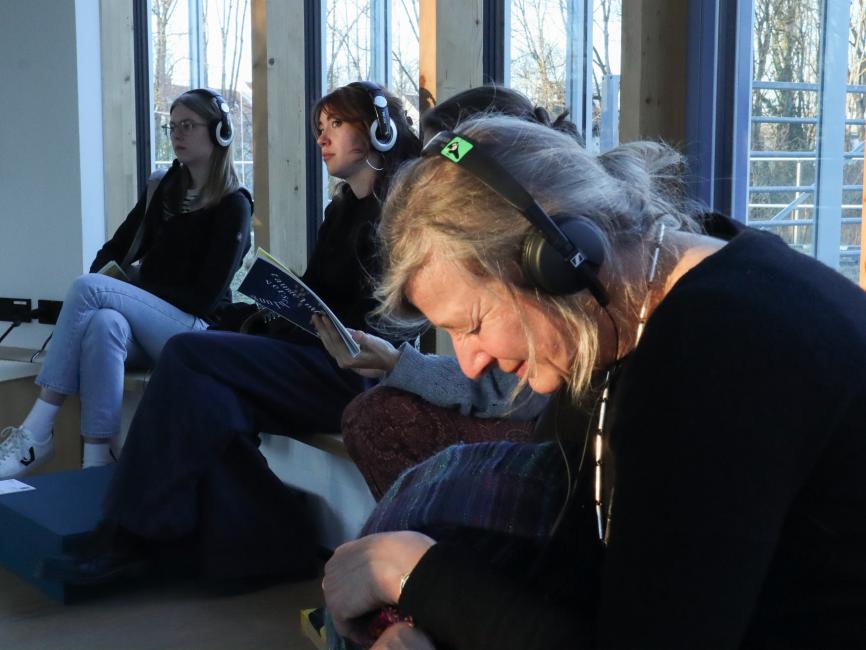
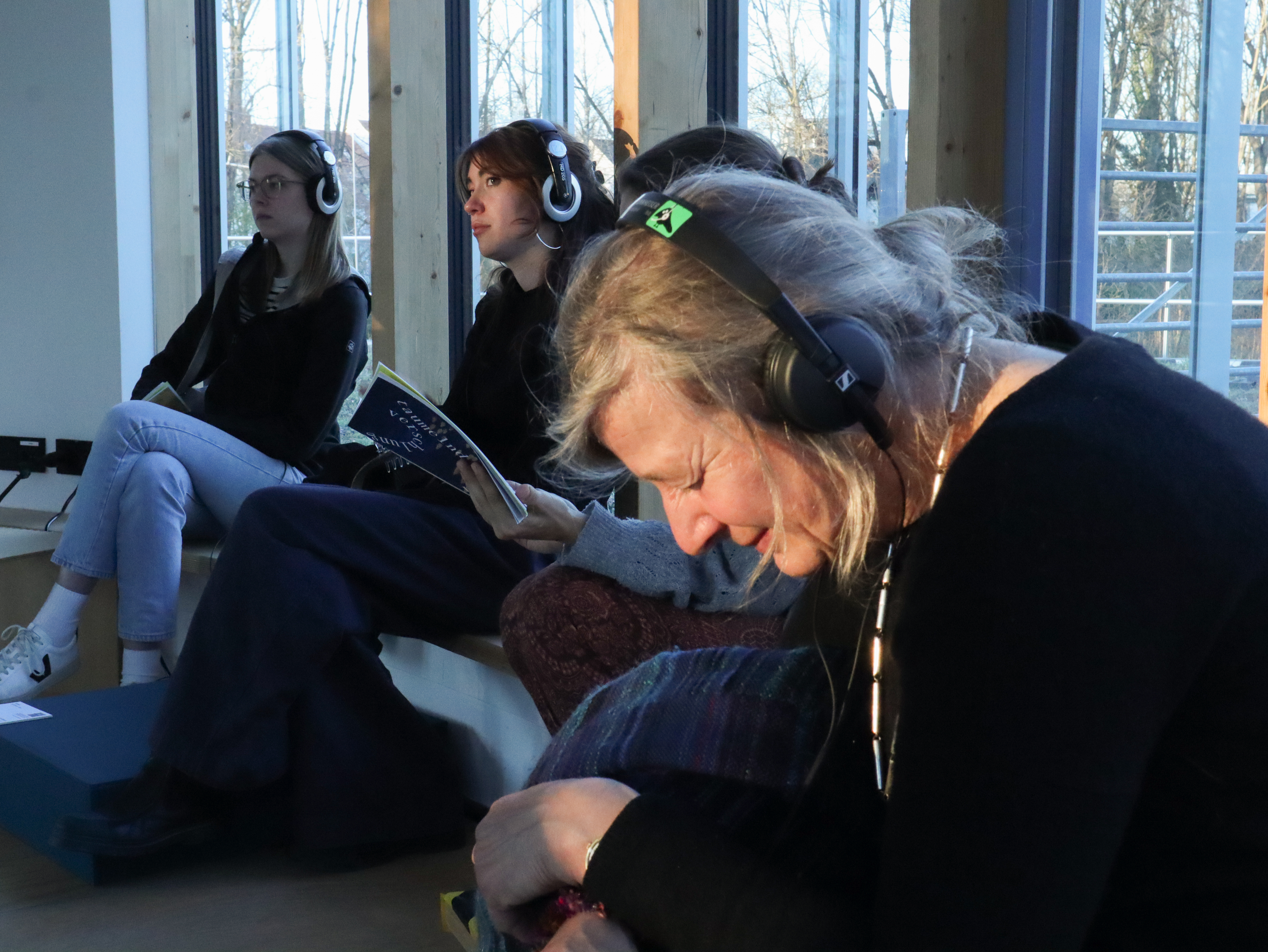
Vernissage at ÖBZ, April 2025, with soundworks by Klara Wrusch und Jan Szesny.
Vernissage at ÖBZ, April 2025, with soundworks by Klara Wrusch und Jan Szesny.
Soundworks by Klara Wrusch und Jan Szesny. Photo © Julia Wyrott. Used by permission.
The copyright holder reserves, or holds for their own use, all the rights provided by copyright law, such as distribution, performance, and creation of derivative works.
Notes
1 The title loosely translates to “to dare to trust tumbling while drawing strength from unending entanglements.”
2 The exhibition was developed in the framework of the course Exhibition Studio run by Dr. Hanna Straß-Senol and Dr. Anna Antonova at the RCC in the winter term of 2024–25.
3 In contrast to a more traditional understanding of exhibitions as “static, temporary constellations of art objects gathered in a dedicated space,” exhibitions as thinking spaces provoke by making central how the works begin “interacting among themselves, with their audiences, and with the various discursive contexts that are implicitly of explicitly present or presented” (Vesters 2016).
4 Zones of Comfort, Boders or Bliss by Jan Szesny.
5 Promise Me That You Will Not Forget My Story by Florentine Illner.
6 Let Me Tell You a Story by Swantje Furtak.
7 Veil of Ignorance by Veronika Angermeier.
8 Ark by Manas Roshan.
9 The Shell by Wu Xinnan.
10 I Don’t Care for Your Scenic View by Jula Eberth.
11 Simultaneousness by Sonja Steffens.
12 Waters Between—unde aqua inde salus by Meleah Moore.
13 Weighing Up to Grasp by Namika Hamahashi.
14 Multiplicity of Collapse by Klara Wrusch.
Bibliography
Vesters, Christel. “A Thought Never Unfolds in One Straight Line: On the Exhibition as Thinking Space and Its Sociopolitical Agency.” Stedelijk Studies Journal 4 (2016). doi:10.54533/StedStud.vol004.art09.
Amitav Ghosh in Munich: Inspirations, Insights, and Storytelling
In the fall of 2024, Amitav Ghosh visited the Rachel Carson Center for Environment and Society as part of the project “One Book—Many Worlds: Munich Reads Gun Island by Amitav Ghosh.” This exhibition emerges from the multifaceted discussion of climate change and its challenges conducted in the “One Book—Many Worlds” project and grapples with the question of the role of literary fiction in interdisciplinary academic exchange and climate communication beyond academia. Taking Amitav Ghosh’s recent writings on the global climate crisis, in particular the novel Gun Island, as a vantage point, the chapters in this exhibition engage with various aspects Gun Island from different disciplinary perspectives, drawing on storylines and narrative elements that allow a multifocal engagement with different social and ecological repercussions of climate change. Additionally, pieces from the spring 2025 taumelnd trauen, verschlungen bleiben student exhibition and winning and honorable mentions from the 2025 “Tell the Untold!” writing competition take the provocation to think creatively about the past and future of our environment and world further. Thereby, the exhibition chapters create a web of diverse thoughts on and readings of the role of storytelling for the contemporary interlinked social and environmental crises from a number of perspectives.
About This ExhibitionAbout the author