The Cash Value of Environmental History
Stephen J. Pyne argues that environmental historians can offer practical value to communities, particularly in areas such as wildfire management.
Richard Walker expresses concern over the current state of environmental history, urging it to adopt a more assertive and impactful role in addressing pressing global issues like climate change and species extinction.
Julia Adaney Thomas argues that climate collapse has fundamentally shifted the focus of historical inquiry from a quest for liberty to the challenge of ensuring survival with ecological decency.
Jane Carruthers traces the development of environmental history, showing how it emerged in the 1970s from the environmental movement with a focus on addressing urgent issues such as resource depletion, climate change, and sustainability, while aiming to bridge the sciences and humanities.
Christof Mauch highlights that environmental history provides a distinctive perspective by treating nature as an active agent and by bridging boundaries of time, space, and discipline.
A hagiographer tells us that when Martin of Tours made the sign of a cross at a falling pine tree, the tree felt fear and was forced to change direction.
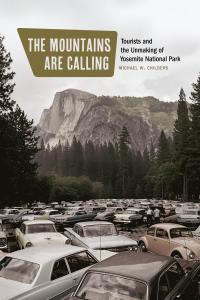
Excerpt from The Mountains Are Calling: Tourists and the Unmaking of Yosemite National Park by Michael W. Childers.