In 2004, UNESCO designated the sacred sites and pilgrimage routes Kumano Kodō in the Kii Mountain Range of southwest Japan as a World Heritage Site. Rising over the Pacific Ocean, the region has been a major holy ground since the ninth century, when the Indigenous nature-worshipping beliefs of Kumano Shinkō and the esoteric Shingon Buddhist tradition both took root there and gradually intertwined. By the twelfth century, this fusion had crystallized into Shugendō—a distinct practice that synthesizes shamanistic ritual, Shintō-rooted nature worship, and esoteric Buddhism into a unified spiritual discipline. The paths through the deep forest interconnect, then, the sites of diverse beliefs. However, the multispecies intellectual history that has spurred environmental advocacy to preserve the local heritage of nature and culture remains absent in the United Nations narrative.
Minakata Kumagusu (1867–1941), a Japanese naturalist-polymath from the Kii region, ran a vehement campaign against the Meiji regime’s Shrine Merger program (1906–1914). The nationwide policy demolished approximately 70,000 of approximately 200,000 then-existing shrines, by ranking their cultural and historical significance in the light of the government’s national history narrative. The program forced all shrines to have a priest paid a set salary and to accumulate basic assets in cash, leaving “insignificant” village shrines more vulnerable to closures. The capital-based, centralized heritage management drove monetization and felling of primordial sacred forests, which had previously been protected by locals’ religious rites and customs. It left an immense impact on the Kii Mountain Range, replacing much of the region’s old-growth forest with industrially planted cedars: a sight mountain walkers can still observe today.
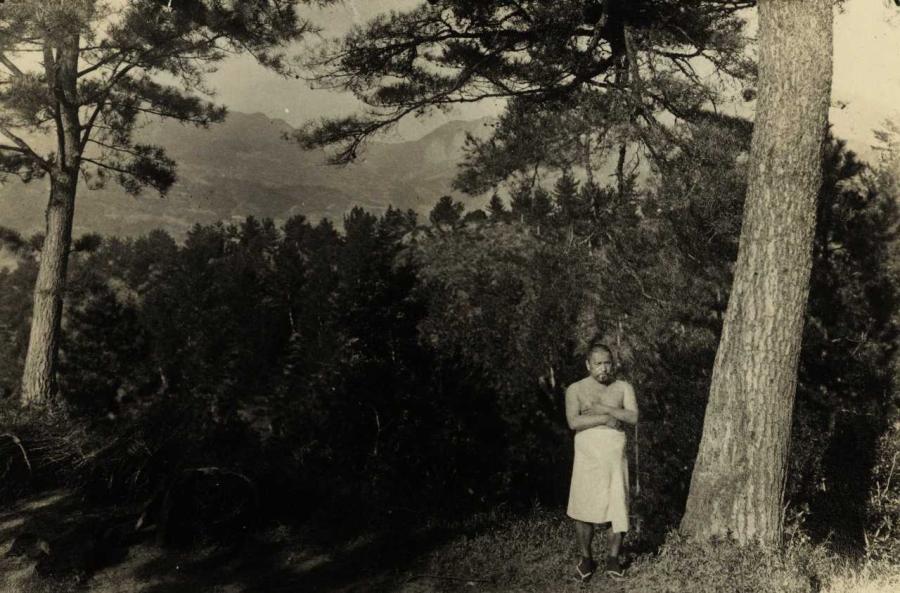
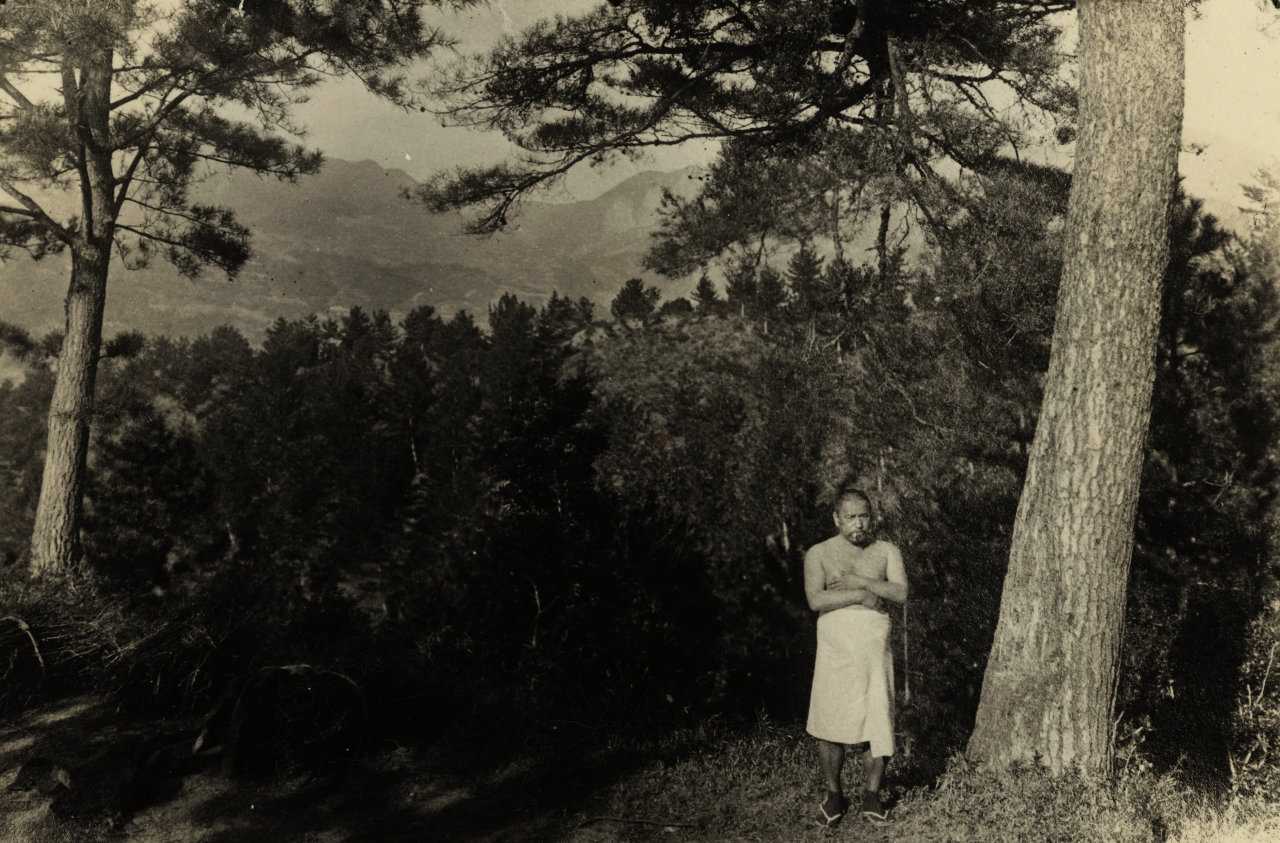
Fig. 1. A self-portrait of Minakata Kumagusu in Kumano in protest of the Shrine Merger (1910)
Fig. 1. A self-portrait of Minakata Kumagusu in Kumano in protest of the Shrine Merger (1910)
Photograph by Minakata Kumagusu, 1910.
Courtesy of the Minakata Kumagusu Archives, Tanabe, Japan.
The copyright holder reserves, or holds for their own use, all the rights provided by copyright law, such as distribution, performance, and creation of derivative works.
Kumagusu perceived the policy as an act of “tyranny” (gyakusei) that led to multiple harms: the loss of rare organisms’ habitats; increased landslides; a decrease in morality, public order, and harmony; a decline in local customs and patriotism; and the destruction of historical sites and ancient customs. “Money is not the only wealth. … The trees in the sacred forest and the ground of the shrine are also assets,” he wrote to the mycologist Shirai Mitsutarō at the Imperial University in Tokyo amid the activism, “making money the only standard destroys shrines that have been at the center of people’s kokoro (mind-heart) in local areas for 1,100 years.”
The Japanese notion of kokoro was key to the multispecies epistemology of Kumagusu’s scientific studies of society and nonhuman organisms. Originally a Buddhist term, commonly used in Japanese, the idea fuses mind and heart into a singular metaphorical organ crucial to onto-epistemological recognition. It posits that intellectual reasoning and emotional experience go hand-in-hand in one’s understanding of the world.
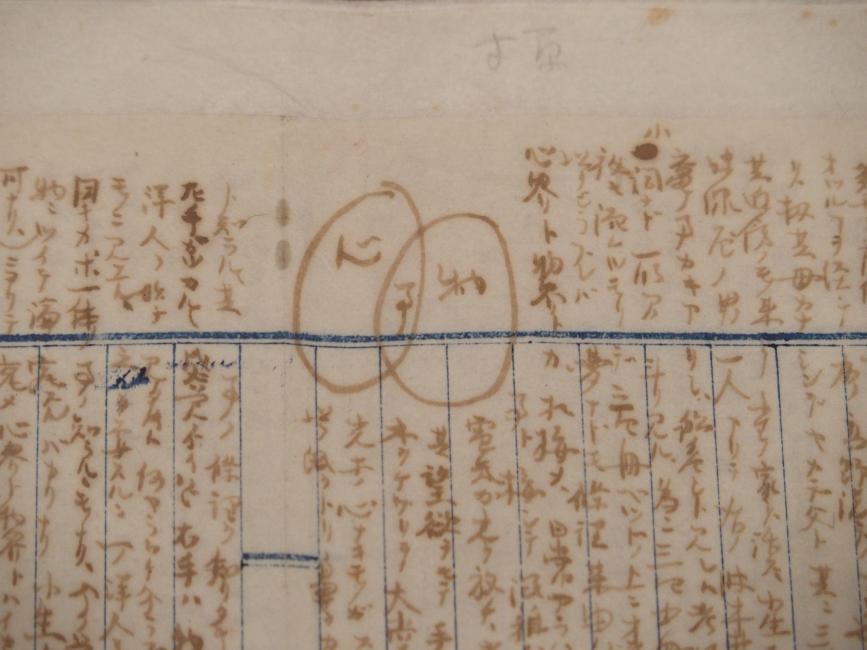
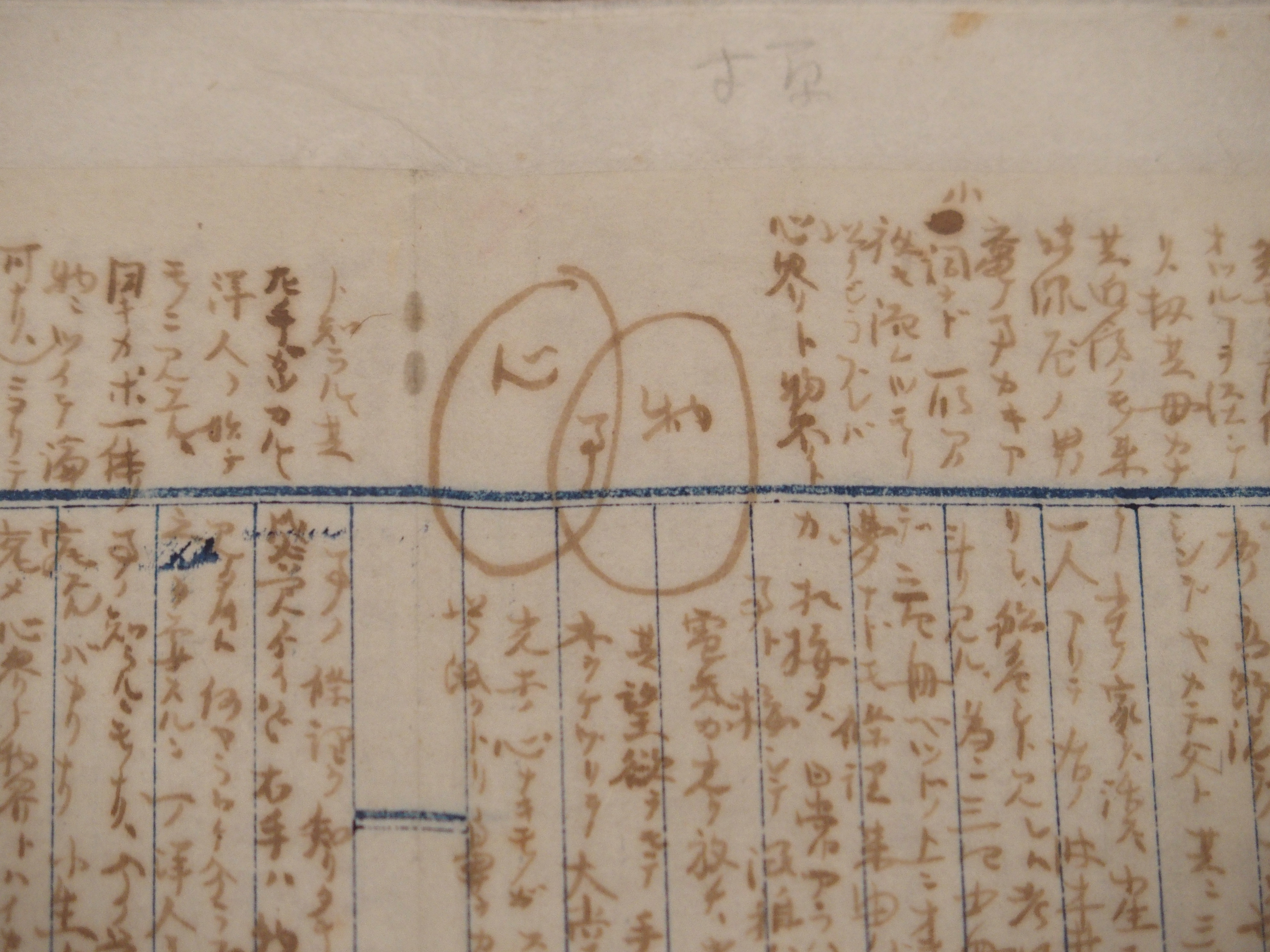
Fig. 2. Minakata Kumagusu’s diagram of bukkai, shinkai, and koto.
Fig. 2. Minakata Kumagusu’s diagram of bukkai, shinkai, and koto.
Diagram by Minakata Kumagusu.
© Minakata Kumagusu Museum, Wakayama, Japan.
The copyright holder reserves, or holds for their own use, all the rights provided by copyright law, such as distribution, performance, and creation of derivative works.
For Kumagusu, kokoro was at the core of religious beliefs sustained by the historic shrines, tales, customs, and the sacred primordial forests in the Kumano region. A sense of intimacy with the more-than-human world emerges in one’s kokoro. In his phenomenological theory of Koto no Gaku (The Study of Things), Kumagusu conceived of two realms: what he called bukkai (the material world of living and nonliving things) and shinkai (the inner world of kokoro). The kokoro reflects—like a mirror—the material world inward and what we experience as “reality” emerges as koto (things as perceived) at the intersection of these two worlds. Kumagusu illustrated this schema in a diagram for the Shingon priest Toki Hōryū in 1893 (Figure 2). He argued that the more one found mono (matters) curious and fascinating, the more one would develop a sense of intimacy with the world. In turn, as people embraced what he referred to as jōsei (affective human nature) instead of financial and territorial gains, societies would increasingly become more “civilized.”
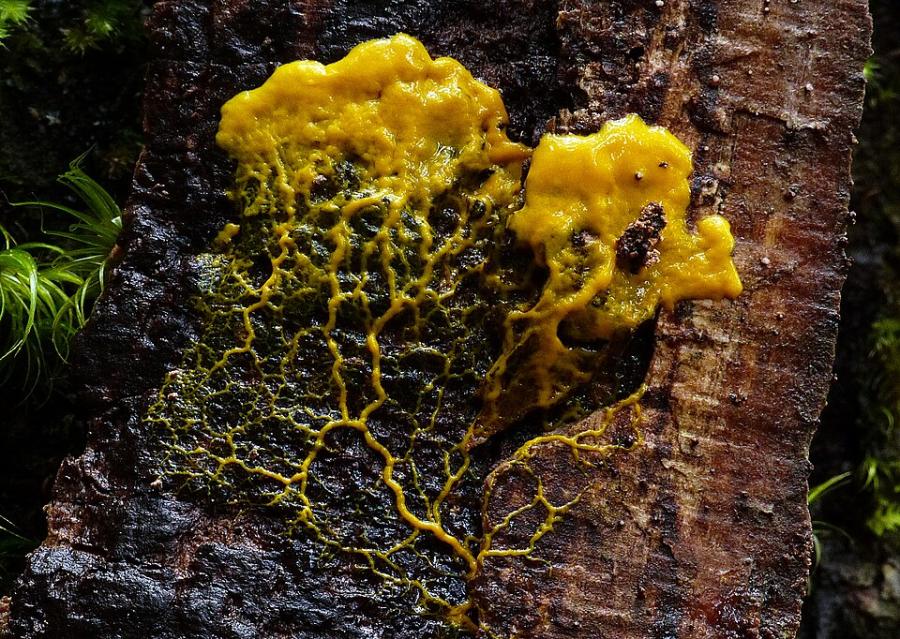
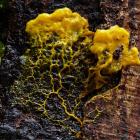
Fig. 3. Slime mold.
Fig. 3. Slime mold.
Photo by Bernard Spragg, 2015. Click here to view Wikimedia source.
 This work is licensed under a Creative Commons Public Domain Mark 1.0 License.
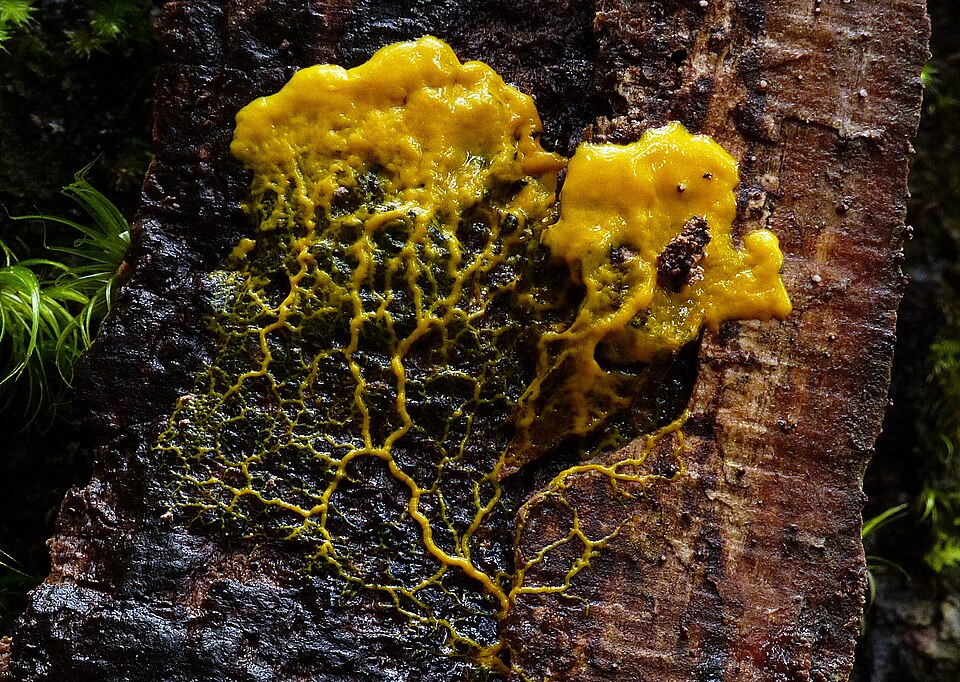
Kumagusu’s intimacy with the more-than-human world emanated from his curiosity about cryptogams: plant-like organisms that reproduce via spores (rather than through flowers or seeds), such as slime mould, fungi, seaweed, mosses, and lichens. He was most fond of slime moulds, which, in his eyes, seemed to defy various biological binaries—such as life/death, male/female, and plant/animal. The non-binary biology of the organism influenced his ways of understanding the world. It led him to reason via non-binary and non-teleological ideas, so that he reconceptualized, for example, evolutionary theory as henkaron (“the theory of change”) instead of the Meiji state’s strategic translation of it as shinkaron (“the theory of progress”).
Kumagusu committed to creating a comprehensive study of cryptogams and reflected on the nature of the universe in the Kii Mountain Range, contributing 51 essays to the science journal Nature. His theoretical ideas and his action against the Shrine Merger policy originated in his curiosity and appreciation for the multispecies entanglement of cryptogams. “In my opinion, the natural scenery unique to our country is our country’s mandala [(a Buddhist representation of the cosmos)],” he explained to Shirai. The mountainscape of Kumano Kodō manifested a more-than-human onto-epistemology informed by slime moulds. He contended that immersing oneself in this mandala, as pilgrims and hikers still do today, helps one “feel the ultimate path of enlightenment (Tathagata) even only for a short time.”
Acknowledgments
I thank the Minakata Kumagusu Archives in Tanabe, the Minakata Kumagusu Museum in Wakayama, and the National Museum of Nature and Science in Tokyo for access to their invaluable archival sources and for their generous support. I am grateful to the members of Unearthing Multispecies Intellectual History—especially Sonia Contera—for invigorating discussions and insights during the development of this article. I also appreciate Jonatan Palmblad’s editorial leadership, Christof Mauch’s encouragement, and the two anonymous reviewers’ helpful feedback.
All Japanese–English translations in this article are the author’s own. The article follows the Japanese convention for Japanese names, with surname first, followed by the given name. Names of famous Japanese figures, including Minakata Kumagusu, are widely referred to by their given names rather than by their surnames.
How to cite
Honda, Eiko. “The Multispecies Intellectual History of the Kumano Kodō: Minakata Kumagusu, Slime Moulds, and Shrine Merger, 1906–1914.” Environment & Society Portal, Arcadia (Spring 2026), no. 7. Rachel Carson Center for doi:10.5282/rcc/10086.
ISSN 2199-3408
Environment & Society Portal, Arcadia
 This work is licensed under a Creative Commons Attribution 4.0 International License.
2026 Eiko Honda
This refers only to the text and does not include any image rights.
Please click on an image to view its individual rights status.
- Hardacre, Helen. Shintō and the State, 1868–1988. Princeton: Princeton University Press, 1989.
- Honda, Eiko. “Minakata Kumagusu and the emergence of queer nature: Civilization theory, Buddhist science, and microbes, 1887–1892.” Modern Asian Studies 57, no. 4 (2023): 1105–1134. doi:10.1017/S0026749X22000385
- Kumagusu, Minakata. Minakata Kumagusu Shokan: Kōzansjizo: Toki Hōryū ate 1893–1922 [Minakata Kumagusu Letters: Kozan Temple Archive: Addressed to Toki Hōryū 1893–1922]. Fujiwara Shoten, 2010.
- Kumagusu, Minakata. “Jinjagōshi ni kansuru iken [Opinions on the Shrine Merger].” Aozora Bunko, 10 March, 1992. https://www.aozora.gr.jp/cards/000093/card525.html






.jpg)