Environmental law and climate litigation are on the rise in Brazil, gaining new validity in the face of anthropogenic disasters like the world-famous dam ruptures in Mariana and Brumadinho that occurred on 5 November 2015 and 25 January 2019 in the state of Minas Gerais. These disasters marked Brazilian history in terms of their massive destruction of the environment and surrounding communities, in addition to causing the death of nearly 300 people and the annihilation of rivers, waterways, and vegetation, even impacting the Atlantic Ocean. These were no mere natural disasters, but resulted from structural and systemic problems that could have been avoided through better environmental regulation and governance.
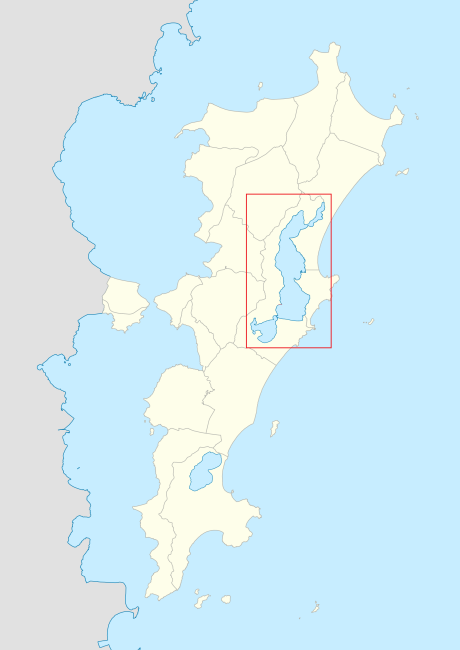
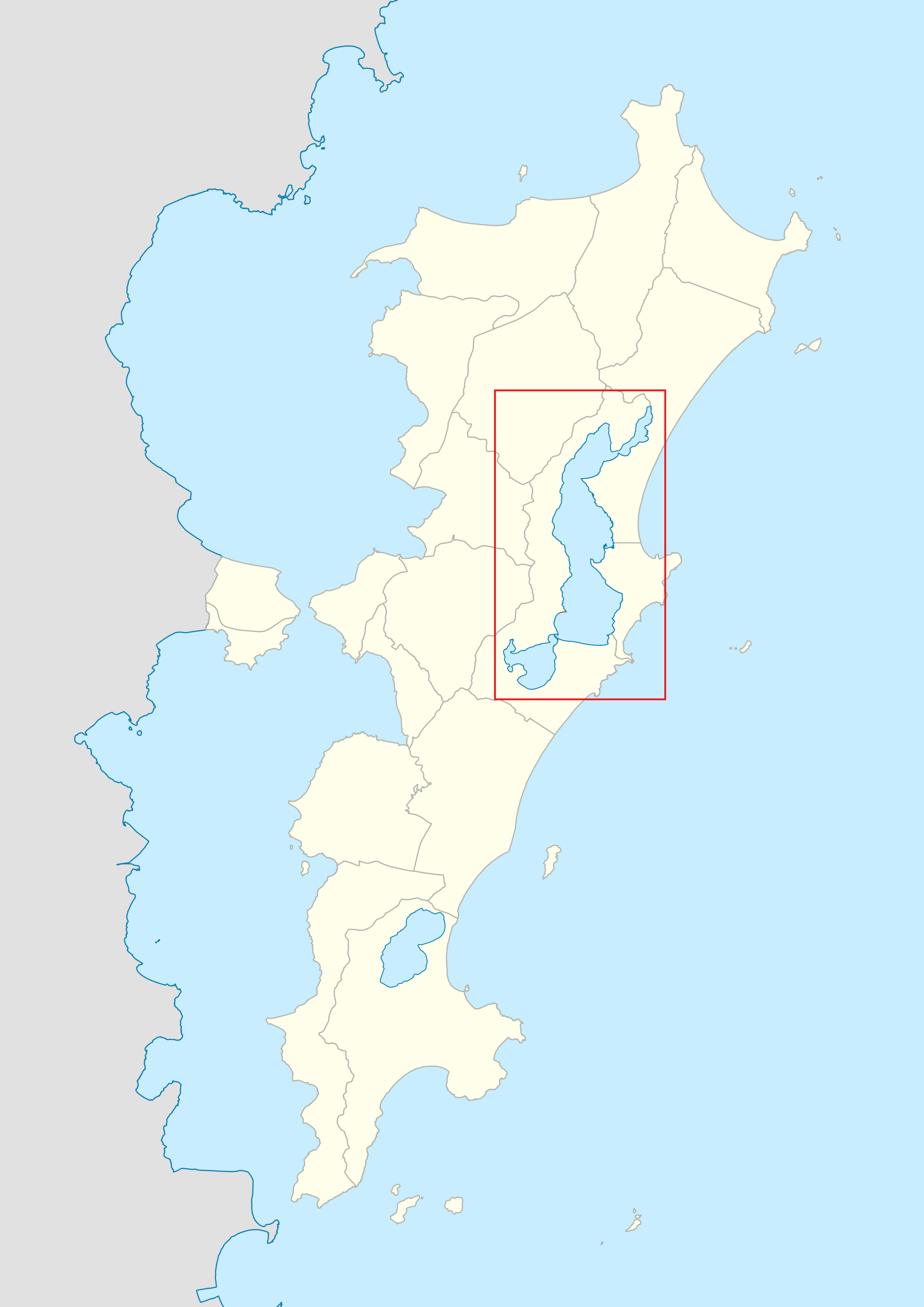
Map of Florianópolis, with Lagoa da Conceição marked in red.
Map of Florianópolis, with Lagoa da Conceição marked in red.
Map by Et27ju7, modified by Jonatan Palmblad. Click here to view original image.
 This work is licensed under a Creative Commons Public Domain Mark 1.0 License.
More recently, the city and island of Florianópolis, Santa Catarina, has become an important juridical battle ground, following a disaster in its major lagoon, Lagoa da Conceição. This has led to a class action lawsuit initiated by research groups at the Federal University of Santa Catarina (UFSC), which potentially could set a new legal precedent for Brazil—much thanks to the municipality’s innovative environmental legislation.
Florianópolis’s Lagoa da Conceição is diverse both in terms of nature and culture. Its geological quality is unique due to its location, making it a complex and heterogeneous ecosystem with a high biological and ecological significance. The ecosystem is rich in biodiversity, encompassing multiple environmental types (dunes, coastal zone, lagoon, Atlantic Forest, and hills) within its 19.71 square kilometers, as well as distinct human communities. Moreover, the lagoon constitutes a notable historical setting since it became a district of Nossa Senhora do Desterro (the former name of Florianópolis) in 1750.
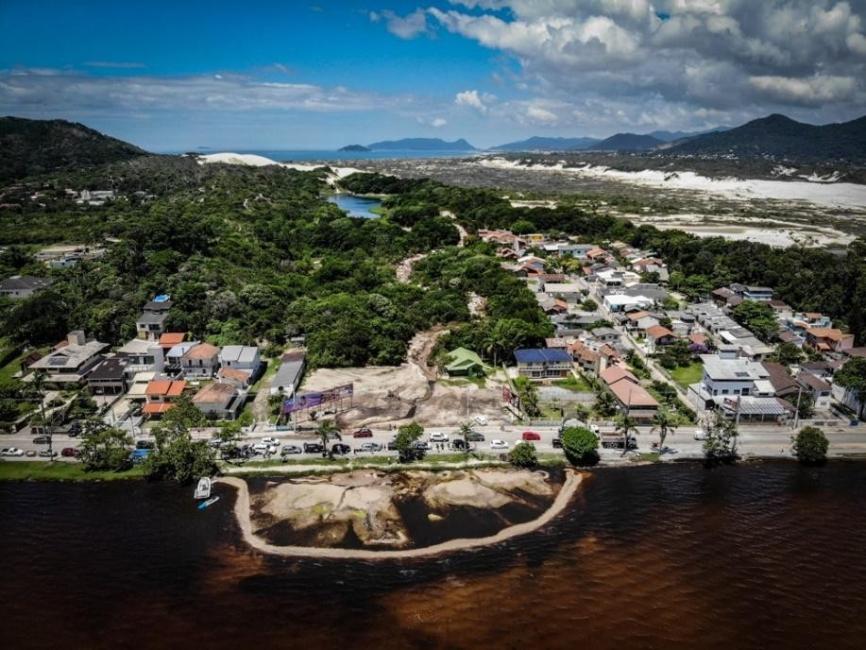
The waters of Lagoa da Conceição serve important societal functions today, even after the disaster, but less so than in the past when the waters were clean and contained a wider variety of fish. Today, residents still eat the fish, and the surplus is sold in the various restaurants along the coast of the lagoon—albeit with restrictions due to pollution and water deterioration. The ecology of the lagoon thus remains fundamental both for the overall ecosystem of the island and the human society depending on its integrity. Lagoa da Conceição can therefore be understood as a socio-ecological site, and its conservation should mean not only the protection of a particular geography and ecology, but also of cultural and traditional values with which the lagoon has co-evolved for almost three centuries. Maintaining its history and cultural heritage, then, means to ensure the intergenerational transmission of these values, reaffirming human principles rooted in relations with the natural environment. Hence the impact of the disaster meant not only the ecological degradation of the ecosystem, but also the annihilation of stories, experiences, and cultural values.
Although Lagoa da Conceição’s cultural and ecological dimensions are of great value, both face structural problems built up over time, stemming from multiple systemic issues and challenges that foreshadowed the incident. These issues include real estate speculation, uncontrolled growth, massive tourism, and a deficient sanitation system—and the sanitary problems of the Parque Natural das Dunas da Lagoa da Conceição (PNDLC) played an essential part in the scenario that led to the ecological collapse of the lagoon. This natural park contains the Lagoa da Conceição Wastewater Treatment Plant, operated by the Companhia Catarinense de Águas e Saneamento (CASAN), which treats the effluents from the surrounding communities. The water treatment plant was founded in 1988 to initially serve 4,000 inhabitants, but ever since its origin it has presented complications following the choice of place and the absence of appropriate environmental impact studies (see Barbosa, 2003).
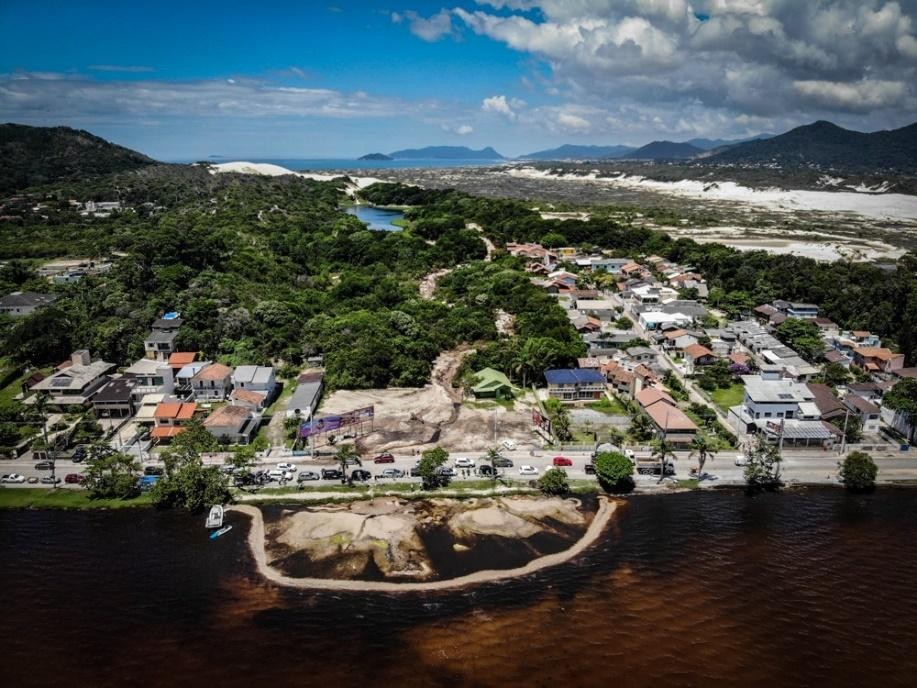
The disaster that followed should therefore not have been a surprise. On 25 January 2021, a part of the evaporation-infiltration lagoon dam in the natural park collapsed, causing untreated sewage to overflow into the dunes, houses, surrounding communities, streets, avenues, and the lagoon itself. The discharge of waste from CASAN’s facilities resulted not only in the change of the lagoon’s color, but also in the expansion of a dead zone and widespread mortality of aquatic organisms, successive algal blooms, and the entry of exotic and invasive species.
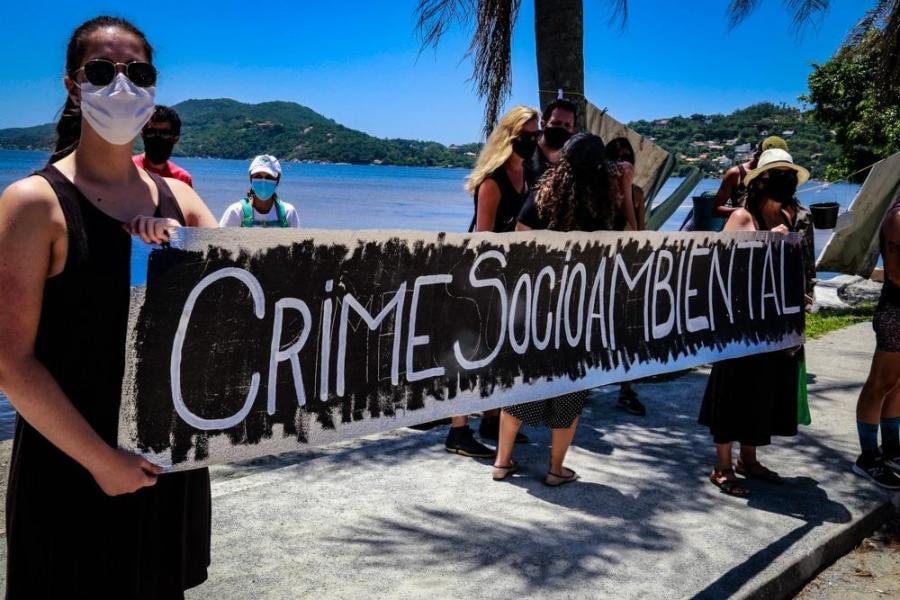
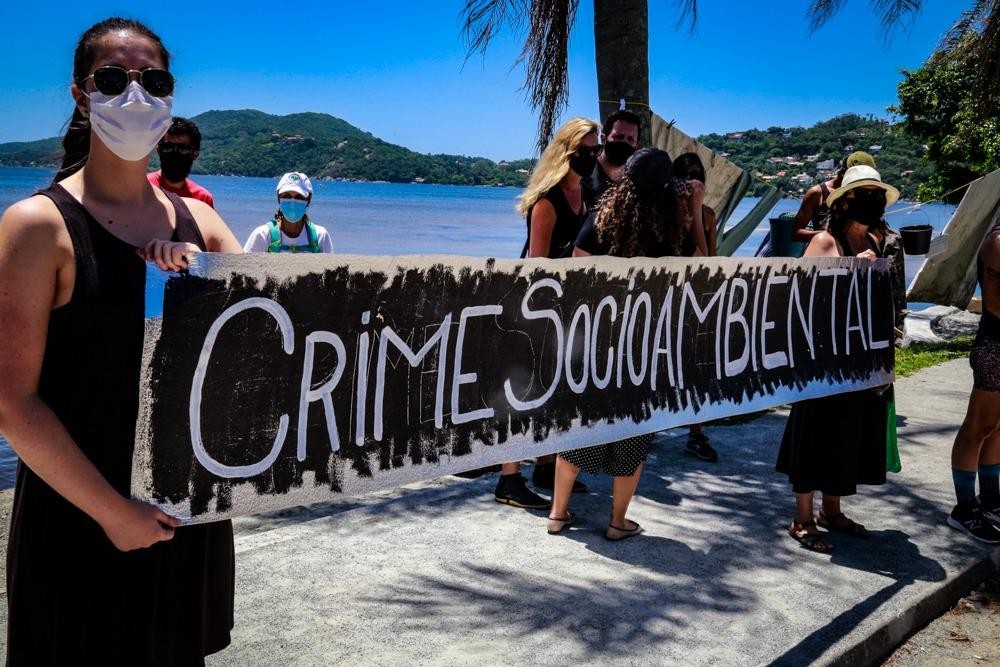
Protesters holding a sign that reads “socio-environmental crime.”
The Lagoa da Conceição Sewage System collapsed due to environmental neglect and insufficient management, and in response a collective initiative was initiated in the form of a class action lawsuit (case n. 5012843-56.2021.4.04.7200/SC, currently pending before the Sixth Federal Court of Florianópolis). A class action lawsuit is made in situations where the problem cannot be resolved by a judicial decision. To ensure compliance with previous decisions, the structural process is organized by thorough monitoring and cascading decisions. In this case, the NGO Costa Legal, the Florianopolitana Association of Community Entities (UFECO), and the Pachamama Association assumed the status of authors of the litigation, and it was assisted by activities at the Law Graduate Program of the Federal University of Santa Catarina, through which teachers, students, and civil society representatives gave legal. Since the disaster impacts not only nonhuman nature, but also the city and its inhabitants, the lawsuit aims to rectify the dysfunctional human–environment relations that led up to it.
The articulation of the litigation moreover aims at establishing and protecting various environmental and autonomous rights of the Lagoa da Conceição itself, recognizing its intrinsic, intergenerational, and immaterial values. This is supported by article 133 of the Organic Law of the Municipality of Florianópolis, especially after the Amendment 47/2019, which demands socio-ecological resilience through the promotion of diversity and harmony with nature, as well as the preservation, recovery, restoration, and expansion of natural ecosystems—all while recognizing Nature as a subject of rights. This recognition is important since it is part of an ecocentric approach that could serve to overcome the limitations of the current paradigm of environmental protection. The Organic Law’s recognition of Nature as a legal subject both supports and is exemplified by the lawsuit, which applies, in a practical way, principles that transcend the traditional logic of Environmental Law.
The litigation in Florianópolis can set a new legal precedent. Although there have been normative advances in the country’s ecological law, the implementation of socio-ecological justice requires the adoption of a new model prioritizing the centrality of Nature. Depending on the outcome of lawsuit, the case of Lagoa da Conceição might not only come to do justice to people and ecology in Florianópolis, but also pave the road for a new model for ecological law in Brazil.
Acknowledgment
This article was written and published as a part of the research project Speak4Nature: Interdisciplinary Approaches on Ecological Justice, funded by the European Union’s Horizon 2020 research and innovation program under grant agreement No. 101086202.
How to cite
Morato Leite, José Rubens, Isabel Pinheiro de Paula Couto, Iasna Chaves Viana, and Marcos José de Abreu. “Climate Litigation in Brazil: The Case of Lagoa da Conceição.” Environment & Society Portal, Arcadia (Spring 2026), no. 8. Rachel doi:10.5282/rcc/10149.
ISSN 2199-3408
Environment & Society Portal, Arcadia
 This work is licensed under a Creative Commons Attribution 4.0 International License.
2026 José Rubens Morato Leite, Isabel Pinheiro de Paula Couto, Iasna Chaves Viana, and Marcos José de Abreu.
This refers only to the text and does not include any image rights.
Please click on an image to view its individual rights status.
- Barbosa, Tereza Cristina Pereira. Ecolagoa: um breve documento sobre a ecologia da Bacia Hidrográfica da Lagoa da Conceição. Florianópolis: Editora Gráfica Pallotti.
- Gimeno, Silvia Ines Dufech. “O Destino Viaja de Barco: um estudo histórico, político e social da Costa da Lagoa e de seu processo de modernização (1930-1990).” MA thesis, Federal University of Santa Catarina, Florianópolis, 1992.
- Pineiro de Paula Couto, Isabel. Geodireito na Perspectiva do Direito Ecológico: Um Estudo de Caso na Lagoa da Conceição/SC. Lumen Juris, 2024.
- Tribunal Regional Federal da 4ª Região. Public Civil Action n. 5012843-56.2021.4.04.7200. 6a Federal District of Florianópolis/SC. https://eproc.jfrs.jus.br/eprocV2/.