


Arcadia
Territories of the Sea: Outlining a Spatial History of Gloucester’s Fisheries
At the turn of the twentieth century, Gloucester, Massachusetts, emerged as one of the most significant US fishing ports.
At the turn of the twentieth century, Gloucester, Massachusetts, emerged as one of the most significant US fishing ports.

A hagiographer tells us that when Martin of Tours made the sign of a cross at a falling pine tree, the tree felt fear and was forced to change direction.

The Bhola Cyclone of 1970 contributed to the independence of Bangladesh and had lasting impacts on its disaster preparedness and public welfare.

Sometimes the link between environmental issues and creative action is a matter of personal expression. In “One Woman’s Waste Is Another Woman’s Treasure,” Regina M. Bichler, a waste and sustainability researcher, interviews the artist Kim Curtis on using environmental struggles and successes as artistic inspiration. Their conversation spans Curtis’s multimedia artworks, political strategies for minimizing environmental harms, and the roles that individuals must play in crafting ecological futures.
Historian Timothy LeCain is interested in the bridge between humans and materiality. Last year, while driving his SUV home through the mountains of Montana, a large truck pulled in front of him and released a cloud of dense, noxious smoke. Like many cyclists, hybrid car drivers, and “No Kings” protestors, LeCain had been “coal rolled.” His tongue-in-cheek essay, “Thank God for the Coal Rollers,” explores the practice’s culture, intended victims, and even the unintended good it might enact.
In “Mapped Futures, Vanishing Places,” literary scholar Kumiko Kiuchi portrays the simple act of walking as an opportunity to inherit shared memory. Her writing takes off from Tokyo’s artificial waterfront into a creative space stretching from past generations into imagined futures, reminding us to remain “attentive to what cannot be fully possessed or understood.”
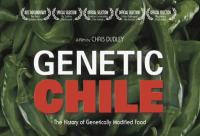
This film uses the New Mexico chile pepper to investigate genetically modified foods and criticizes the practices of the companies involved.

This undated pseudonymous document describes elements to consider when starting an Earth First! group.
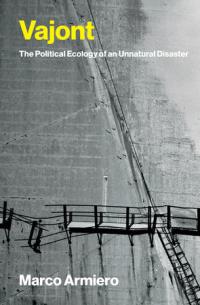
Full open-access volume Vajont: The Political Ecology of an Unnatural Disaster (2026) by Marco Armiero.

This article argues that Lin Zhao’s novel Chao Xi Tu provides a timely literary reworlding of the delta and its amphibious, more-than-human materialities, while mounting a powerful critique of Anthropocene violence, a force that continues to extract from and marginalize both the delta’s amphibious matter and its forms of knowledge.