


Arcadia
Epistemological Negotiations of “the Fly” and Native Reserves in Colonial Zambia
In former Northern Rhodesia, the case of the Tsetse fly shows how knowledge has been co-created by humans and nonhumans.
In former Northern Rhodesia, the case of the Tsetse fly shows how knowledge has been co-created by humans and nonhumans.
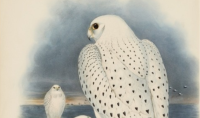
In April of 1191, a gyrfalcon from the far north flew over Acre. How did it get there? Did it feel hot? Can one use scant medieval sources to explore the experiences of a bird that lived at the end of the twelfth century?

Care is not simply an ethical disposition or a practice of lifemaking but a political struggle to defend and transform the conditions through which human and more-than-human life is sustained.
Full book of Urbanizing the Future: A New City Project in Agrarian South India by Carol Upadhya.

Multispecies research relies on multisensory methods to know other earthly beings. This new mode of research faces a double challenge: how to know others in multi-sensory ways and how to document and communicate them back to a human audience.

Environmental lawyer Valeria Berros interviews the Rachel Carson Center’s founding director Christof Mauch on his notion of slow hope.

Excerpt from Rivers on the Move: Waterways in Human Life from the Ice Age to the Anthropocene, edited by Bathsheba Demuth, Mark A. Healey, Giacomo Parrinello, and Laurence C. Smith.

This article investigates the reception and legacy of the German geographer Ernst Herrmann, who was the first explorer to make a colour film of the Arctic.

This article argues for reforms to university governance and accountability that establish faculty oversight of donor agreements, calling for systematic research into corporate capture and the conditions under which faculty unions and collective organizing can defend and expand shared governance.

In 1855, John Dominy created the first human-mediated hybrid orchid, paving the way for a unique symbiotic relationship between people and plants.