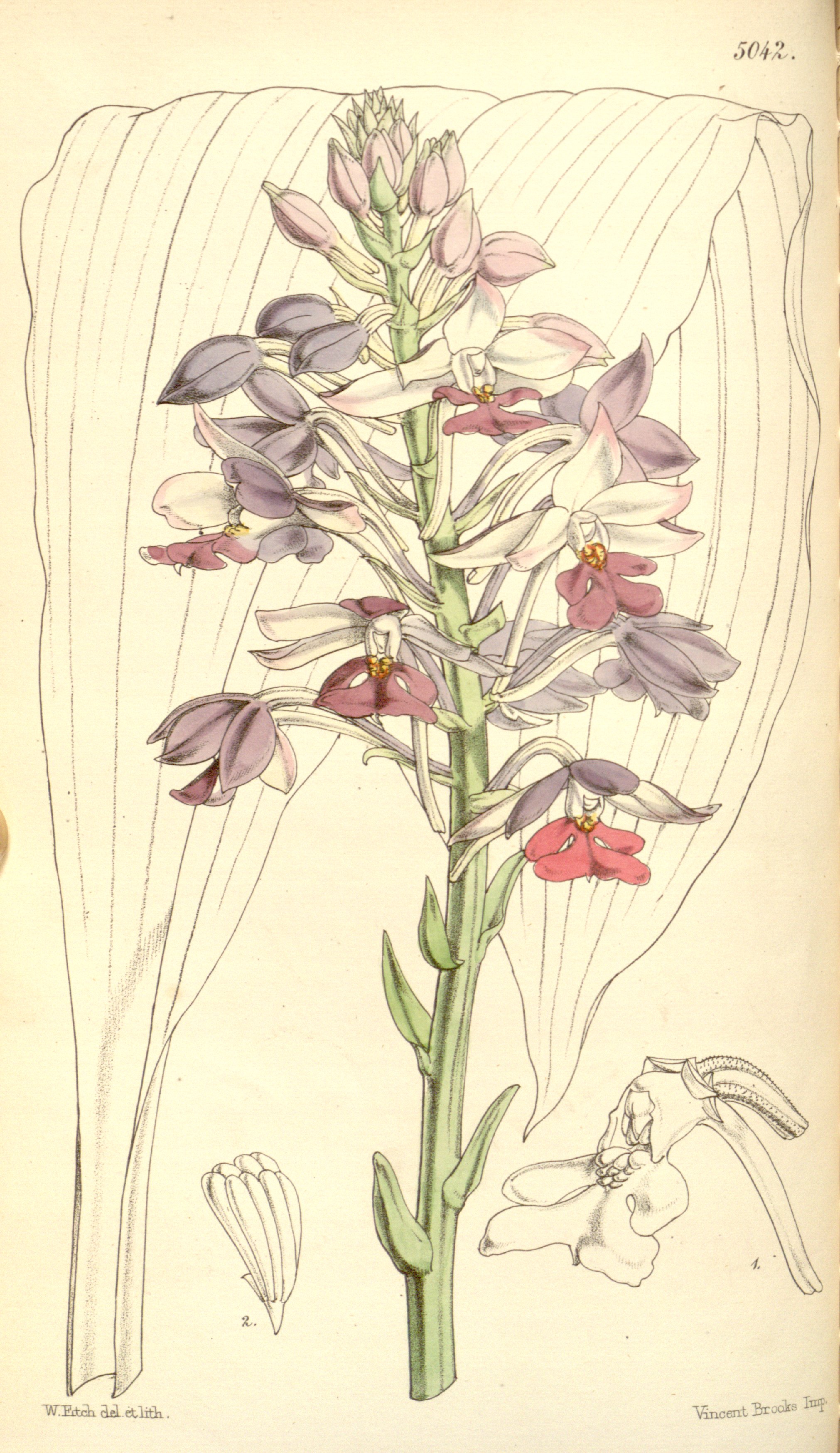
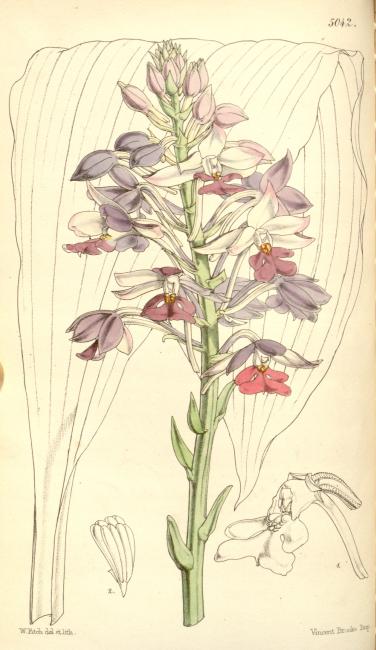
Fig. 1. Calanthe × dominii.
Fig. 1. Calanthe × dominii.
Originally from Curtis’s Botanical Magazine, vol. 84 (Ser. 3 no. 14) pl. 5042. Click here to view Wikimedia source.
 This work is licensed under a Creative Commons Public Domain Mark 1.0 License.
In 1855, John Dominy (1816–1891), a horticulturist at Veitch Nurseries in Chelsea, London, used the pollen of Calanthe furcata to fertilize Calanthe masuca. The result: the first documented human-created hybrid orchid, Calanthe × dominii. Dominy’s success marked the beginning of an unprecedented, capitalist-shaped mutualist relation whereby professional and amateur horticulturists turned into dedicated pollinators. Unlike nectar-seeking insects, the reward for these human pollinators was the beauty of often extravagant varieties of orchids, anthuriums, or begonias not found in nature. Once in the market, these new varieties provided the hybridizers and the nurseries they worked for a constant flow of money. Meanwhile, the plants (although transformed into another entity) ensured the persistence of their genetic material. This profit-driven creation of hybrids, however, unfolded without knowledge of the mechanisms governing interbreeding and heredity discovered by Gregor Mendel in 1866 (and first publicized in 1900). Without epistemological guidance, interbreeding was a blind process of trial and error in which hybridizers rarely knew the outcome of their experiments in advance.
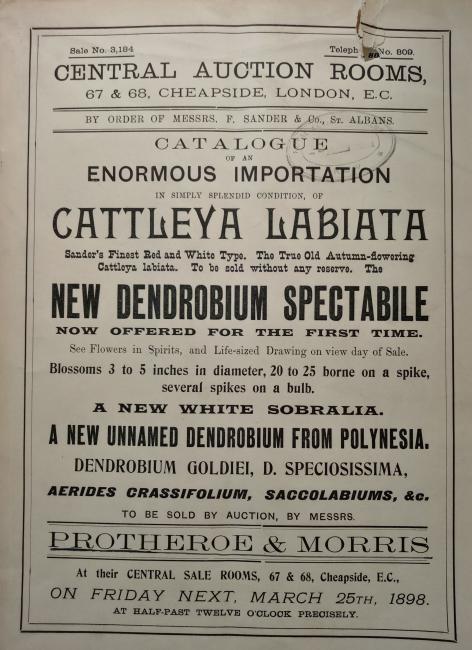
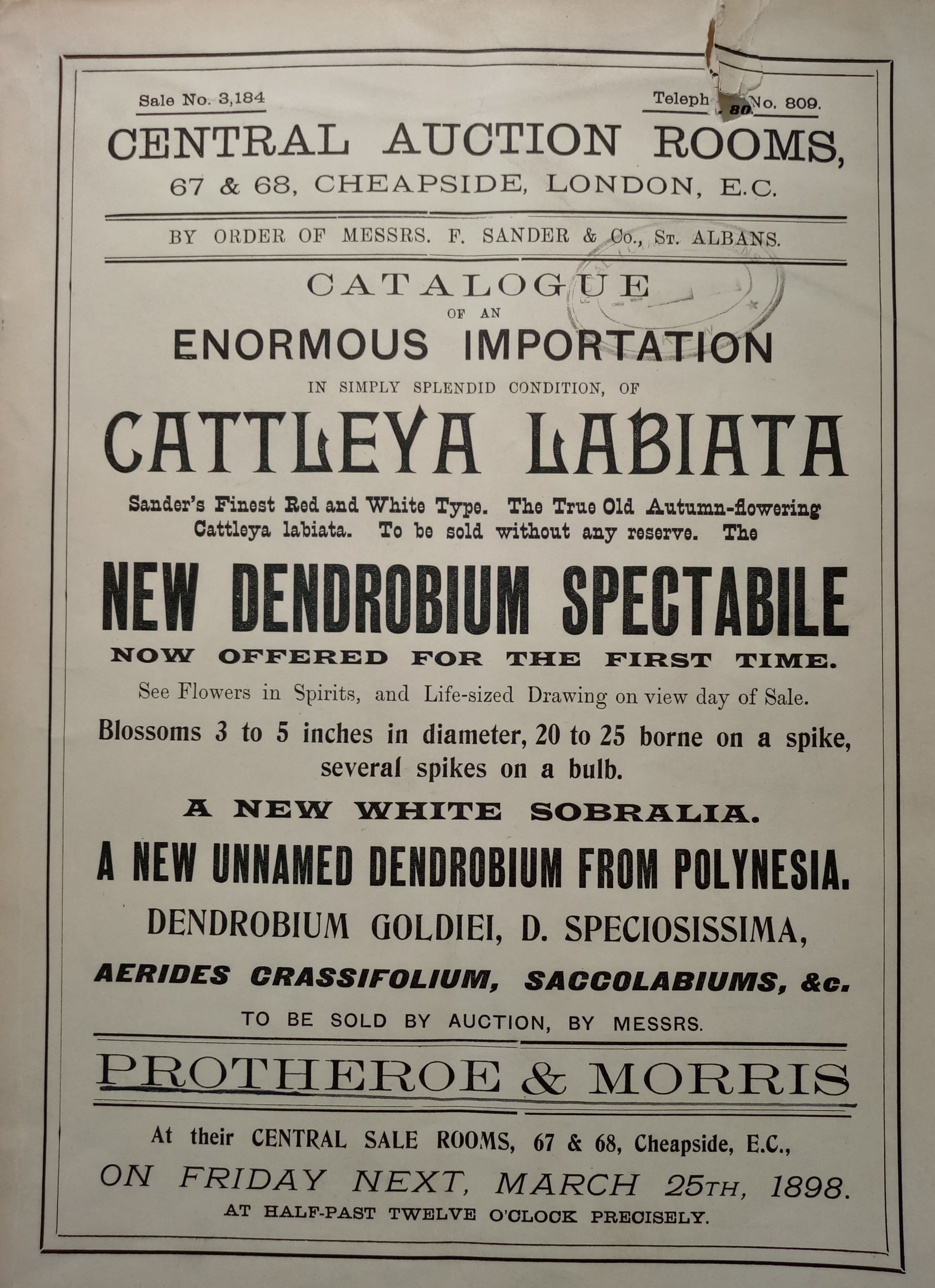
Fig. 2. Advertising calling for an auction of orchids in London, including a “new unnamed Dendrobium from Polynesia,” 1898.
Fig. 2. Advertising calling for an auction of orchids in London, including a “new unnamed Dendrobium from Polynesia,” 1898.
Courtesy of the Kew Gardens Library
This work is licensed under a Creative Commons Public Domain Mark 1.0 License.
This particular interaction between plants and Europeans was shaped by the nineteenth-century’s growing bourgeois class, who embraced “exotic” plants as symbols of wealth, sophistication, and social status. While monarchs and their allies had long exhibited a devotion to non-European plants, the size of the bourgeois class pushed up demand, and the nurseries that had emerged during previous decades were ready to supply it. In the United Kingdom in particular, plant collectors extracted millions of plants from distant ecosystems for both imperial organizations such as Kew Gardens and private nurseries such as William Bull, Loddiges, and Veitch. After deforesting big areas and depleting entire populations of plants, these collectors sent their cargo to Europe. Once there, the plants were acclimatized and asexually replicated, before being advertized in high-end catalogues, in many instances without a defined name. The market for exotic plants was thus often fed with plants that had not been formally described through the taxonomic apparatus devoted to giving identity to every new species.
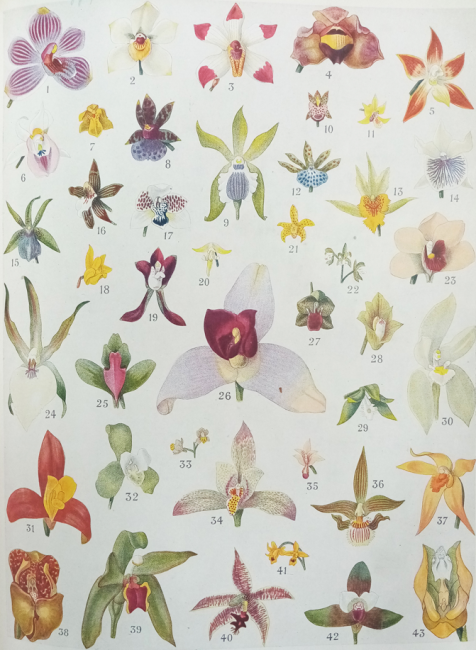
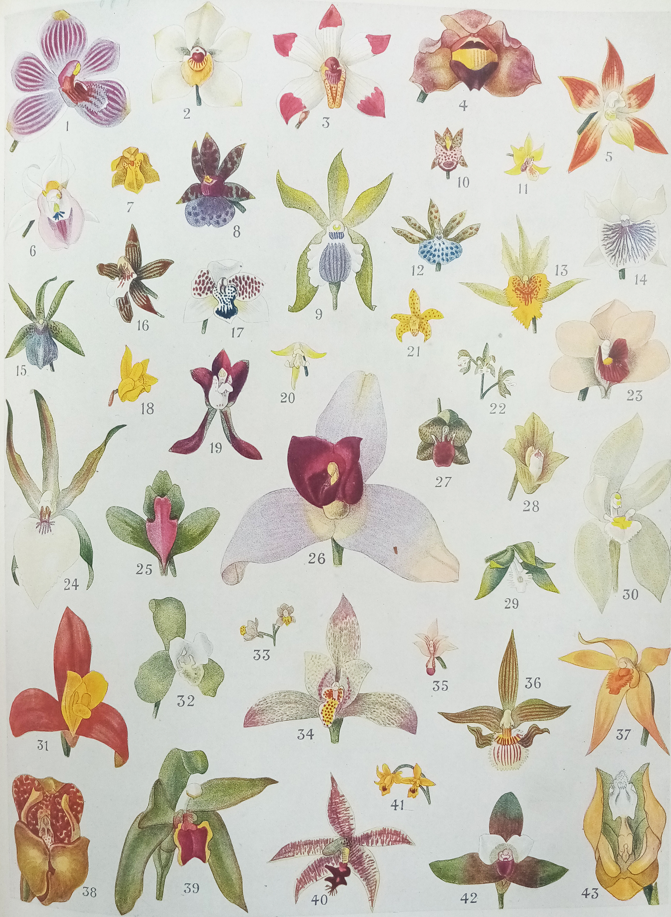
Fig. 3. Natural diversity in the orchid genus Pescatorea.
Fig. 3. Natural diversity in the orchid genus Pescatorea.
Source: Atlas en Couleurs des Orchidées Cultivée by Julien Constatin, 1912.
This work is licensed under a Creative Commons Public Domain Mark 1.0 License.
The emergence of hybridization radically altered the dynamics of this market, which until then had relied on the limited diversity in wild plant communities (Figure 3). Hybrids represented a theoretically limitless source of novelty. Created by a sort of genetic permutation, the mixing of species added new shapes, colors, and sizes to the catalogue of exotic plants, expanding the range of available ornamental species. Importantly, this could only happen because plants such as orchids, begonias, bromeliads, and anthuriums hybridized naturally. Their large, vibrant, and unique flowers and leaves had already given them a central place in the market for “exotic” plants, and horticulturists now exploited their natural tendency for hybridization for experimentation and profitability through the creation of novel varieties. In turn, some of the genetic identity of the plants survived in a kind of botanical disguise.
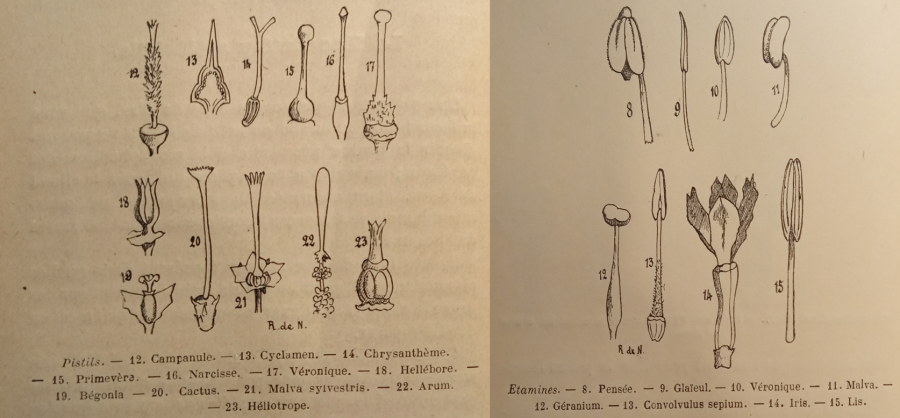
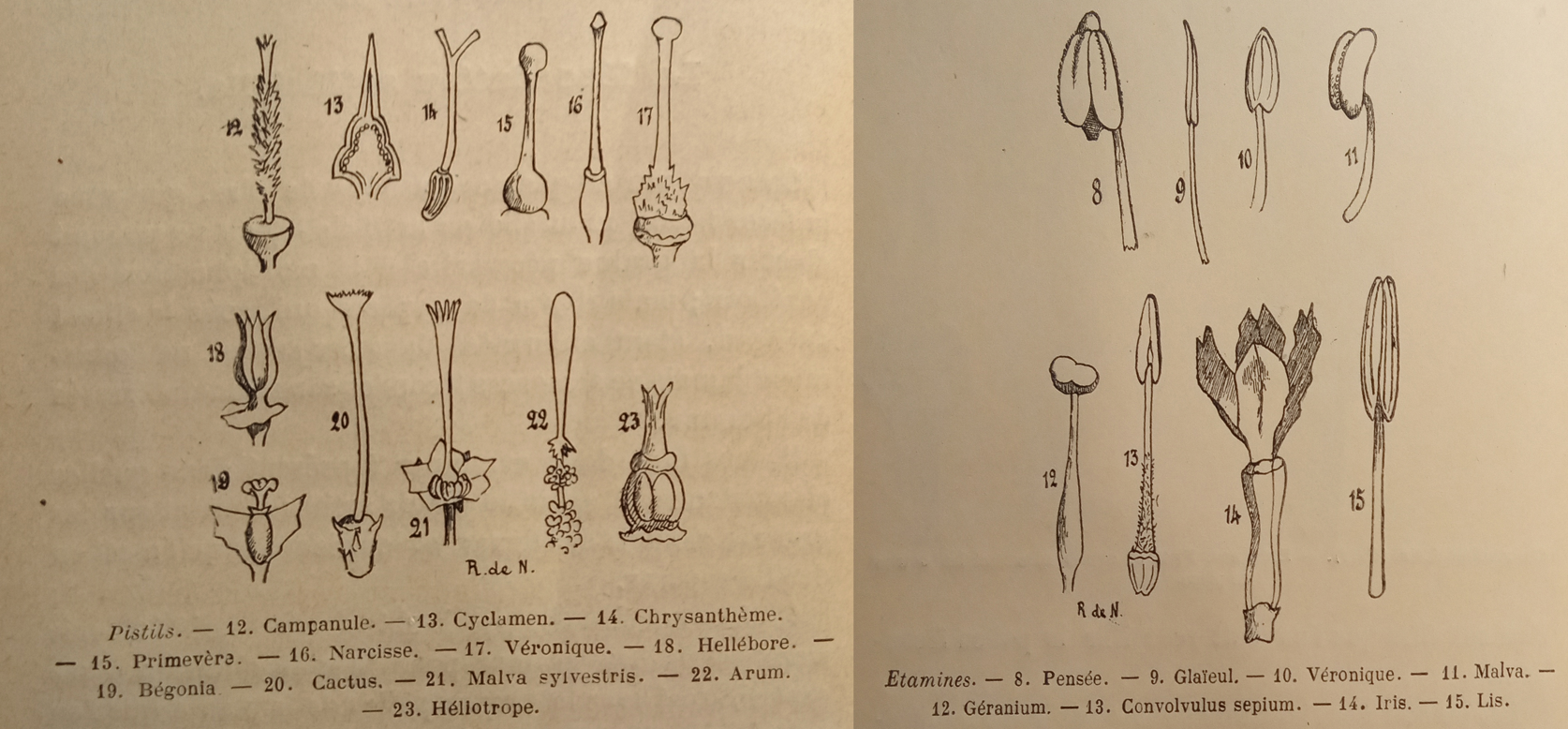
Fig. 4. Study on pistils and stamens, 1857.
Fig. 4. Study on pistils and stamens, 1857.
Source: L’Hibridisation des Plans by Raphael de Noter, 1857.
This work is licensed under a Creative Commons Public Domain Mark 1.0 License.
In this mutualistic interaction between plants and their hybridizers, the latter became pollinators. Their work involved facilitating sexual connections between plants that, as inhabitants of entirely different environments or even separate continents, would never have come into contact otherwise. As a result, many hybridization manuals show how this “anthro-pollination” of ornamental plants brought about a renewed focus on the sexual organs of plants, much as Linnaeus’s Species Plantarum had done. Interestingly, these guides, which detailed practical methods for breeding plants, also introduced a conceptual universe that conflated animal sexuality with that of plants. For instance, with the active hybridization of orchids, anthuriums, and other plants, terms such as “emasculated” or “castrated” flowers, which had been initially used during the seventeenth and eighteenth centuries, regained currency. This hyper-focus on the sexuality of plants may be attributable to the lack of knowledge of the patterns governing heredity, later discovered by Mendel. The evidence also shows that the careful selection of parent plants, cross-pollination, and years of cultivation meant hybrids were slow to produce, and their outcomes remained unpredictable. This made them unique exponents of rare diversity and elevated them to the status of luxury goods for the elite.
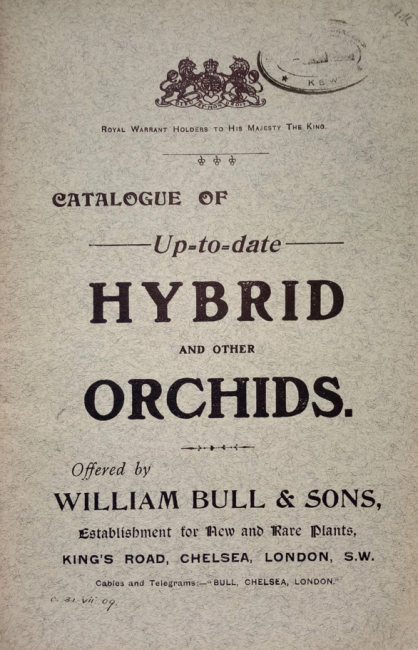
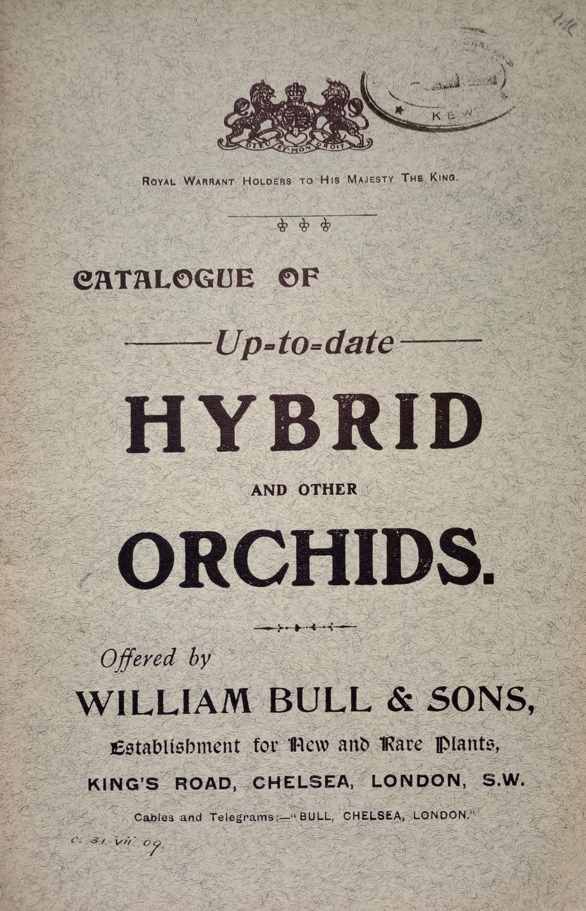
Fig. 5. William Bull’s 1904 catalogue of hybrid orchids.
Fig. 5. William Bull’s 1904 catalogue of hybrid orchids.
Courtesy of the Kew Gardens Library.
This work is licensed under a Creative Commons Public Domain Mark 1.0 License.
The opportunities that hybrids brought to the ornamental plant market were not necessarily celebrated by taxonomists. The dual nature of hybrids did not fit within the architecture of taxonomic practice, which was structured around types with a set of discrete traits that delimited the extension of what could be named as a species. Joseph Dalton Hooker, Director of Kew Gardens (1865–1885), observed how hybridization was “an agent in confusing species.” For Hooker, these “spurious” hybrids challenged the taxonomist’s conception of the natural order. Simply put, they did not fit into a world compartmentalized by fixed species boundaries, necessitating the creation of a new taxonomy for these plants. The naming conventions for these plants reflected not only the parental species of each hybrid but also the person by whom and place in which they were developed. Half product of nature and half product of hybridizers, these chimerical plants were the result of economic, social and biological forces—and they were “artificial” botanical entities in the eyes of taxonomists.
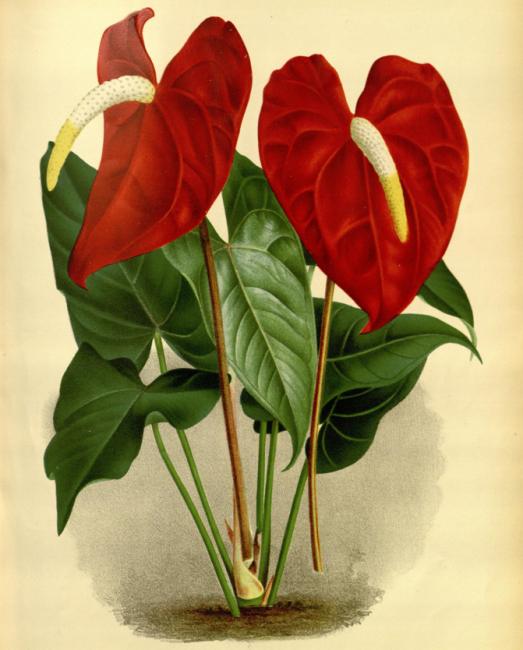
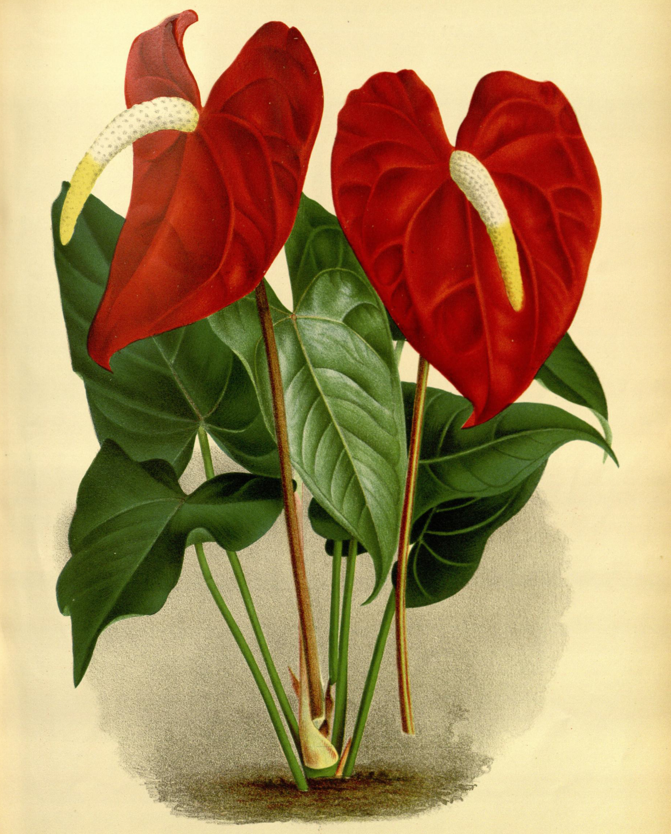
Fig. 6. Anthurium x desmetianum, a product of the hibridization of A. scherzerianum and Anthurium andraeanum.
Fig. 6. Anthurium x desmetianum, a product of the hibridization of A. scherzerianum and Anthurium andraeanum.
Source: L’Illustrastration Horticole. Courtesy of the Kew Gardens Library.
This work is licensed under a Creative Commons Public Domain Mark 1.0 License.
The nineteenth-century hybridization craze, driven by market forces and experimentation, reshaped both the ornamental plant market and scientific conventions. Without a guiding framework, hybridizers relied on empirical methods to create a vast diversity of plants. However, the fever for “exotic” plants began to decline by the end of the century, when tastes shifted toward native species and “naturalistic” gardens. Paradoxically, it was in 1900 that Mendel’s work was rediscovered, sparking a new era in genetics. Had it been acknowledged earlier, it could have guided the hybridization efforts. Nevertheless, as exemplified by the omnipresence of Anthurium andraeanum varieties in today’s supermarkets, the hybrids produced then remain enduring symbols of this unique era of collaboration between plants and their hybridizers.
Primary Sources
- Darwin, Charles. On the Various Contrivances by Which British and Foreign Orchids Are Fertilised by Insects, and on the Good Effects of Intercrossing. London: John Murray, 1862.
- Hooker, William. Introductory Essay to the Flora of New Zealand. London: L. Reeve, 1853. https://darwin-online.org.uk/converted/pdf/1853_Hooker_New_Zealand_CUL-DAR.LIB.291.pdf.
- Mendel, Gregor. “Experiments in Hybridisation.” Journal of the Royal Horticultural Society 26 (1901): 1–32. https://www.biodiversitylibrary.org/item/164047#page/9/mode/1up
- Noter, Raphaël de. L’hybridation des plantes. Paris: Charles Amat, 1857. https://catalog.hathitrust.org/Record/006852675.
- Roberts, H. F., and Gregor Mendel. Plant Hybridization Before Mendel. Princeton: Princeton University Press, 1929. doi:10.5962/bhl.title.4517.
- Veitch, James Herbert. Hortus Veitchii: A History of the Rise and Progress of the Nurseries of Messrs. James Veitch and Sons, Together with an Account of the Botanical Collectors and Hybridists Employed by Them and a List of the Most Remarkable of Their Introductions. London: J. Veitch & Sons, 1906. http://archive.org/details/hortusveitchiihi00veitrich.
How to cite
Molina, Diego. “Anthro-Pollination: The Nineteenth-Century Production of Hybrid Ornamental Plants.” Environment & Society Portal, Arcadia (Autumn 2026), no. 15. Rachel Carson Center for Environment and Society. doi:10.5282/rcc/10179.
ISSN 2199-3408
Environment & Society Portal, Arcadia
 This work is licensed under a Creative Commons Attribution 4.0 International License.
2026 Diego Molina
This refers only to the text and does not include any image rights.
Please click on an image to view its individual rights status.
- Alcorn, Keith. “‘His Utter Unfitness for a Commercial Collector’: Sponsorship of Exotic Plant Collecting in Early Nineteenth-Century Britain.” Journal of the History of Collections 35, no. 2 (2023): 347–62. doi:10.1093/jhc/fhac032.
- Endersby, Jim. Orchid: A Cultural History. Chicago: University of Chicago Press, 2016.
- Kingsbury, Noel. Hybrid: The History and Science of Plant Breeding. Chicago, IL: University of Chicago Press, 2009.