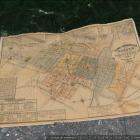
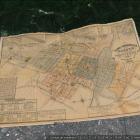
Map: CB&Q map of Chicago, 1880
This 1880 map centered on Chicago displays the early CB&Q railroad route.
This 1880 map centered on Chicago displays the early CB&Q railroad route.
Longley traces how geographic and cartographic knowledge of the Athabasca region, Alberta, Canada, colonized the region in the southern imagination long before the oil sands industry began extraction there. The practices of exploration, surveying, and documentation mapped the Athabasca region in terms of its rich bitumen deposits, obscuring the histories of Indigenous people. The south gained political and economic control of the region, although this process is incomplete and contested.
Dudley draws on her experience of researching the Severn River, UK, to reflect on what it means to know a place. The river is constituted through legal documents, maps, regulations, through the lived experience of recreational users, and through imaginative and artistic practices. These multiple ways of knowing a river can inform philosophies of place and space.
This study reviews the main changes of the vegetation and fauna in northern Portugal during the Holocene, using literature from palaeoecology, archaeology, history, writings from travellers and naturalists, maps of agriculture and forestry and expert consultation.
Los mapas son representaciones más políticas que objetivas sobre un lugar. Al seleccionar y codificar algunas piezas de información, mientras se silencian otras, los mapas funcionan como discursos políticos y son usados como “órdenes de marcha” para construir geografías.
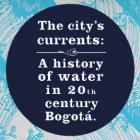
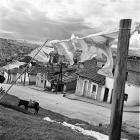
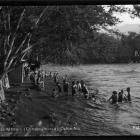
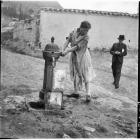
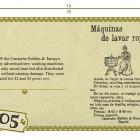
Esta exposición explora el rol del agua en la lucha de Bogotá, capital de Colombia, por convertirse en una ciudad moderna. Para Bogotá, cumplir con los estándares de los higienistas y la élite gobernante fue una tarea de control social, tecnológico y ambiental. Esta exposición examina experiencias cotidianas del agua como el lavado de la ropa o la limpieza del cuerpo, al mismo tiempo que estudia intervenciones de infraestructura urbana que incluyeron la domesticación de los ríos para el abastecimiento de agua potable y la evacuación de aguas residuales.
Stefania Gallini, Laura Felacio, Angélica Agredo y Stephanie Garcés



Wild Earth 10, no. 2 is dedicated to US national parks and protected areas. It also features articles by John Muir on anthropocentrism and James Morton Turner on early American environmentalism.
Maps are political rather than objective representations of a place. By selecting some pieces of information and codifying them, while silencing others, maps work as political discourses and are used as “marching orders” of geographies to be built.
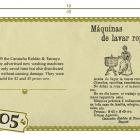
This exhibition explores the role of water in the struggle of Colombia’s capital to become a modern city. For Bogotá, complying with the standards of sanitary reformers and the governing elite was a social, technological, and environmental control endeavor. The exhibition examines everyday and gendered experiences of water, such as washing clothes or bathing, as well as urban infrastructural interventions including the domestication of rivers for water supply and wastewater disposal systems.
Stefania Gallini, Laura Felacio, Angélica Agredo, and Stephanie Garcés The challenges for mountain fieldwork today are different than those faced by researchers a century ago. This article looks at differences in funding, surveying practices, and academic networks and debate.
This issue of RCC Perspectives uses mountains as a common denominator around which to discuss overarching challenges of environmental history: challenges relating not only to mountain landscapes, but also to broader questions of sources, methods, cross-cultural research, project scale, and audience. Each author discusses some of their most intriguing discoveries, resulting in a brief and diverse collection of environmental history snapshots.
Content