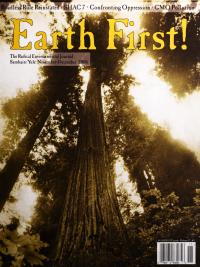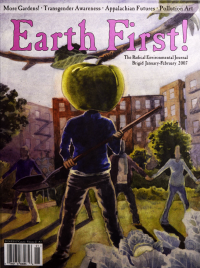
Earth First! 27, no. 5
Earth First! 27, no. 5 features topics such as the true bioregional way, New York City’s community gardens, the G8 summit in Heiligendamm, Germany, unsustainable activism, and a safe traveling culture for activists.
Earth First! 27, no. 4 features Skyler Simmons’ report on the occupation of West Virginia’s governor by anti-coal environmentalists, the whale protecting “Operation Leviathan,” and Jenny Weber recounts the anti-logging action in Tasmania’s Weld Valley.
Earth First! 27, no. 3 features essays on the topics of animal testing, the Miami Superbowl protests, resistance and repression in Oaxaca, Mexico, nickel mining in Guatemala, and the role and place of sexuality within the environmental movement.
Earth First! 27, no. 2 features articles on nuclear resistance in Germany, Trinidad community’s fight against the Alcoa aluminum smelter, Molokai’i activists’ battle to “save the last Hawaiian island”, and the self-sustaining community Umoja Village Shantytown in Miami.
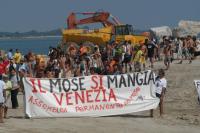
In the early 2000s, a coalition of citizen-activists in Venice denounced the state’s massive flood-barrier project, raising public participation in the fate of the lagoon.
In 1966, historian Albert Silbert highlighted the longstanding importance of fire in the traditional Portuguese rural economy, at a time when such practices were being erased from the landscape.
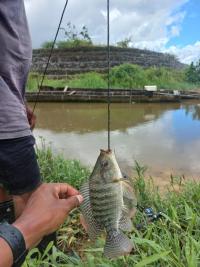
Indonesian state experts introduced invasive species into West Papua, a deliberate ecological disruption that advances a colonial agenda disguised as development.
To what extent did the unveiling of gas leaks “scale up” a Romanian technical problem into an EU environmental issue?
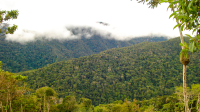
The Andean-Amazonian conservation area Cordillera Escalera reveals the history of a forest whose ecological integrity is due to the native population’s efforts to preserve it.
Tropical humidity necessitated a quest for rust-proof insect pins, determining which specimens could be preserved, which tools could be used, and ultimately what knowledge could be produced in the Dutch East Indies.