“Whoever throws themselves down in the dirt, / they will equally become dirty. / Whoever wants to live with swine, / will learn how to grunt” warns medieval Dutch poet Dirc Potter in “Der Minnen Loep.” In the last decade, in the 436 km2 peninsula of Karaburun—located on the Aegean Sea in the İzmir province of Turkey, where 8,799 people live spread over two towns and 13 villages—learning how to keep living with nonhumans like swine has become a troublesome matter indeed.

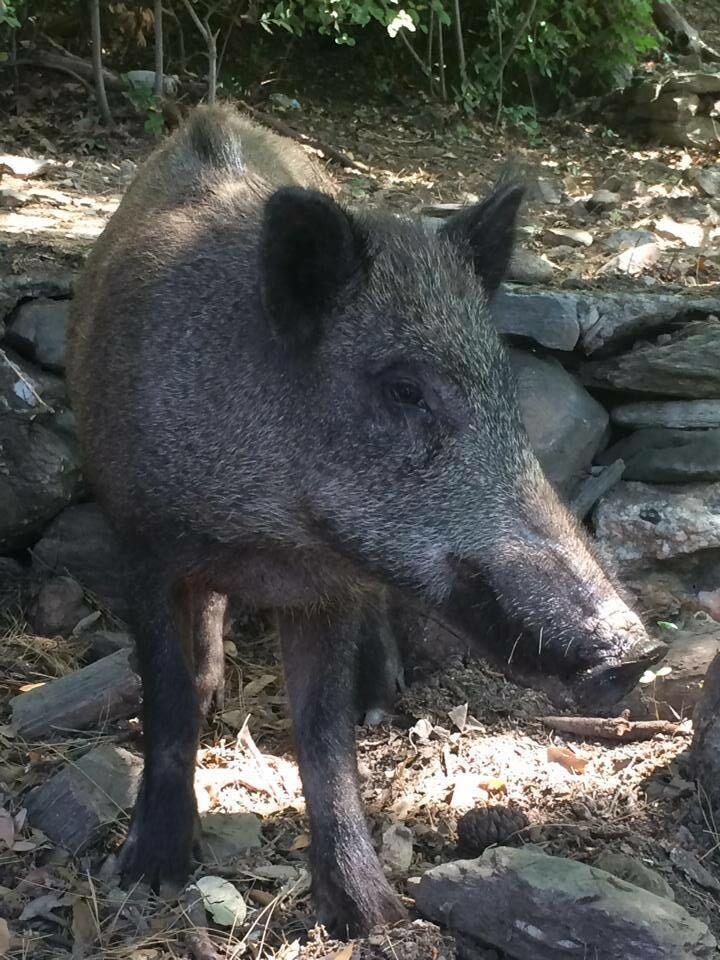
Anatolian boar (Sus scrofa libycus)
Anatolian boar (Sus scrofa libycus)
Photo by Henri Bergius. Click here to view Wikimedia source
 This work is licensed under a Creative Commons Attribution-ShareAlike 4.0 International License.
In the twenty years since governmental interest in developing the region began, the peninsula underwent numerous infrastructural developments and a great deal of construction in the form of hydroelectric dams, eolic and solar energy farms, stone quarries, geothermal power plants, fish farms, roads, sewers, gated holiday villages, hotels, olive plantations, olive oil processing plants, and more. To many, including the eolic energy companies, the leasing of 89 percent of a peninsula so famous for its windiness since antiquity that it was named after Mimas, the titan of wind, can be seen as an attempt to form more sustainable relations with nature. The Lodos Energy Company advertises on its webpage that their 87 turbines produce 900 GWh of energy annually, providing clean energy for 475,000 households. What they don’t advertise is the fact that, during the land grading process, they illegally uprooted thousands of olive trees, which the local humans and non-humans relied on for economic benefit, sustenance, or shelter.
Since 1939, olive trees in Turkey enjoyed a special protection status under law no. 3573 that banned construction on lands designated to be olive orchards, although exceptions to undermine this law were repeatedly proposed in the national assembly for years. In July 2025, an addendum to the law was made to allow energy and mining corporations to clear olive orchards, provided that they would plant twice the number of trees after the conclusion of their operations. While the addendum was described as a “Death Decree for Olive Orchards” by the oppositional news agencies, agencies aligned with the government published statistics showing that the number of olive trees doubled since the ruling AKP party first came to power.
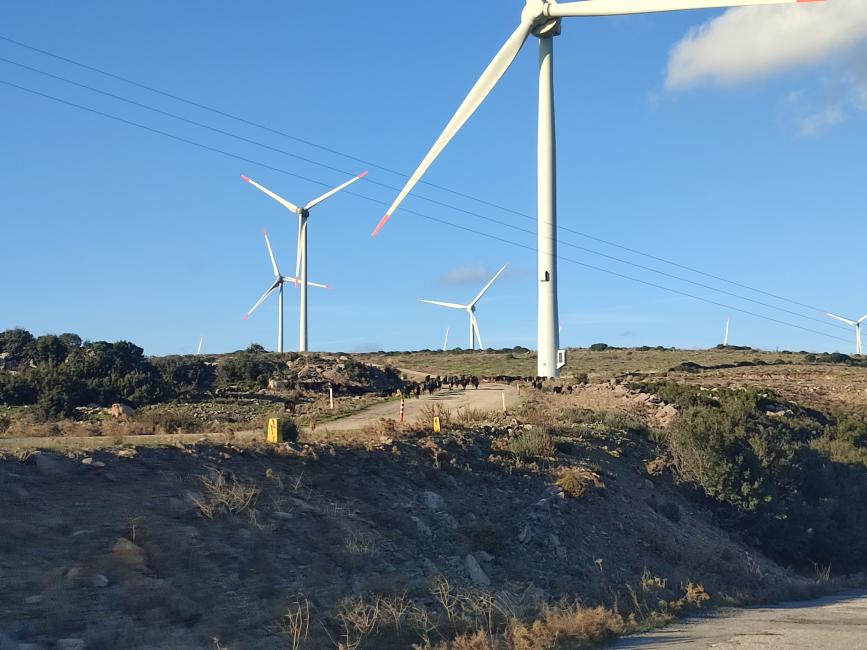
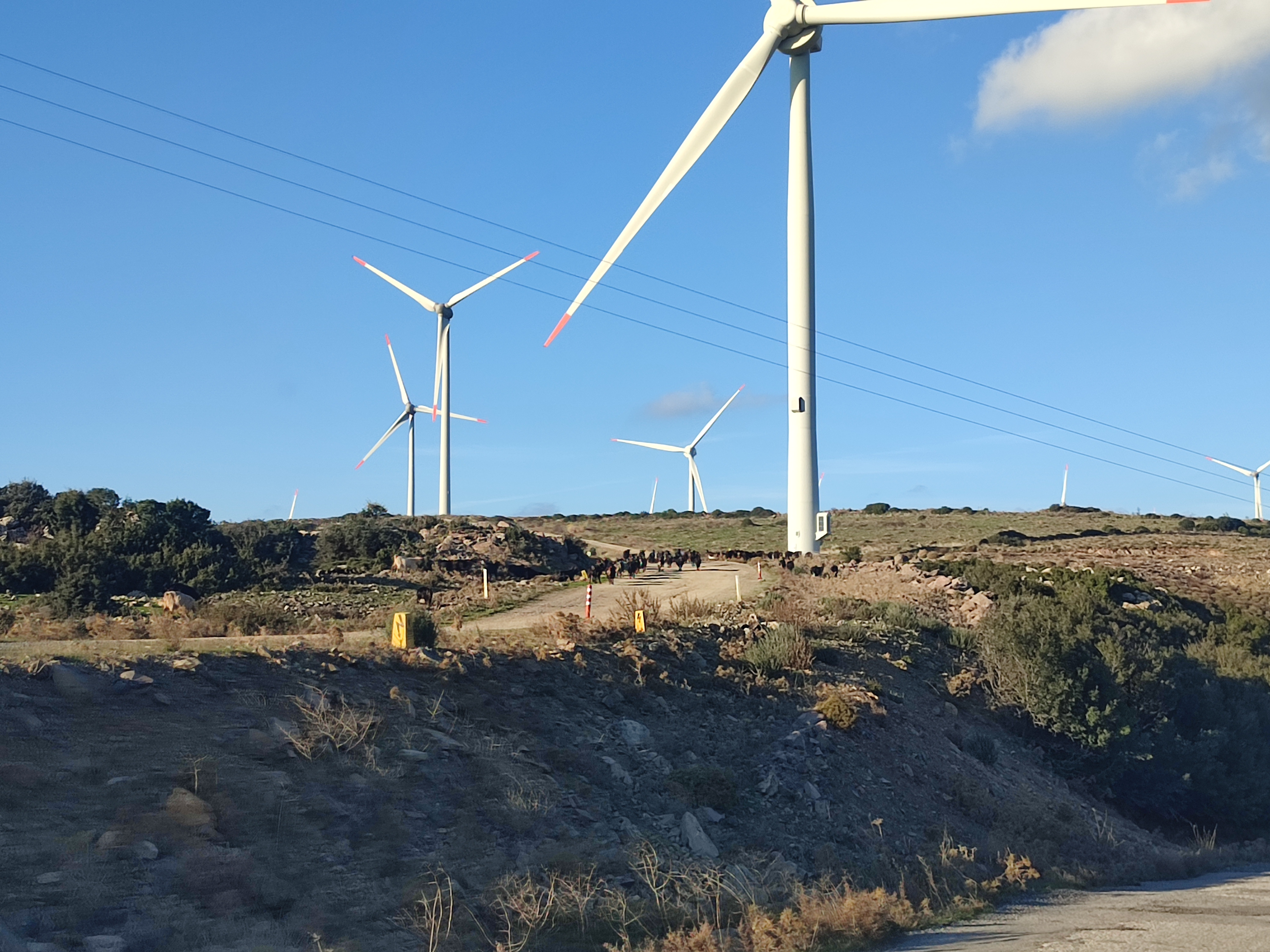
A herd of Anatolian black goats walking on concrete roads between turbines—on land that used to be their grazing grounds near Yayla village
A herd of Anatolian black goats walking on concrete roads between turbines—on land that used to be their grazing grounds near Yayla village
Photo by Efe Cengiz
 This work is licensed under a Creative Commons Attribution 4.0 International License.
In their article “Developing with Olives,” economists Fikret Adaman and Orkun Doğan explain how such neoliberal strategies—which reduce the complex totality of rural relations to measurable and interchangeable assets—contribute to the accumulation of rural capital at the hands of large companies by dispossessing peasants (Tiryakioğlu 2020). Thousands of villagers who marched to Ankara to protest the addendum did not care for the enumeration of trees as assets, but for the suspension of ecological relations:
We, the villagers, the farmers, the producers, those who are being victimized, are here in Ankara today… . Today, the cows protested and did not give milk. Today, the sheep, the goats, all the animals are protesting like us. Today, the wheat is not being harvested, the chickpeas, the sesame seeds are not being harvested… . We have come here to be the voice of the olives, the voice of the streams, the voice of our land, our villages, our animals, our birds, our wolves. (BirGün, 2025)
Villagers of Karaburun similarly present themselves as a vital part of local rural and agricultural relations, underlining their knowledge of local multispecies relations and giving a voice to birds, wolves, and boars. They argue, therefore, that their being dispossessed of land implies ruin. I spent the second half of 2023 conducting fieldwork on olive agriculture in Karaburun, asking locals about olives and being told stories of multispecies relations disrupted and reorganized by poorly planned developmental construction.
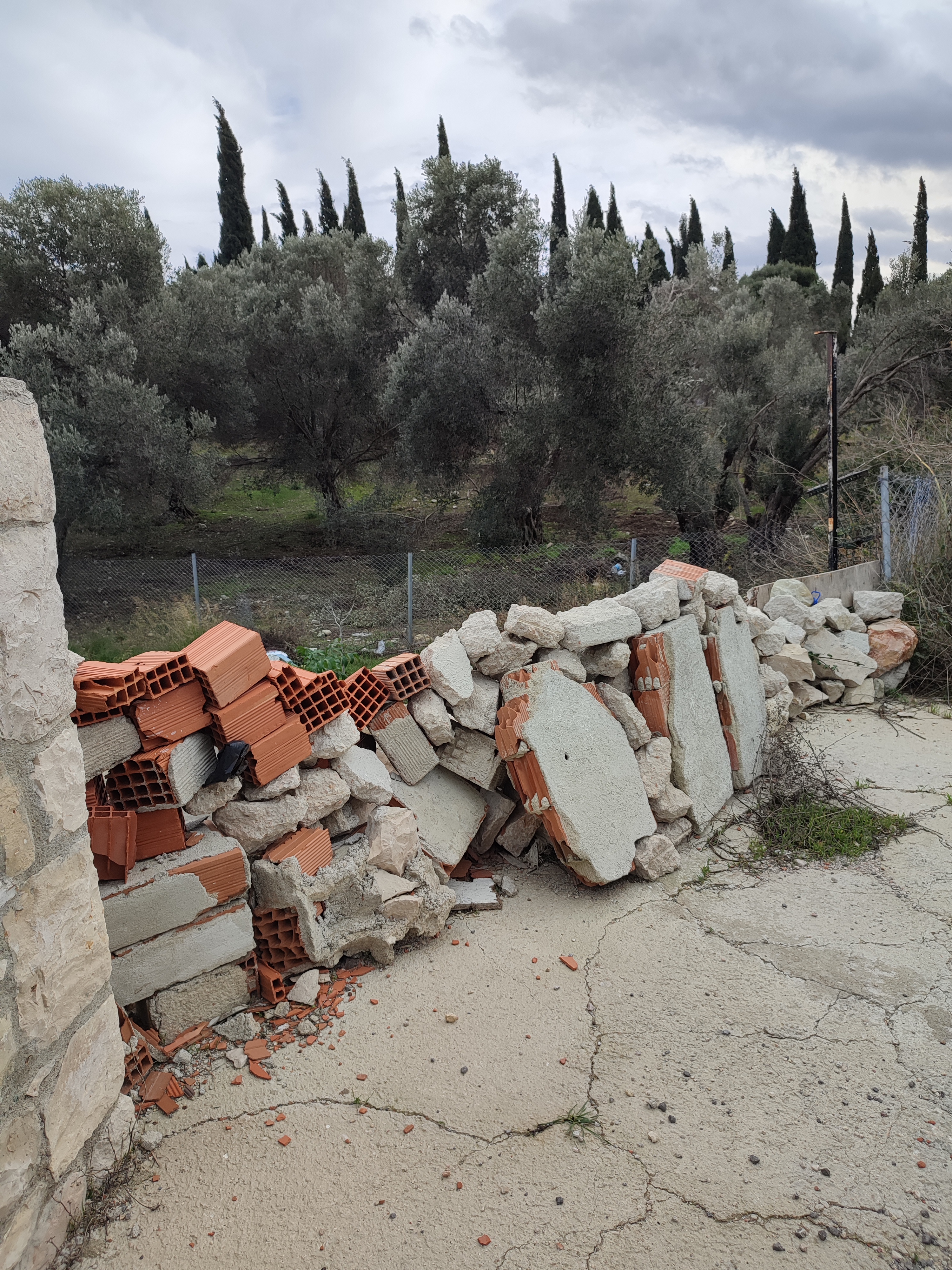
Makeshift wall to keep the boars out of a small artichoke field in İnecik village.
Makeshift wall to keep the boars out of a small artichoke field in İnecik village.
Photo by Efe Cengiz
This work is licensed under a Creative Commons Attribution 4.0 International License.
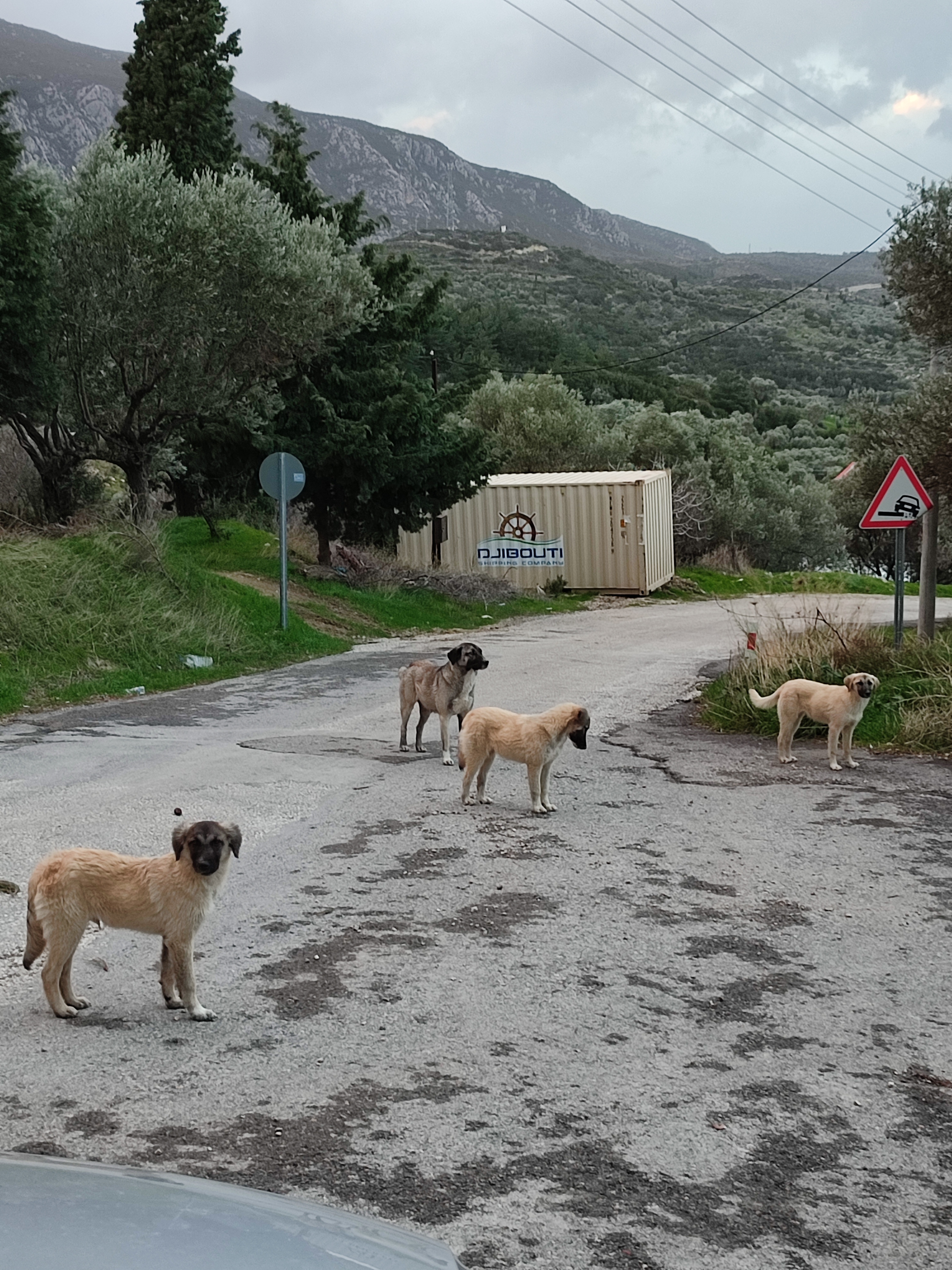
On the road climbing up to Yayla village, surrounded on all sides by newly built wind turbines, a shepherd told me that the walls of the İzmir-Çeşme highway that run through the southern side of the peninsula—effectively blocking off the access of roaming predators such as bears and wolves—caused the increase in the local boar population and the extinction of local predators. A former member of the Karaburun town council explained how they organized local resistance against the wind energy companies’ expansion plans by inviting environmental NGOs to conduct studies on the effects of the operation of wind turbines on local birds and bat populations. This was in response to villagers’ reports that the dwindling numbers caused by the turbines were in turn causing an uptick in pest-related harm in their olive fields, since the birds and bats couldn’t perform their ecological tasks. A sturdy old man, introduced to me only as “Hurricane,” led the collective effort in explaining to me how fences were a sad new technology in Eğlenhoca village, where the doors used to not have keyholes. According to the passionate villagers at the coffeehouse, fences were first built in the region by energy companies and rental agencies to mark their property lines, blocking off access to old grazing grounds for domestic and wild animals alike. When boars began frequenting the fields of villages and gardens of touristy neighborhoods for food, more fences went up and guard dogs were purchased by those with the means. As these dogs were abandoned over time by tourists heading back home and locals unable to care for them, feral bands began roaming the towns and villages, causing even further concern for safety, and more fence construction.
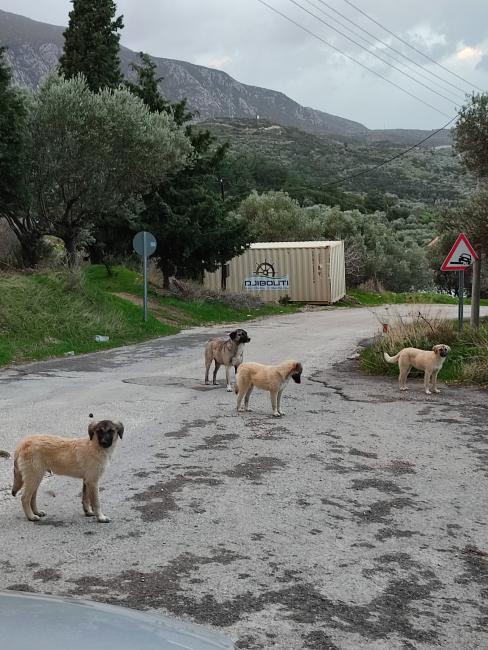
Band of young stray dogs roaming village roads.
Band of young stray dogs roaming village roads.
Photo by Efe Cengiz
This work is licensed under a Creative Commons Attribution 4.0 International License.
These are but a few examples of the locals’ sensibilities for what anthropologist Anna Tsing calls the “arts of noticing,” a careful awareness displayed towards multispecies connectivity and the power held by nonhumans as agents within and of environmental changes. In its Peninsula Sustainable Development Strategy 2014–2023, İzmir Development Agency (İZKA) mentions boars only as part of the fauna. In contrast, the villagers keep bringing them up in ways that help them challenge ongoing development in the region. The insistence displayed by the villagers on discussing more-than-human effects and consequences of development—at city council and environmental impact assessment meetings, or when being interviewed by me—is demonstrative of their attempts to be taken seriously as knowers capable of governing their landscapes.
Like the villagers, we can only hope that these struggles for environmental and epistemic justice will bear better fruit next season; otherwise, as the medieval English saying goes: “Nu hit ys on swines dome, cwæð se ceorl sæt on eoferes hricge” (“now it is in the judgement of the pig, said the man who sat on the boar’s back”).
How to cite
Cengiz, Efe. “Insisting on Boars: How Villagers of Karaburun Employ their Knowledge of Multispecies Entanglements in Local Power Struggles.” Environment & Society Portal, Arcadia (Spring 2026), no. 2. Rachel Carson Center for Environment and Society. doi:10.5282/rcc/10056.
ISSN 2199-3408
Environment & Society Portal, Arcadia
This work is licensed under a Creative Commons Attribution 4.0 International License.
2026 Efe Cengiz
This refers only to the text and does not include any image rights.
Please click on an image to view its individual rights status.
- Akdemir, Özer. Rüzgarlı Mimas Uyanmazsa [If the windy Mimas doesn’t awaken]. Sakin Kitap, 2023.
- İzmir Development Agency. Yarımada Sürdürülebilir Kalkınma Stratejişi [Peninsula sustainable development strategy]. İzmir, 2023. https://izka.org.tr/wp-content/uploads/pdf/14_yarimada_kalkinma_stratejisi.pdf.
- Malone, Karen. “Theorizing a Child–Dog Encounter in the Slums of La Paz Using Post-Humanistic Approaches in Order to Disrupt Universalisms in Current ‘Child in Nature’ Debates.” Children’s Geographies 14, no. 4 (2015): 390–407. doi:10.1080/14733285.2015.1077369.
- “Zeytinlikler tehlikede, köylüler Meclis’te” [Olive groves in danger, villagers in the parliament]. BirGün, 24 June 2025. Accessed 28 November 2025. https://www.birgun.net/haber/zeytinlikler-tehlikede-koyluler-meclis-te-madene-gomulmeyecegiz-633315.
- Tiryakioğlu, Murat, ed. Devletle Kalkınma: Fikret Şenses’e Armağan [Developing with the State: Gift to Fikret Şenses]. İletişim, 2020.
- Tsing, Anna, and Justin McGuirk. “‘Noticing is my way of opposing’: Anna Tsing in Conversation with Justin McGuirk.” Future Observatory Journal 2 (2024). https://fojournal.org/interview/anna-tsing-noticing-is-my-way-of-opposing/.
- Yıldırım, Ali Ekber. Üretme Tüket: İthalat-Siyaset-Rant Kıskacında Tarım [“Do not produce, consume: Agriculture in the grasp of imports, politics and development]. Sia Kitap, 2020.