Wild Earth 13, no. 4
Wild Earth 13, no. 4, focuses on the National Wildlife Refuge System with essays on its history, the wildlife refuge in Southeastern Oregon, wildlands ofthe Great Plains, and pronghorn extinction in the Sonoran Desert.
Wild Earth 13, no. 4, focuses on the National Wildlife Refuge System with essays on its history, the wildlife refuge in Southeastern Oregon, wildlands ofthe Great Plains, and pronghorn extinction in the Sonoran Desert.
Wild Earth 14, no. 3/4, is the last issue of the Wild Earth Journal. It presents essays on connectivity and long-distance migration in human-fragmented landscapes, the Great Bear Rainforest archipelago, and rewilding Patagonia.
In Wild Earth 5, no. 3 Wendell Berry writes about private property and the Commonwealth, Thomas P. Rooney reflects on global warming, and Paul J. Kalisz analyses sustainable silviculture in the hardwood forests of the eastern United States.
Fresh Kills Landfill in Staten Island, New York, was the subject of a struggle over where to dispose of the waste of a city strapped for space. While the landfill was closed in 2001, the events of 9/11 and the need to clear the large amounts of rubble and human remains from the site of the Twin Towers attack turned Fresh Kills into hallowed ground, which posed new questions about the future of the site.
Following catastrophic flooding of the Red River in 1950 in Winnipeg, citizens demanded a more permanent solution to flooding control in the city. The result was the Red River Floodway, a feat of engineering affectionately referred to as “Duff’s Ditch”.
The Sundarbans, one of the largest remaining areas of mangroves in the world with an exceptional level of biodiversity, is inscripted as a UNESCO World Heritage Site.
Corroded chemical drums from WR Grace and Company were discovered leaking trichloroethylene and perchloroethylene into the town’s water supply, causing childhood leukemia in several cases.

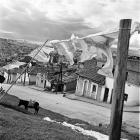
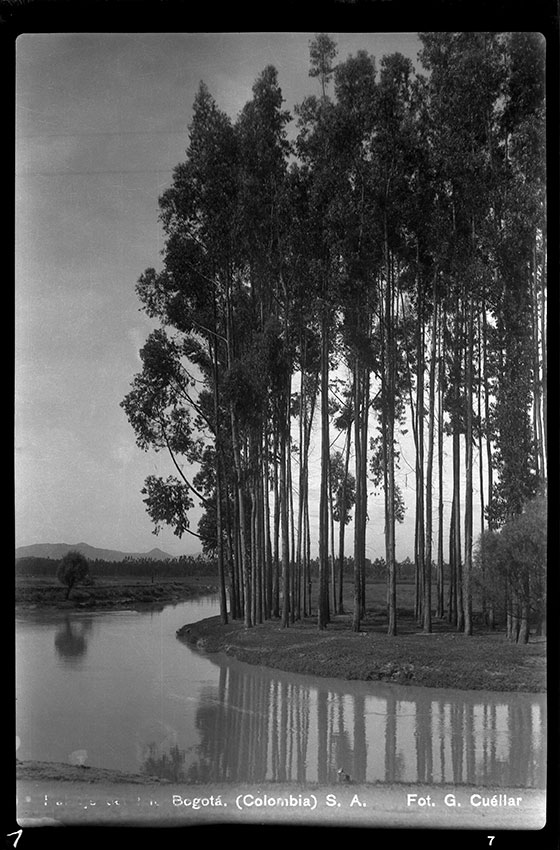
Paisaje del Río Bogotá (Colombia) S.A. The landscape of the Bogotá River. One of the riverbanks is planted entirely with eucalyptus. (Photograph by Gumersindo Cuéllar Jiménez. © Biblioteca Luis Ángel Arango.)
Paisaje del Río Bogotá (Colombia) S.A. The landscape of the Bogotá River. One of the riverbanks is planted entirely with eucalyptus. (Photograph by Gumersindo Cuéllar Jiménez. © Biblioteca Luis Ángel Arango.)
© Biblioteca Luis Ángel Arango. Banco de la República de Colombia. Courtesy of Mario Cuéllar Bobadilla. Collection Gumersindo Cuéllar Jiménez, Reference FT1676 brblaa791800-3.
The copyright holder reserves, or holds for their own use, all the rights provided by copyright law, such as distribution, performance, and creation of derivative works. https://rightsstatements.org/page/InC/1.0/?language=en.
This exhibition explores the role of water in the struggle of Colombia’s capital to become a modern city. For Bogotá, complying with the standards of sanitary reformers and the governing elite was a social, technological, and environmental control endeavor. The exhibition examines everyday and gendered experiences of water, such as washing clothes or bathing, as well as urban infrastructural interventions including the domestication of rivers for water supply and wastewater disposal systems.
Stefania Gallini, Laura Felacio, Angélica Agredo, and Stephanie Garcés