A Symphony of Summits. The Alps from Above
A geography and history of the Alps, filmed exclusively with aerial shots.
A geography and history of the Alps, filmed exclusively with aerial shots.
Wild Earth 6, no. 2 features Bill McKibben on nature writing and common ground, Laura Westra writes about ecosystem integrity, sustainability, and the “Fish Wars”, and W. O. Pruitt explains “The Caribou Commons.”
Ludwig Leichhardt’s original letters are held at the archive of the Deutsches Museum in Munich.
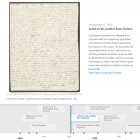
To view the digitized letters and to read their English translation, please click on the links below:
1. Letter to his brother-in-law, Friedrich August Schmalfuß
(Sydney, 23 March 1842)
Seventeen letters sent by Ludwig Leichhardt from 1842–48 vividly depict his stay in Australia. In this exhibition curated by historian Heike Hartmann, we are introducing a brand new English translation of the letters and a timeline tool with which to view those, this virtual exhibition documents Leichhardt’s adventurous stay in Australia and opens up new perspectives for the environmental history of the land, Europeans’ engagement with its indigenous population, and international scientific networks at the time.
Heike Hartmann
Even before he departed for Australia, Ludwig Leichhardt kept in touch with his family via letters written during his travels. Between 23 March 1842 and 22 February 1848, he sent 17 letters back home from Australia; these letters document the period from his arrival on the continent until the disappearance of his final expedition. Leichhardt’s letters are an important source of information about his experiences, plans, and everyday concerns, as well as securing his reputation as a scientist.
Seventeen letters sent by Ludwig Leichhardt from 1842–48 vividly depict his stay in Australia. In this exhibition curated by historian Heike Hartmann, we are introducing a brand new English translation of the letters and a timeline tool with which to view those, this virtual exhibition documents Leichhardt’s adventurous stay in Australia and opens up new perspectives for the environmental history of the land, Europeans’ engagement with its indigenous population, and international scientific networks at the time.
Heike Hartmann Child advocacy expert Richard Louv directly links the lack of nature in the lives of today’s wired generation—he calls it nature-deficit—to some of the most disturbing childhood trends, such as the rises in obesity, attention disorders, and depression.
Bill Bryson introduces the history and ecology of the Appalachian Trail.
The Monkey Wrench Gang fueled a new generation of angry young environmentalists (such as Earth First!) who practice monkey-wrenching, or sabotage for the sake of protecting the wilderness.
First published in 1854, Walden details Thoreau’s experiences over the course of two years in a cabin amidst woodland near Walden Pond.
Aldo Leopold’s A Sand County Almanac has enthralled generations of nature lovers and conservationists and is indeed revered by everyone seriously interested in protecting the natural world.
A study of homesteading in America from the late nineteenth century to the present.