“Role of Marine National Park for Sustainable Livelihoods of Artisan Fisherfolk”
This article looks at marine conservation and fishing communities in the Gulf of Kachchh Marine National Park, India.
This article looks at marine conservation and fishing communities in the Gulf of Kachchh Marine National Park, India.
This chapter of the “Wilderness Babel” exhibition, written by historian Mikko Saikku, explores central concepts for understanding the traditional Finnish relationship with nature and use of natural resources.
What does wilderness mean in your language? Listen to words for “wilderness” and learn about their political and historical meanings in different regional contexts. “Wilderness Babel” is a collaboration with the Institute of Evolutionary Biology and Environmental Studies at the University of Zurich, edited by Marcus Hall and Wilko Graf von Hardenberg. Its international contributions are still growing.
This version 2, published in 2020, includes minor updates to the original 2013 virtual exhibition (view PDF here) and applies the Environment & Society Portal’s responsive layout.
Marcus Hall and Wilko Graf von Hardenberg, eds.
The article explores the opposing practices and philosophies between the Sámi people and state policymakers in northern Norway in terms of the human-environment relationship with a particular focus on language translation issues.
The article explores the complex socio-environmental relations of small-scale inland fishing by using the Pantanal wetland in Brazil as a case study and attempts to deconstruct environmental narratives behind top-down fishing management practices.
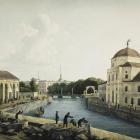
This exhibition shows some of the many links between the Neva River in St. Petersburg and the Viennese Danube discovered during the joint Russian-Austrian research project “The Long-Term Dynamics of Fish Populations and Ecosystems of European Rivers.”
The exhibition aims to reveal and visualize the power of mighty rivers so crucially important for the history of St. Petersburg and Vienna—the major imperial centers of continental Europe in the modern era.
Gertrud Haidvogl, Alexei Kraikovski, and Julia Lajus


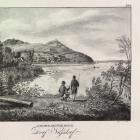
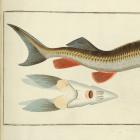
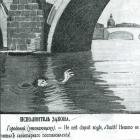
“‘Commanding, sovereign stream’: The Neva and the Viennese Danube in the History of Imperial Metropolitan Centers” was created by Gertrud Haidvogl, Alexei Kraikovski, and Julia Lajus (2019) under a Creative Commons Attribution 4.0 International license. This refers only to the text and does not include image rights. Please click on an image to view its individual rights status. Thumbnails of the following images appear on the exhibition landing page:
The exhibition aims to reveal and visualize the power of mighty rivers so crucially important for the history of St. Petersburg and Vienna—the major imperial centers of continental Europe in the modern era.
Gertrud Haidvogl, Alexei Kraikovski, and Julia Lajus The idea for this virtual exhibition came out of the joint Russian-Austrian research project “The Long-Term Dynamics of Fish Populations and Ecosystems of European Rivers.” Analyzing the history of fish populations in the Neva and Viennese Danube, the Russian-Austrian research group discovered numerous links between the great cities and their great rivers, including the fish populations. The project has been supported by the Rachel Carson Center for Environment and Society.
The exhibition aims to reveal and visualize the power of mighty rivers so crucially important for the history of St. Petersburg and Vienna—the major imperial centers of continental Europe in the modern era.
Gertrud Haidvogl, Alexei Kraikovski, and Julia Lajus In this chapter of their virtual exhibition “‘Commanding, Sovereign Stream’: The Neva and the Viennese Danube in the History of Imperial Metropolitan Centers,” the authors examine the dynamic landscapes of the Neva and Danube Rivers, the ways they determine people’s lives and are also modified to secure people’s needs and protect them from flooding.
The exhibition aims to reveal and visualize the power of mighty rivers so crucially important for the history of St. Petersburg and Vienna—the major imperial centers of continental Europe in the modern era.
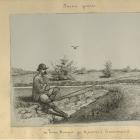
Gertrud Haidvogl, Alexei Kraikovski, and Julia Lajus In this chapter of their virtual exhibition “‘Commanding, Sovereign Stream’: The Neva and the Viennese Danube in the History of Imperial Metropolitan Centers,” the authors describe fish resources in St. Petersburg and Vienna and their role in urban life from different perspectives. Fisheries constituted an important part of local economic activities and fishers—both poor professionals and wealthy leisure anglers—were very visible in the cities’ crowds, at their markets, and on the banks of their rivers and canals.
The exhibition aims to reveal and visualize the power of mighty rivers so crucially important for the history of St. Petersburg and Vienna—the major imperial centers of continental Europe in the modern era.
Gertrud Haidvogl, Alexei Kraikovski, and Julia Lajus