Wild Earth 10, no. 4
Wild Earth 10, no. 4 celebrates the journal’s 10-year anniversary with a retrospective of past highlights and many new contributions.
Wild Earth 10, no. 4 celebrates the journal’s 10-year anniversary with a retrospective of past highlights and many new contributions.
Wild Earth 9, no. 4 features visionary essays that reimagine the future. Topics include abolitionism and preservationism, the environment and the US constitution, and the Buffalo Commons.
In Wild Earth 7, no. 2 Doug Peacock presents his field report on the Yellowstone bison slaughter, Reed Noss writes about endangered major ecosystems of the United States, and Virginia Abernethy analyzes if and how population growth discourages environmentally sound behavior.
Kleinstuck Marsh in Michigan is not the pristine, untouched landscape it might at first seem. Once a peat bog, the property was drained for a botanical garden and later sold as an unwanted piece of property and embedded with sewage pipes for a neighboring housing development, before becoming a nature preserve.
Ethics of Nature is an inquiry into the value of nature. Is nature’s value only instrumental value for human beings or does nature also have intrinsic value?
This film follows Ecuadorean President Rafael Correa’s plan to avoid exploiting its Amazonian oil fields and convince industrialized countries to help fund this initiative.
The Sundarbans, one of the largest remaining areas of mangroves in the world with an exceptional level of biodiversity, is inscripted as a UNESCO World Heritage Site.
“The City’s Currents: A History of Water in 20th-Century Bogotá” was created by Stefania Gallini, Laura Felacio, Angélica Agredo, and Stephanie Garcés (2014) under a Creative Commons Attribution-NonCommercial-ShareAlike 4.0 International license.
This refers only to the text and does not include any image rights. Please click on an image to view its individual rights status.
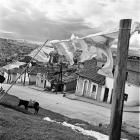
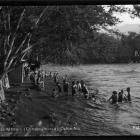
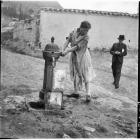
This exhibition explores the role of water in the struggle of Colombia’s capital to become a modern city. For Bogotá, complying with the standards of sanitary reformers and the governing elite was a social, technological, and environmental control endeavor. The exhibition examines everyday and gendered experiences of water, such as washing clothes or bathing, as well as urban infrastructural interventions including the domestication of rivers for water supply and wastewater disposal systems.
Stefania Gallini, Laura Felacio, Angélica Agredo, and Stephanie Garcés



An ethnographic documentary film that follows an aging misfit bachelor as he negotiates his status in a world changed by nature conservation and the loss of traditional farming and forestry in Poland’s Białowieża Forest.
This paper explores the concept of “nature” from the perspective of African meanings and practices that were criminalised as poaching during and after the colonial moment.