Nuclear colonialism
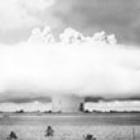
In this chapter of the online exhibition “Representing Environmental Risks in the Landscapes of US Militarization,” literary scholar Hsuan L. Hsu writes about the impacts of US nuclear testing.
What does history tell us about energy transitions? What do energy transitions tell us about the history of colonialism? This volume of RCC Perspectives presents five histories of colonial projects that transformed potential energy sources in Africa, Europe, North America, and Greenland into mechanical energy for wealth production.
Content
Energy must be seen in interaction with transportation and industry in order for its role in South-Central Africa to be fully understood. This article traces the history of energy, industrialization, and transportation from the pre-colonial through the colonial period.
This paper looks at how the master-servant politics of British indirect rule (ruling the colonized through their traditional authorities and structures) related to the production of coal and coal-using industries in Nigeria.
About eight percent of Earth’s freshwater is located in Greenland. Theoretically, this would mean that Greenland has some of the greatest potential for hydropower in the whole world. However, nearly all its freshwater is permanently frozen.
The failure of the potato crop in Ireland, aided by harsh British land ownership policies, caused a period of mass starvation, disease, and emigration.
With an emphasis on national parks, this article examines the kinds of environmental edges particular to South Africa and to Africa more generally.
Esta coletânea reúne alguns dos principais estudiosos das histórias ambientais da América Latina e do Caribe. Ela sugere novas perspectivas para discutir o desenvolvimento do continente no período pós-colonial. Estes ensaios narram histórias variadas sobre as interações complexas entre sociedades, estados, territórios e ecossistemas. Eles questionam narrativas anteriormente aceitas e abrem novos horizontes de interpretação.
Content
In this chapter of the online exhibition “Representing Environmental Risks in the Landscapes of US Militarization,” literary scholar Hsuan L. Hsu writes about the impacts of US nuclear testing.
This virtual exhibition curated by literary scholar Hsuan Hsu examines the environmental impact of US military activities worldwide and how activists have used art and other forms of representational media to convey the harmful effects of militarization on the local population and landscape.
Hsuan Hsu
Hsuan L. Hsu is an associate professor of English at the University of California, Davis and the author of Literature and the Production of Space in Nineteenth-Century American Literature (Cambridge) and Sitting in Darkness: Mark Twain’s Asia and Comparative Racialization (NYU, forthcoming).
This virtual exhibition curated by literary scholar Hsuan Hsu examines the environmental impact of US military activities worldwide and how activists have used art and other forms of representational media to convey the harmful effects of militarization on the local population and landscape.
Hsuan Hsu