

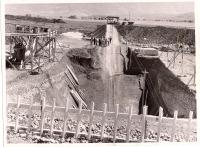
Arcadia
Development and Degradation in the Lakes of Lapsista and Ioannina from the 1950s to the Present
With the drying of its sister lake for purposes of agricultural development, Pamvotis is suffering accelerating degradation.
With the drying of its sister lake for purposes of agricultural development, Pamvotis is suffering accelerating degradation.

Agbogbloshie (Ghana) is an unnerving and fascinating example of human ingenuity, but at the same time an environmental and social tragedy.
Wan Yin Kim Fung’s “What Cannot Be Unearthed” is a sensitively told account that quite literally gives pause to the toxic fallout of nineteenth- and twentieth-century copper mining in eastern Japan. It was one of the two honorable mentions in the nonfiction category of the RCC environmental writing competition “Tell the Untold!”
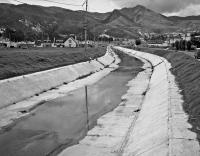

This is Chapter 3 of the exhibition “Rachel Carson’s Silent Spring: A book that changed the world” by historian Mark Stoll.
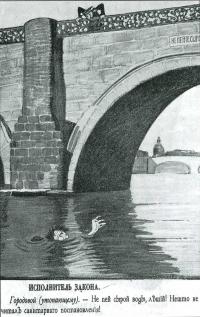
In this chapter of their virtual exhibition “‘Commanding, Sovereign Stream’: The Neva and the Viennese Danube in the History of Imperial Metropolitan Centers,” the authors discuss similarities and differences in the history of water supply, pollution, and waste management in St. Petersburg and Vienna.
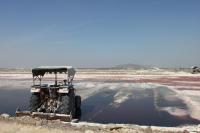
Across a century and a half, colonial, private and government salt farming at Sambhar has transformed the ecology of the lake and caused a slow cataclysm of pollution, affecting wildlife and livelihoods.
This chapter from the virtual exhibition “The Life of Waste” highlights people who live with waste—landfill workers, waste pickers, trash collectors, sanitation workers—and the social, economic, and health challenges they face.

Chapter 2 of the virtual exhibition Toxic Relationships: Uncovering the Worlds of Hazardous Waste.