

Arcadia
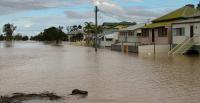
River Rights at Rockhampton (a Rhetoric)
Rivers need property rights so that humans can live with floods.
Rivers need property rights so that humans can live with floods.

In this chapter of the virtual exhibition “Drought, Mud, Filth, and Flood: Water Crises in Australian Cities, 1880s–2010s,” the authors show the extent to which the people of Perth, Western Australia, have relied on the groundwater of the Swan Coastal Plain, and the implications of this reliance in a drying climate. In the context of private and public extraction of groundwater, the government in 2014 commenced a groundwater replenishment scheme to “recharge” the local aquifers with treated wastewater.
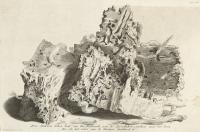
An invasive mollusk called the shipworm (Teredo navalis) attacked coastal dikes in the Netherlands in the 1730s, leading to changes in the design of dikes.

In 1975, construction began for the Thames Barrier, a moveable flood defense located on the River Thames, downstream of central London in the United Kingdom.
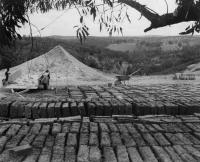
Environmental building in Australia as a form of communing with nature.
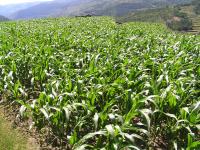
This article discusses the intimate connection between seeds and landscapes through networks of non-corporate farmers, experts, politicians, and agricultural companies.

Wild rice was “tamed” when domesticated in the 1950s, yet both cultivated and foraged wild rice face shared contemporary challenges.

This is a chapter of the virtual exhibition “Welcome to the Anthropocene: The Earth in Our Hands”—written and curated by historian Nina Möllers.
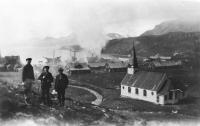
Beginning in 2013, reindeer on South Georgia—originally brought to the island by whalers in 1911—were eradicated in order to safeguard local biodiversity.
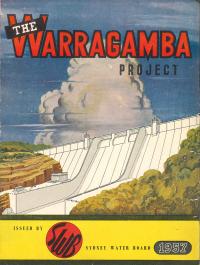
In this chapter of the virtual exhibition “Drought, Mud, Filth, and Flood: Water Crises in Australian Cities, 1880s–2010s,” the authors describe how the city of Sydney, New South Wales, has pursued the dual goals of plentiful water and cheap sanitation through the construction of the massive Warragamba Dam and ocean outfall sewers. Sewage polluting Sydney’s iconic beaches saw large protests in the 1980s and 1990s and closer monitoring of the ocean outfalls. Householders successfully curtailed their water consumption during the Millennium Drought, but as soon as dam levels rose again, water restrictions were abandoned because water retailers gain financially from higher consumption.