Growing Change
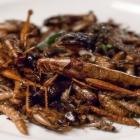
This film examines the development of a new, more localized food system in Venezuela.
This film examines the development of a new, more localized food system in Venezuela.
The writings of Erik Gustaf Geijer allow us to distinguish between two modes of thought in representations of scarcity: the idealization of scarcity as the “simple life” and its problematization in discourses on poverty.
In 1932, the Soviet Union dictator Joseph Stalin enacts policies in Ukraine that seek to decimate nationalist aspirations for independence and force collectivization on the peasantry. These measures amplified into a grand famine and led to the death of an estimated 3.5 million people.
The Hongerwinter was a major famine that occurred in the Netherlands, particularly in the Nazi-occupied western part of the country. Twenty-two thousand people died and 4.5 million were affected by the direct and indirect consequences of the famine.
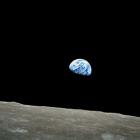
This interview with Paul Crutzen is a chapter of the virtual exhibition “Welcome to the Anthropocene: The Earth in Our Hands”—written and curated by historian Nina Möllers.
Together with the Rachel Carson Center for Environment and Society, the Deutsches Museum hosted a major special exhibition on the Anthropocene from December 2014 – September 2016, which was curated by Nina Möllers. Coined by the atmospheric chemist and Nobel Prize laureate Paul J. Crutzen, the term “Anthropocene” describes the idea of a new geological era shaped by deep interventions into nature by humans as biological and geological agents.
Nina Möllers
In State of the World 2005: Redefining Global Security, Worldwatch researchers explore underlying sources of global insecurity including poverty, infectious disease, environmental degradation, and rising competition over oil and other resources.
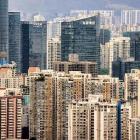
State of the World 2007: Our Urban Future examines changes in the ways cities are managed, built, and lived in that could tip the balance towards a healthier and more peaceful urban future.
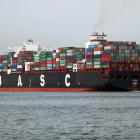
State of the World 2006 provides a special focus on China and India and their impact on the world as major consumers of resources and polluters of local and global ecosystems.
State of the World 2011: Innovations that Nourish the Planet introduces the latest agro-ecological innovations and their global applicability and also gives broader insights into issues including poverty, international politics, and even gender equity.
The special edition of State of the World, The Consumer Society, examines how we consume, why we consume, and what impact our consumption choices have on the planet and our fellow human beings.