

Arcadia
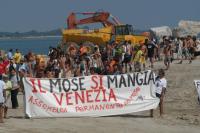
NoMOSE: Contested Flood Barriers in Venice, Italy
In the early 2000s, a coalition of citizen-activists in Venice denounced the state’s massive flood-barrier project, raising public participation in the fate of the lagoon.
In the early 2000s, a coalition of citizen-activists in Venice denounced the state’s massive flood-barrier project, raising public participation in the fate of the lagoon.

To what extent did the unveiling of gas leaks “scale up” a Romanian technical problem into an EU environmental issue?
A long struggle on the part of the Mi’gmaq community of Listuguj to continue fishing, despite arrests and financial pressures, has cleared the way for the resurgent power of Mi’gmaq law to govern the fishery, and to face the salmon aquaculture industry with confidence.
Bjarne Johansen advocates for the restoration of coastal Sami fishing rights and stricter limits on river and salmon farming practices to protect wild salmon, cultural traditions, and fjord communities from environmental and regulatory harm.
David Frank, Paul Robinson, and Wally Samuel highlight how the Ahousaht Nation navigates fish farming by balancing economic benefits, environmental stewardship, and cultural values through local governance and negotiated agreements.
Otto Andreassen advocates for the utilization of a framework compromising environmental, economic, social, and institutional dimensions to address the multifaceted challenges of the Norwegian salmon farming industry and to achieve a holistic sustainability.

Recyclable waste in India is dealt with in traditional ways and could serve as a model for sustainable waste management in the Global North.
Amy M. Hay examines the history of Agent Orange and its environmental and human consequences—a story that represented a transnational history.

John R. McNeill emphasizes the need for environmental history to broaden its scope by addressing underexplored regions, eras, and themes.
Martin V. Melosi reflects on the past and future of environmental history, noting its broad scope but also its tendencies to prioritize social history and ecological concerns over certain “top-down” topics, such as the environmental politics of specific governments.