

Perspectives Article
Whales and Whaling in Puget Sound Coast Salish History and Culture
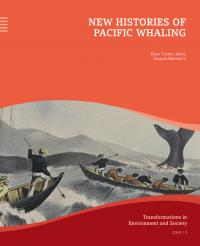
Jonathan Clapperton details the importance of whaling to Puget Sound Coast Salish people (Puget Salish) along the Pacific Northwest Coast.
Jonathan Clapperton details the importance of whaling to Puget Sound Coast Salish people (Puget Salish) along the Pacific Northwest Coast.
Billie Lythberg and Wayne Ngata explore what it means to be whale people in the modern whaling period.
Joshua L. Reid concludes that the history of Pacific whaling has undergone a scholarly renaissance.
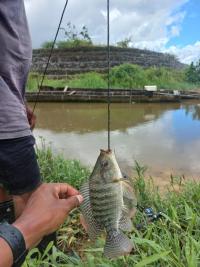
Indonesian state experts introduced invasive species into West Papua, a deliberate ecological disruption that advances a colonial agenda disguised as development.

Tropical humidity necessitated a quest for rust-proof insect pins, determining which specimens could be preserved, which tools could be used, and ultimately what knowledge could be produced in the Dutch East Indies.

This poem traces the complex relationship between humans and the largest bird of the Alps, the bone-eating bearded vulture (Bartgeier).

Zahīr ud-Dīn Muhammad Bābur’s autobiography anticipates an ecological and multispecies way of understanding the environment, highlighting confluence rather than divergence between humans and nonhumans.

Miyaoi Yasuo’s 1858 collection of tales, Kidan zasshi, challenges assumed human–animal boundaries, portraying shared ethics, reincarnation, and emotional connections by blending folklore and insights drawn from Edo-period experience.
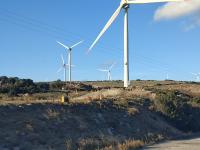
Villagers witness and push to maintain ecological relations in the face of development that has decimated olive groves and scattered fences and turbines.
A poetic descent into illness parallels a whale fall, uncovering beauty, vulnerability, and new forms of living.