

Show search results for
(A)synchronicities | Wetland Times
The fifth chapter of “Wetland Times,” “(A)synchronicities.”

“La primavera silenciosa de Rachel Carson”
The story of Rachel Carson’s Silent Spring told in Spanish.
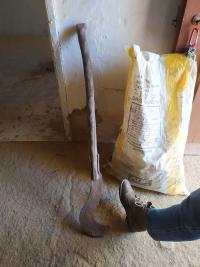
Roças and queimadas: Changing Landscapes of Fire in Twentieth-Century Portugal
In 1966, historian Albert Silbert highlighted the longstanding importance of fire in the traditional Portuguese rural economy, at a time when such practices were being erased from the landscape.

State Natural Areas and the Evolution of Land Conservation in Twentieth-Century Wisconsin
Land conservation initiatives underwent rapid change in early twentieth-century Wisconsin, culminating in the protection of hundreds of local natural areas scattered across the state.
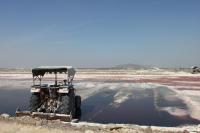
Between Salt and Water: The Environmental Crisis at Sambhar Lake, Rajasthan, India
Across a century and a half, colonial, private and government salt farming at Sambhar has transformed the ecology of the lake and caused a slow cataclysm of pollution, affecting wildlife and livelihoods.
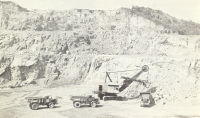
“Visual Tailings” (manuscript draft)
Prepublished draft of a Emmanuelle Roth’s and Gregg Mitman’s article “Visual Tailings.”

“Making Bourdélots and Tasting Terroir”
An exploration of the apple-growing culture and landscape of the island of Jersey through one of its little-known dishes.
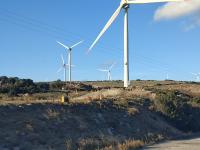
Insisting on Boars: How Villagers of Karaburun Employ their Knowledge of Multispecies Entanglements in Local Power Struggles
Villagers witness and push to maintain ecological relations in the face of development that has decimated olive groves and scattered fences and turbines.
How to Reimagine Our Doomed Futures Through Ursula K. Le Guin’s Lens: A Case Study in the Argentinian Wetlands | Ghosh in Munich
Vera Krause’s “How to Reimagine Our Doomed Futures Through Ursula K. Le Guin’s Lens: A Case Study in the Argentinian Wetlands” is a sympathetic account of a so-called capybara “invasion” in contemporary Buenos Aires, taking its cue from the anarchist fantasy of Ursula K. Le Guin to show the difference between invading and reclaiming one’s space. It was one of the two honorable mentions in the reflective essay category of the RCC environmental writing competition “Tell the Untold!”