Hatmaker, Susie, "On Mattering: A Coal Ash Flood and the Limits of Environmental Knowledge"
Susie Hatmaker investigates the largest flood of coal ash in United States history in 2008 as an event at once monumental and insignificant.

This is the introductory page of the virtual exhibition “Representing Environmental Risks in the Landscapes of US Militarization”—written and curated by literary scholar Hsuan Hsu.
Garbage, wastewater, and hazardous waste: these are the lenses through which Melosi views nineteenth- and twentieth-century America. In broad overviews and specific case studies, Melosi treats the relationship between industrial expansion and urban growth from an ecological perspective.
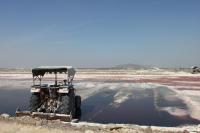
Across a century and a half, colonial, private and government salt farming at Sambhar has transformed the ecology of the lake and caused a slow cataclysm of pollution, affecting wildlife and livelihoods.
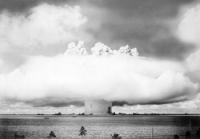
In this chapter of the online exhibition “Representing Environmental Risks in the Landscapes of US Militarization,” literary scholar Hsuan L. Hsu writes about the impacts of US nuclear testing.
The cartography of nuclear bombings and nuclear waste can be understood and visualized in different ways depending on who is drawing the map. This is a chapter of the virtual exhibition “Representing Environmental Risk in the Landscapes of US Militarization” by literary scholar Hsuan L. Hsu.
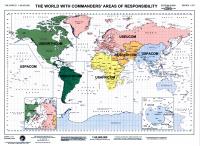
In this chapter of the virtual exhibition “Representing Environmental Risks in the Landscapes of US Militarization,” literary scholar Hsuan Hsu discusses the emergence and controversial politics of US military bases on foreign soil.
Wan Yin Kim Fung’s “What Cannot Be Unearthed” is a sensitively told account that quite literally gives pause to the toxic fallout of nineteenth- and twentieth-century copper mining in eastern Japan. It was one of the two honorable mentions in the nonfiction category of the RCC environmental writing competition “Tell the Untold!”
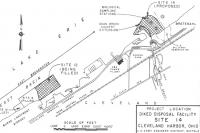
Environmental activism in the 1960s forced the Army Corps of Engineers to limit the open-water dumping of dredge spoils in the Great Lakes and create new “natural” areas along the shore.
Literary scholar Hsu Hsuan writes about how monuments affect the way we percieve a landscape and its history. This is a chapter of the virtual exhibition “Representing Environmental Risk in the Landscapes of US Militarization.”