

Perspectives Article
Can Public Policy Perpetuate the Memory of Disasters?
Colten and Grismore examine the Amite River flood in August 2016 against the backdrop of collective flood memory and public policy.
Colten and Grismore examine the Amite River flood in August 2016 against the backdrop of collective flood memory and public policy.
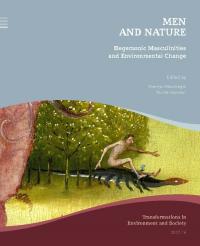
Susanne Leikam explores the extreme weather hero and performed masculinity in contemporary American pop culture through an analysis of the 2013 film Sharknado.
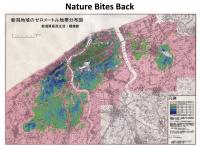
Engineering the Lower Shinano River in northeastern Japan expanded the risk of other flood and tsunami damage.

This is the introductory page of the virtual exhibition “Drought, Mud, Filth, and Flood: Water Crises in Australian Cities, 1880s–2010s”—written and curated by Andrea Gaynor et al.
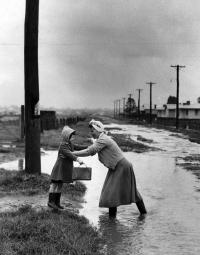
In this chapter of the virtual exhibition “Drought, Mud, Filth, and Flood: Water Crises in Australian Cities, 1880s–2010s,” the authors describe the ways in which infrastructure failed to keep pace with population growth in Melbourne, Victoria, and how residents developed their own means to overcome deficiencies. Residents of the postwar suburban frontier installed septic tanks and pan toilets, joined together to lay stormwater drains to improve the health and amenity of their local streets.

An account of the destruction in Nuremberg by major flooding along the Pegnitz River.
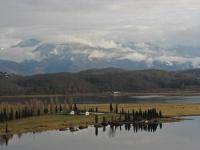
In 1969, the Georgian resort of Pitsunda and its beach were severely damaged by a storm. This was largely due to an ongoing process of coastal erosion caused by anthropogenic influences.
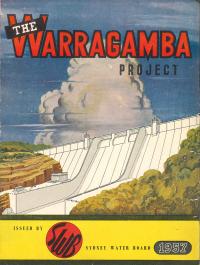
In this chapter of the virtual exhibition “Drought, Mud, Filth, and Flood: Water Crises in Australian Cities, 1880s–2010s,” the authors describe how the city of Sydney, New South Wales, has pursued the dual goals of plentiful water and cheap sanitation through the construction of the massive Warragamba Dam and ocean outfall sewers. Sewage polluting Sydney’s iconic beaches saw large protests in the 1980s and 1990s and closer monitoring of the ocean outfalls. Householders successfully curtailed their water consumption during the Millennium Drought, but as soon as dam levels rose again, water restrictions were abandoned because water retailers gain financially from higher consumption.
Covering a wide geographical range of European countries, the articles in this edited collection investigate urban disasters such as floods, fires, earthquakes, and epidemic diseases.

Historical documents indicate that the disasters caused by mining in Brazil are a reality since the eighteenth century.