“Urban Natures in the Anthropocene”
Lunchtime Colloquium at the Rachel Carson Center with Matthew Gandy.
Lunchtime Colloquium at the Rachel Carson Center with Matthew Gandy.
Kenneth Olwig on landscape. This is an entry in the KTH EHL VideoDictionary.
This volume addresses our understanding of the Anthropocene and its challenges, and suggests that multidisciplinarity and storytelling play key roles in devising resilient solutions.
Content
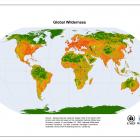
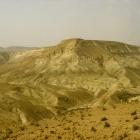
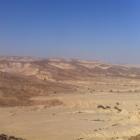
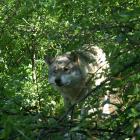
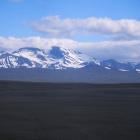
This exhibition collects wilderness-equivalent terms and describes them in a few short paragraphs, discussing how they may be similar to or different from the wilderness that native English speakers know and admire. The subtleties of meanings encompassed by the above terms, say, between human presence or absence, or between love and fear for the wild regions, is what we hope to explore. The exhibition is coordinated and edited by environmental historian Marcus Hall.
What does wilderness mean in your language? Listen to words for “wilderness” and learn about their political and historical meanings in different regional contexts. “Wilderness Babel” is a collaboration with the Institute of Evolutionary Biology and Environmental Studies at the University of Zurich, edited by Marcus Hall and Wilko Graf von Hardenberg. Its international contributions are still growing.
This version 2, published in 2020, includes minor updates to the original 2013 virtual exhibition (view PDF here) and applies the Environment & Society Portal’s responsive layout.
Marcus Hall and Wilko Graf von Hardenberg, eds.
This exhibition collects wilderness-equivalent terms and describes them in a few short paragraphs, discussing how they may be similar to or different from the wilderness that native English speakers know and admire. The subtleties of meanings encompassed by the above terms, say, between human presence or absence, or between love and fear for the wild regions, is what we hope to explore. The exhibition is coordinated and edited by environmental historian Marcus Hall.
What does wilderness mean in your language? Listen to words for “wilderness” and learn about their political and historical meanings in different regional contexts. “Wilderness Babel” is a collaboration with the Institute of Evolutionary Biology and Environmental Studies at the University of Zurich, edited by Marcus Hall and Wilko Graf von Hardenberg. Its international contributions are still growing.
This version 2, published in 2020, includes minor updates to the original 2013 virtual exhibition (view PDF here) and applies the Environment & Society Portal’s responsive layout.
Marcus Hall and Wilko Graf von Hardenberg, eds. Astrid M. Eckert’s West Germany and the Iron Curtain takes a fresh look at the history of Cold War Germany and the German reunification process from the spatial perspective of the West German borderlands that emerged along the volatile inter-German border after 1945.
The author examines the role of plantation forestry through the shift within the New Zealand State Forest Service from an orthodox state forestry model to one favoring large-scale exotic plantations.
The authors explore the implementation of Traditional Ecological Knowledge (TEK) and Indigenous knowledge (IK) in mapping efforts, taking cues from previous spatio-temporal visualization work in the Geographic(al) Information System(s)/Science(s) GIS community, and from temporal depictions extant in existing cultural traditions.