national parks

The National Park Line

The National Park Line

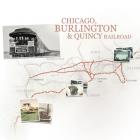
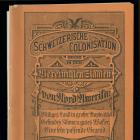
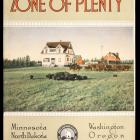
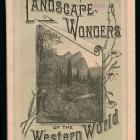
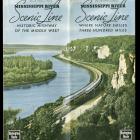
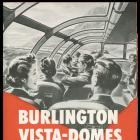
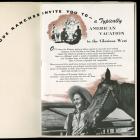
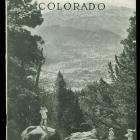
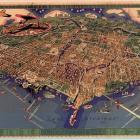
This is Chapter 10 of the virtual exhibition “Promotion and Transformation of Landscapes along the CB&Q Railroad” by environmental historian Eric D. Olmanson. The chapter focuses on how railroads played a crucial role in establishing and popularizing US national parks such as Yellowstone.

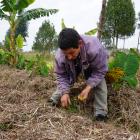
“Evaluating a Union between Health Care and Conservation: a Mobile Clinic Improves Park-People Relations, Yet Poaching Increases”

The authors evaluate the attitudes and perceptions of local communities living in proximity to protected areas. To demonstrate the positive effects of protected areas providing employment or services to neighboring communities, they study the provision of a mobile health clinic in Kibale National Park in Uganda.

"Connecting Climate Social Adaptation and Land Use Change in Internationally Adjoining Protected Areas"

Drawing on interviews with the managers of 56 internationally adjoining protected areas in 18 countries in the Americas, the study focuses on the link between land use change and environmental change, and on three adaptation strategies, namely diversification, pooling, and out-migration. It suggests that the impact of adaptation depends on the adaptation strategy chosen.

"Creating Landscapes of Coexistence: Do Conservation Interventions Promote Tolerance of Lions in Human-dominated Landscapes?"

This paper uses a comparative case study approach to explore the individual and societal desire to maintain current lion populations alongside communities in Zimbabwe’s Hwange National Park, Tanzania’s Ruaha National Park, and Kenya’s southern Maasailand.

Protecting Wild Spaces and Species (Sweden)

Protecting Wild Spaces and Species (Sweden)

Jonathan Carruthers Jones’s 360º video takes you on a journey with multiple hikers to the Arctic Circle, the Abisko National Park in northern Sweden, to understand what wilderness means to people. He concludes that even though it is a much-contested term—with supposedly lots of personal differences in opinions—people share a lot in common in their views of what wilderness is.