Tyson Kills the Mulberry Fork
Arcadia, Spring 2021, no. 16
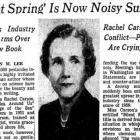
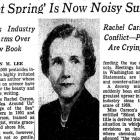
This is Chapter 3 of the exhibition “Rachel Carson’s Silent Spring: A book that changed the world” by historian Mark Stoll.
This virtual exhibition presents the global reception and impact of Rachel Carson’s Silent Spring as well as the book’s legacy in popular culture, music, literature, and the arts.
This version 2, published in 2020, includes minor updates to the original 2012 virtual exhibition (view PDF here) and applies the Environment & Society Portal’s responsive layout.
Mark Stoll
Guy DeLeonardo of General Electric (GE) highlights the market, business, and technology in energy generation. Motivated by the 1.2 billion people who lack access to reliable electricity, DeLeonardo talks about how renewable resources enter the energy production market through technology, and what alternatives to our present modes of productions can achieve better energy use.
Les Beldo proposes thinking about nonhuman contributions to production, including those taking place at the microbiological level, as labor, and offers an ethnographic description of the lives of broiler chickens.
In episode 43 of Nature’s Past, Sean Kheraj speaks with scholars from the Toronto Environmental History Network about the relationship between environmental scholarship and environmental activism.
This book provides an economic history of the petroleum industry in Alberta, Canada, as well as a detailed analysis of the operation of the markets for Alberta oil and natural gas, and the main governmental regulations (apart from environmental regulations) faced by the industry.
In this issue of the The Voice of the Wild Siskiyou of Spring 1998, a quarterly newsletter of the Siskiyou Regional Education Project, Art R. Kruckeberg and Frank A. Lang provide information about the Klamath-Siskyiou bioregion, a unique place situated along the Pacific Ocean across the Californian and Oregon border. Further, they ask the question of “how to preserve this bioregion and all its distinctive ecosystems - in the face of ongoing resource extraction and other human incursions?”, and encourage joining the Siskiyou Project network.
Book profile for The Limits to Growth.