Earth First! 1, no. 3
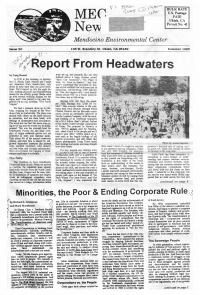
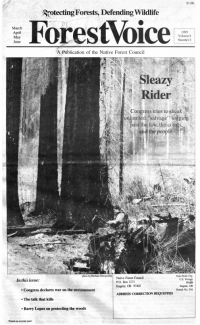
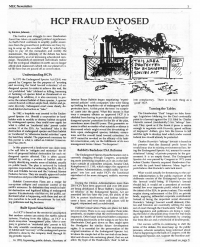
Issue three of Earth First! celebrates the movement’s diversity.
In issue two of Earth First! the editors confirm their seriousness and invite readers to radicalize the conservation movement.
In this inaugural issue of its journal, the radical environmentalist group Earth First! announces its principles and platform.
How a Japanese naturalist-polymath’s fascination with slime mold shaped a multispecies onto-epistemology—and a fierce campaign to protect shrines and sacred forests.
Marc Elie reflects on the evolution of his research on tragic events in twentieth-century Russia and the Soviet Union—from researching Gulag ex-detainees to analyzing the history of disaster and risk management.
Perhaps it is a feature of environmental history in particular that our origins and our past stories shape our interests and our fields of enquiry in myriad ways. Many of the “tracks” in this volume are not well-trodden, and they lead us through a landscape that is mutable and as yet uncharted.
Thomas Lekan examines the history of wildlife conservation through the figure of Bernhard Grzimek and the creation of the Serengeti as a protected tourist landscape.
Stefan Dorondel writes about agrarian transformations and land-use changes in post-socialist Romania, focusing on the impact of massive social, economic, and political transformations on the natural environment.
Grace Karskens examines the tension between urban development and the preservation of historical and cultural landscapes along Castlereagh Road near the Nepean River in Sydney.
Claudia Leal reflects on her intellectual formation through childhood travels in Colombia and later work in education and biodiversity conservation.