


Multimedia | journal article
“Growing Up amid Environmental Change: A Conversation with Jan David Hauck”
Jan David Hauck and Pooja Nayak discuss how changing environments change our language and morals.
Jan David Hauck and Pooja Nayak discuss how changing environments change our language and morals.
An exploration of the apple-growing culture and landscape of the island of Jersey through one of its little-known dishes.
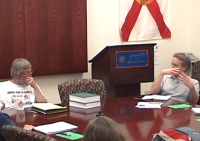
Is technology neutral, or is it the architect of our alienation? In this March 2005 lecture, anarcho-primitivist philosopher John Zerzan argued that civilization itself—defined by domestication, division of labor, and industrial technology—is the root cause of modernity’s ecological and psychological dysfunctions.

Dive into a pivotal 1993 lecture by renowned Professor Bron Taylor as he unravels the complex tapestry of the American conservation movement. This insightful presentation offers a panoramic view, tracing the philosophical and spiritual roots that shaped environmental thought and action, particularly focusing on the rise of the deep ecology movement and what Taylor terms “pagan environmentalism.”
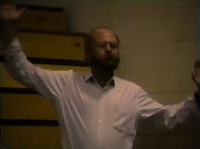
The lecture features environmental activist Dave Foreman, introduced by Bron Taylor at the University of Wisconsin–Oshkosh in 1990. The event situates Foreman’s ideas within the emerging discourse on radical environmentalism and its ethical foundations.

Zahīr ud-Dīn Muhammad Bābur’s autobiography anticipates an ecological and multispecies way of understanding the environment, highlighting confluence rather than divergence between humans and nonhumans.
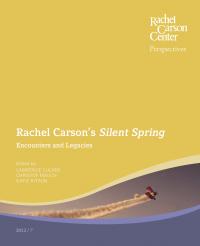
This issue of RCC Perspectives takes a sweeping look at encounters with and legacies of the book, examining the global impact of Silent Spring over its half century of existence and considering the ways in which Rachel Carson’s ecological worldview equips us to understand and confront current and future challenges to our planet.

Miyaoi Yasuo’s 1858 collection of tales, Kidan zasshi, challenges assumed human–animal boundaries, portraying shared ethics, reincarnation, and emotional connections by blending folklore and insights drawn from Edo-period experience.

This podcast discusses linalool extraction from rosewood grown in the Amazon rainforest.
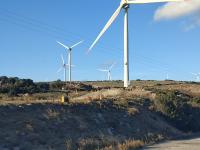
Villagers witness and push to maintain ecological relations in the face of development that has decimated olive groves and scattered fences and turbines.