Filling the Blue Hole in Environmental History
John R. Gillis critiques the landlocked nature of environmental history, highlighting its neglect of oceans, which comprise most of Earth’s surface and are central to its ecosystems.


An enduring legacy of the antinuclear movement is its construction of a narrative connecting human survival to nature’s beneficence.
Bron Taylor discusses books, authors, and other streams of American counterculture which had significant impacts on radical environmentalism and the founding of the Earth First! movement.
Joseph Szarka presents and evaluates environmental policy-making in France at a time when environmental problems are growing in complexity and gravity.
Jost Halfmann illustrates the differences between images of risk by comparing the American and German anti-nuclear movements.
Environmental Humanities Switzerland (EH-CH) aims to become a key regional network in the growing worldwide movement to provide novel insights about humans in nature, especially through the goal of helping resolve complex environmental problems.
This issue of Mendocino Environmental Center Newsletter covers the Wise Use Movement, Coho salmon, companies of the Global Forest Management Group and “pests” of Russian boreal forests. Gary Ball describes the domination of multinational corporations as the outcome of what was effectively “World War III,” with dire consequences for the planet.
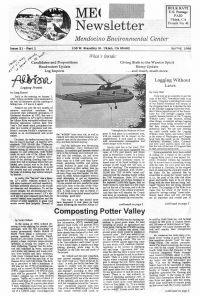
This issue of Mendocino Environmental Center Newsletter reports on protests against the deforestation of the Albion River watershed; composting the Potter Valley, updates on Headwaters Forest, wolves, hemp, “Economic Aspects of Ecoforestry,” and candidate’s positions for an upcoming election for Congress, State Assembly, and county supervisor. Charles Sullivan writes on “Giving Birth to the Warrior Spirit: The End of Environmentalism.”
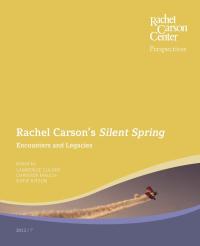
Lawrence Culver argues that no book has matched the impact of Rachel Carson’s Silent Spring and urges modern environmentalists to emulate her clear, compelling communication to reach broad audiences.
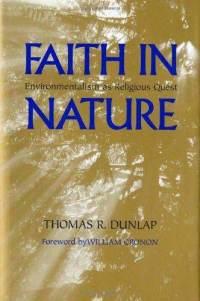
Faith in Nature traces the history of environmentalism—and its moral thrust—from its roots in the Enlightenment and Romanticism through the Progressive Era to the present.