


Multimedia | book excerpt
The Routledge Handbook of Environmental History
Read the introduction to The Routledge Handbook of Environmental History.
Read the introduction to The Routledge Handbook of Environmental History.
Sir Crispin Tickell scans what industrial countries can and have to do in order to give a lead in global arrangements to alleviate economic and ecological problems.
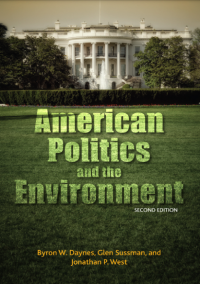
Full text of the second edition of American Politics and the Environment.

Synthesizing ethnographic case studies from mainland Southeast Asia, the authors critically review the implementation of REDD+, a UN project to reduce emissions from deforestation and forest degradation. They argue that REDD+ maps onto local power structures and political economies in its implementation, rendering it blunt as a tool for change.
A woman returns to her ancestral home, where mangroves speak memory, loss, and land history long buried.

The project Everyday Futures explores the role museums can play in helping to make sense of Australia’s experiences during a time of rapid planetary change and global disruption.

Through a case study of the “invasive alien species” (IAS) narrative in South Africa, Susanna Lidström, Simon West, Tania Katzschner, M. Isabel Pérez-Ramos, and Hedley Twidle suggest that IAS oversimplifies the webs of ecological, biological, economic, and cultural relations to a simple “good” versus “bad” battle between easily discernible “natural” and “nonnatural” identities.

In 2021, a disaster in Florianópolis prompted a lawsuit that might have far-reaching effects on environmental law.

In this episode from the New Books Network podcast, Ronald L. Trosper is interviewed on his recent book, Indigenous Economics: Sustaining Peoples and Their Lands .

The premises of water allocation legislation came under harsh scrutiny in the early 2000s as severe drought plagued the American Southwest.