


Arcadia
The Thames Barrier: London's Moveable Flood Defense
In 1975, construction began for the Thames Barrier, a moveable flood defense located on the River Thames, downstream of central London in the United Kingdom.
In 1975, construction began for the Thames Barrier, a moveable flood defense located on the River Thames, downstream of central London in the United Kingdom.

The St. Petersburg flood of 1824, in which the level of the river Neva rose to the 4 meter 20 centimeter mark, is the greatest in the history of the city. The city did not recover from the destructive effects of the flood until the mid-1830s.
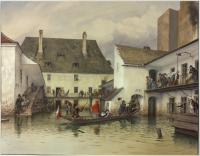
During the eighteenth and nineteenth centuries, massive floods regularly threatened cities and settlements along the Danube River. The introduction of wide-reaching telegraph networks enabled Habsburg authorities in Vienna to protect the most important city of the empire.

A flooding in the Saint Petersburg metro divided the city into two parts for nearly a decade.
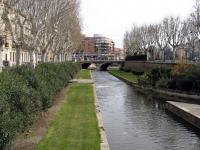
Late medieval efforts at river management to control floods in the county of Roussillon reveal environmental awareness and responsibility in an emerging state and also the grounds and strength of local resistance.
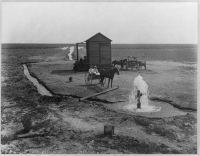
The agricultural landscape of California was based on a complex system of aqueducts that created the illusion of “normal” climatic variation.
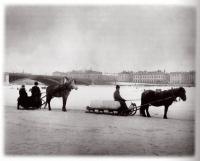
Since its foundation in 1703, the history of St. Petersburg is closely linked to the Neva River. The Neva is the biggest and the most important river in the Eastern Baltic. The citizens of St. Petersburg constructed complex technologies of river control that enabled them to live cheek by jowl with the mighty and self-willed stream.
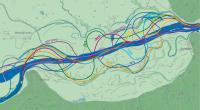
The history of the Danube regulation in the Austrian Machland during the nineteenth century shows the enormous efforts made to transform a dynamic river landscape into a navigable waterway and a stable floodplain that supports the various human demands.
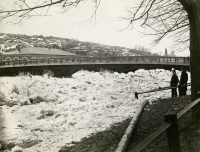
Historical documents provide detailed descriptions of ice-jam flood events and climate impacts in riverine communities.
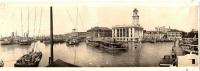
This article examines early twentieth-century China’s top-down scheme of managing rivers based on watershed.