

Multimedia | journal
Wild Earth 10, no. 3
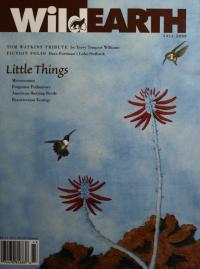
Wild Earth 10, no. 3 features essays on “little things”: the microbial microcosm, forgotten pollinators like birds and bats, the American burying beetle, and butterflies.
Wild Earth 10, no. 3 features essays on “little things”: the microbial microcosm, forgotten pollinators like birds and bats, the American burying beetle, and butterflies.
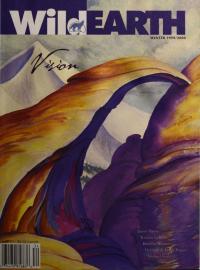
Wild Earth 9, no. 4 features visionary essays that reimagine the future. Topics include abolitionism and preservationism, the environment and the US constitution, and the Buffalo Commons.
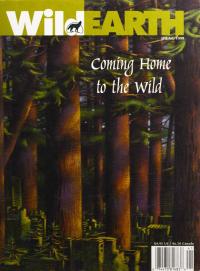
Wild Earth 9, no. 1 features essays on wilderness and spirituality. They center around two slogans: “Rewilding Ourselves” and “Rewilding the Land.”

In Wild Earth 5, no. 3 Wendell Berry writes about private property and the Commonwealth, Thomas P. Rooney reflects on global warming, and Paul J. Kalisz analyses sustainable silviculture in the hardwood forests of the eastern United States.
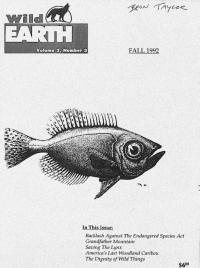
Wild Earth 2, no. 3 about the Endangered Species Act, saving the Lynx, bioregionalism, and America’s last woodland caribou.

Wild Earth 4, no. 2 features Wendell Berry on “A Walk Down Camp Branch,” Howie Wolke’s “Butchering the Big Wild,” and William R. Catton, Jr., on “Carrying Capacity and the Death of a Culture.”
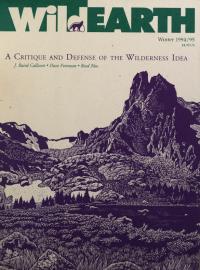
This issue of Wild Earth celebrates the third year of the Wildlands Project featuring the theme “A Critique and Defense of the Wilderness Idea,” as well as essays on: falcons in urban environments, state complicity in wildlife losses, and common lands recovery.
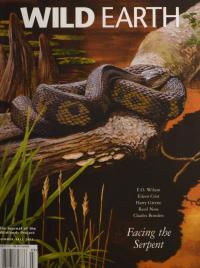
Wild Earth 13, no. 2/3, features essays on the biological and cultural significance of snakes, the populist right in America, rednecks as wildlife managers, and mosquitoes across the Florida Everglades.
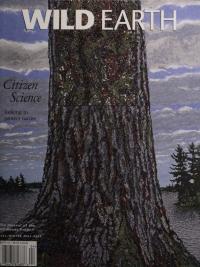
Wild Earth 11, no. 3/4, on defining citizen science: its protagonists, sources, relevance and results, as well as a selection of new and old programs.
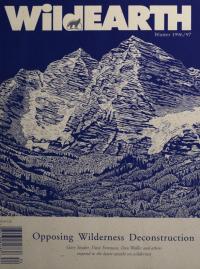
Wild Earth 6, no. 4 features essays opposing wilderness deconstruction. Gary Snyder writes on nature as a social construction, Dave Foreman contributes a piece on the conservation opposition’s underlying views, and Don Waller discusses the evolution of wilderness concepts.