

Exhibition chapter
Time After the Hero—Or, in Proposing the Age of the Anthropoiescene | Ghosh in Munich
The Age of the Anthropoiescene is a time of sympoietic tanglings with the human and more-than-human ghosts of deep time.
The Age of the Anthropoiescene is a time of sympoietic tanglings with the human and more-than-human ghosts of deep time.

This issue of Forest Voice covers the Forest Summit and deforestation debates.
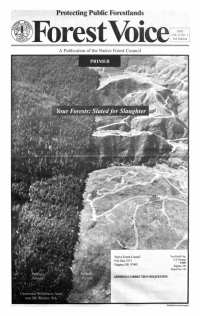
This issue of Forest Voice offers a primer, “Your Forests: Slated for Slaughter.” It includes a summary of the National Forest Protection Acts, a package of draft legislation developed by the Native Forest Council, satellite images comparing deforestation in the U.S. to that in Brazil, and an instructional graphic titled, “Nature Pays, You Pay, Your Children Pay.”

In 2021, a disaster in Florianópolis prompted a lawsuit that might have far-reaching effects on environmental law.
Thomas Lekan examines the history of wildlife conservation through the figure of Bernhard Grzimek and the creation of the Serengeti as a protected tourist landscape.

Harriet Ritvo explores the intersection of environmental history and environmental concerns, emphasizing how the discipline reflects the growing awareness of global environmental challenges.
Jane Carruthers traces the development of environmental history, showing how it emerged in the 1970s from the environmental movement with a focus on addressing urgent issues such as resource depletion, climate change, and sustainability, while aiming to bridge the sciences and humanities.