

Arcadia
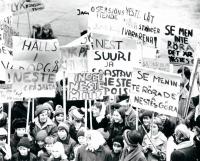
The Neste War 1970–1972: The First Victory of the Budding Finnish Environmental Movement
This article studies the “Neste war,” 1970–1972, the first major victory of the environmental movement in Finland.
This article studies the “Neste war,” 1970–1972, the first major victory of the environmental movement in Finland.
Catrina A. MacKenzie, Rebecca K. Fuda, Sadie Jane Ryan, and Joel Hartter use interviews and focus group discussions to assess the interaction of oil exploration with the three primary conservation policies employed by the Uganda Wildlife Authority: protectionism, neoliberal capital accumulation, and community-based conservation.
This book provides an economic history of the petroleum industry in Alberta, Canada, as well as a detailed analysis of the operation of the markets for Alberta oil and natural gas, and the main governmental regulations (apart from environmental regulations) faced by the industry.
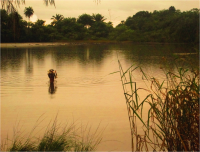
Once a benefit to humanity but now a scourge, the environment of the Niger Delta has been transformed into a haven for violence, militancy, and criminality.

This joint presentation by Varro Laszlo and Stefan Pfenninger for the ESC Symposium 2017: Global Energy Challenge provides a framework to understand the economics behind energy consumption in the past, present, and future.

The first episode of the Crosscurrents podcast series focuses on the impact of oil on 20th-century plastic production, geopolitical conflict, and culture.
The fifth episode of the Crosscurrents podcast series, John Sandlos interviews Ashlee Cunsolo on the concept of ecological grief among indigenous communities in Labrador, Canada; Sean Kheraj speaks about the history of the Trans Mountain Pipeline Project.
Vasundhara Jairath reviews the book Life in Oil: Cofán Survival in the Petroleum Fields of Amazonia by Michael L. Cepek.
Helbert raises the issue of justice in energy transitions by looking at the discrimination faced by women in oil regions of Nigeria.

In this article, Antoine Acker provides a different perspective on the Anthropocene.