


Multimedia | film profile
Das Ding am Deich [The Thing at the Dike]
This film examines the life of a German town some decades after a nuclear plant inspired nationwide resistance.
This film examines the life of a German town some decades after a nuclear plant inspired nationwide resistance.

This film explores how various communities around the world are transitioning to a more sustainable and local way of life.
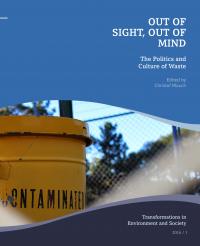
Waste is never completely or permanently “out of sight.” Once discarded, it undergoes transformations, often reappearing elsewhere in new forms. In this volume of RCC Perspectives, scholars from different disciplines—from history and art history, urban geography, environmental studies, and anthropology—investigate the traces waste leaves behind in the course of its travels.
As a space where terrestrial jurisdiction did not apply, the ocean has often served as a repository for unwanted things, whether people or objects. This article traces the journeys of several ships and their cargos of toxic waste in the 1970s and 1980s.
Fresh Kills Landfill in Staten Island, New York, was the subject of a struggle over where to dispose of the waste of a city strapped for space. While the landfill was closed in 2001, the events of 9/11 and the need to clear the large amounts of rubble and human remains from the site of the Twin Towers attack turned Fresh Kills into hallowed ground, which posed new questions about the future of the site.
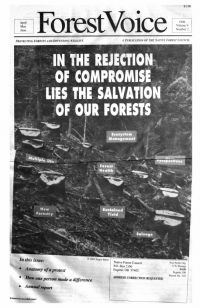
This issue of Forest Voice, a publication of the Native Forest Council, provides an annual report, outlines its goals, and highlights its successes in advancing a Zero-Cut policy on public lands, even resulting in support from a majority of Sierra Club members. Bill Willers address timber industry influence on U.S. public schools. A feature article spotlights a referendum to limit clearcutting in Maine.

This is Chapter 10 of the exhibition “Rachel Carson’s Silent Spring: A book that changed the world” by historian Mark Stoll.
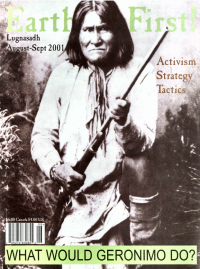
In this issue of Earth First! Journal various opinions are voiced in “Dear Ned Ludd,” the discussion forum for creative means to defend the Earth, several essays deal with oppression and the criminalization of ecological activism, and David Orton analyzes the connections between “Deep Ecology, Earth First! and Anarchism.”
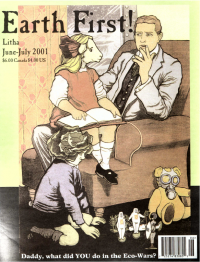
Earth First! Journal 21, no. 6 features essays about the desecration of Mount Graham, wolf genocide in Sweden, Colombian resistance against globalization, and biotechnology and human identity.
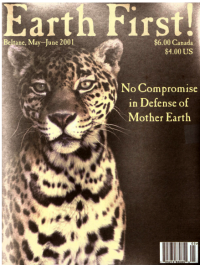
In this issue of Earth First! Journal, Dug sends greetings from the new EF! Journal headquarters in Tucson, Arizona, Karen Pickett gives an update on MAXXAM/Pacific Lumber’s (PL) lawsuit against public participation (SLAPP), Leith Kahl comments on the structurelessness of the Earth First! movement, and Kieran Suckling discusses the connections between the biological and linguistic diversity crises.