Munich Airport | Ecopolis München 2019
Munich airport: Economy instead of ecology? The Munich airport wants to be green. But it used to be much greener here. How high is the price for humans and nature?
Historic transportation reliant on unpredictable rivers and underfunded railways contributed to the long-term economic fortunes of Malawi.
Whereas scientific evidence points towards substantial and urgent reduction in greenhouses gas (GHG) emissions, economic analysis of climate change seems to be out of sync by indicating a more gradual approach.
Excerpt from The State in the Forest: Contested Commons in the Nineteenth Century Venetian Alps.
In this commentary, Simon A. Levin argues for the partnership between ecologists and economists.
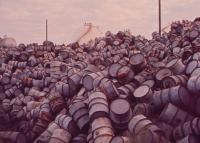
Introductory chapter to the virtual exhibition Toxic Relationships: Uncovering the Worlds of Hazardous Waste.
Chapter 3 of the virtual exhibition Toxic Relationships: Uncovering the Worlds of Hazardous Waste.
In this episode from the New Books Network podcast, John Bellamy Foster is interviewed on his book, The Return of Nature: Socialism and Ecology.
China and the United States are in a fierce competition, but what about Europe? Spotlighting “twenty-first century ecological politics,” environmental studies and public policy scholar Sophia Kalantzakos wonders: “Can Brussels and Beijing get it right?”
Franz-Josef Brüggemeier outlines the history one of the most crucial energy source of twentieth-century Europe in this article. “Coal returned to center stage again and again. In both world wars, coal provided the material basis for the atrocities committed and was of decisive importance in the subsequent search for lasting peace.”