

Multimedia | book, full-text
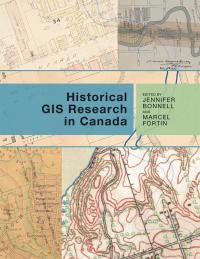
Historical GIS Research in Canada
This book brings together case studies of HGIS projects in historical geography, social and cultural history, and environmental history from Canada’s diverse regions.
This book brings together case studies of HGIS projects in historical geography, social and cultural history, and environmental history from Canada’s diverse regions.
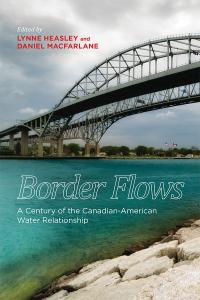
This collection of essays traces the century-long effort by Canada and the United States to manage and care for their ecologically and economically shared rivers and lakes, offering critical insights into the historical struggle to care for these vital waters.
Northern Canada’s distinctive landscapes, its complex social relations and the contested place of the North in contemporary political, military, scientific and economic affairs have fueled recent scholarly discussion. At the same time, both the media and the wider public have shown increasing interest in the region. This collection extends our understanding of the environmental history of northern Canada—clarifying both its practice and promise, and providing critical perspectives on current public debates.
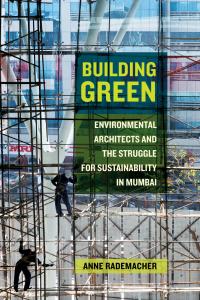
This book explores the experience of environmental architects in Mumbai, one of the world’s most populous and population-dense urban areas and a city iconic for its massive informal settlements, extreme wealth asymmetries, and ecological stresses.

Time to Eat the Dogs is a blog about science, history, and exploration. It aims to broaden the conversation beyond the limits of the history of science.
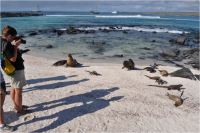
Is it possible to conserve the Galápagos Islands as a “natural laboratory” in the Anthropocene?

In this chapter of the German-language version of her virtual exhibition, “Mensch und Natur in der deutschen Literatur (Human-Nature Relations in German Literature),” Sabine Wilke examines mountains and glacial environments in German-language literary descriptions. Whereas the German Romantic poets still highlighted mountainous nature as deeply ambiguous, Goethe’s Faust tried to understand mountainous nature in its materiality through scientific studies. Modernism focuses on the more often destructive results of human-nature entanglements. For the English-language version of this exhibition, click here.
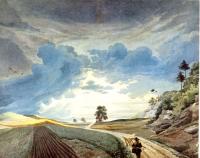
In this chapter of the German-language version of her virtual exhibition “Mensch und Natur in der deutschen Literatur (Human-Nature Relations in German Literature),” Sabine Wilke discusses texts that register transformations of landscapes or take a position on their causes. For the English-language version of this exhibition, click here.

The Virunga National Park (Democratic Republic of the Congo) is still partially influenced by imaginaries developed in the 1920s.

The Nordic Network for Interdisciplinary Environmental Studies (NIES) promotes interdisciplinary environmental studies, especially work in the environmental humanities. The network is supported by NordForsk, and is based in Sweden, Denmark, Norway, Finland, and Iceland.