

Multimedia | journal article
"Aquaphobia, Tulipmania, Biophilia: A Moral Geography of the Dutch Landscape"
In this article, Hub Zwart discusses the emergence of a cultivated landscape in the Netherlands.
In this article, Hub Zwart discusses the emergence of a cultivated landscape in the Netherlands.
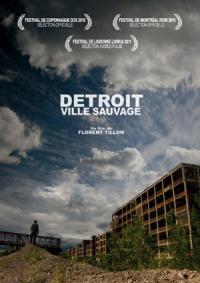
The film depicts the rise, fall, and rebirth of the postindustrial city Detroit.
By investigating landscape change and land reform in Northwest Scotland, this study illustrates how the multifaceted concept of landscape mediates cultural, social and political issues, and is continually evolving in response to aesthetic, ideological and institutional agencies.
This article argues that the State-Primacy Theory provides a plausible explanation for the nature of that mechanism, and concludes that the most common strategies offered as a response to our environmental impact are most likely to be insufficiently radical to meet our seeming obligations effectively.
This paper examines three forest value orientations—clusters of interrelated values and basic beliefs about forests—that emerged from an analysis of the public discourse about forest planning, management, and policy in the United States.

This collection brings together leading scholars on the environments of Latin America and the Caribbean to give us new and alternative narratives of the postcolonial history of the continent.
Esta colección reúne a algunos de los académicos más destacados en el estudio de las historias ambientales de América Latina y el Caribe para proponer nuevas perspectivas sobre el desarrollo poscolonial del continente. Estos ensayos narran historias variadas de interacciones complejas entre grupos sociales, estados y sus ambientes, y proveen nuevos ángulos para enriquecer las interpretaciones más conocidas.
In this article, Andrew Light and Aurora Wallace highlight several examples of how environmental architecture has combined success and failure at taking a broader view of environmental questions, with a specific focus on one green skyscraper that may be good for the natural environment but not necessarily for the human environment of the city.
In their article, William R. Sheate and J. Ivan Scrase argue that for a risk-oriented framing to succeed, new assumptions about causation and a new ethical outlook are now needed.
This paper argues that restoration attempts should not be dismissed “out of hand,” and can be conducted outside of a “dominator logic.”