

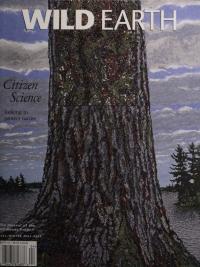
Multimedia | journal
Wild Earth 11, no. 3/4
Wild Earth 11, no. 3/4, on defining citizen science: its protagonists, sources, relevance and results, as well as a selection of new and old programs.
Wild Earth 11, no. 3/4, on defining citizen science: its protagonists, sources, relevance and results, as well as a selection of new and old programs.

This Spring 1994 issue of Entmoot! encourages environmental activists to take direct action about issues such as the eradication of wild salmon and the reintroduction of wolves.
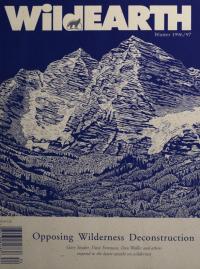
Wild Earth 6, no. 4 features essays opposing wilderness deconstruction. Gary Snyder writes on nature as a social construction, Dave Foreman contributes a piece on the conservation opposition’s underlying views, and Don Waller discusses the evolution of wilderness concepts.
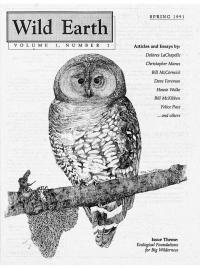
Wild Earth 1, no. 1, with the theme “Ecological Foundations for Big Wilderness,” discusses ecosystem restoration in Florida, corridors in the Klamath Mountains, and a Yellowstone ecosystem Marshall Plan.
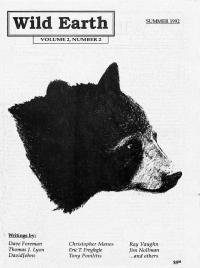
Wild Earth 2, no. 2., with an update on the Wildlands Project and essays on: forest health and forestry, the practical relevance of deep ecology, and ancient forest legislation.
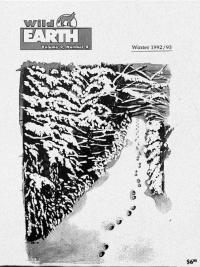
Wild Earth 2, no. 4 with essays on environmental devastation and the war in Lebanon, the Colorado River delta, reef protection, and zoos and the “psychology of extinction.”
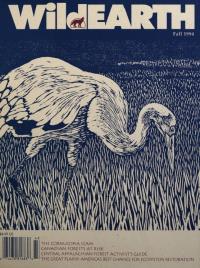
Wild Earth 4, no. 3 features Canadian forests at risk, an activist’s guide to Central Appalachian forests, citizen involvement in mining issues, a proposal for a Thoreau Regional Wilderness in northern Maine.
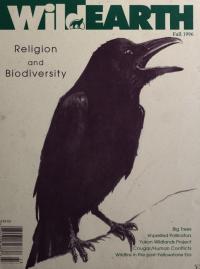
In Wild Earth 6, no. 3 Max Oelschlaeger discusses religion and the conservation of biodiversity, Christopher Genovali reflects on the Alberta oil rush, Joseph P. Dudley writes about biodiversity in Southern Africa, and A. Kent MacDougall considers thinking of humans as a cancer.

In Wild Earth 6, no. 1 Bill McKibben imagines new organizations like “MACHO” (Manly and Courageous Hunters Organization), Stephanie Mills visits Leopold’s shack, and Daniel Dancer seeks a deep photography ethic.
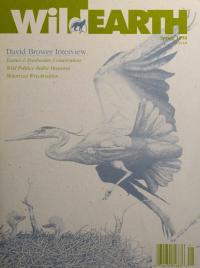
Wild Earth 8, no. 1 features essays on protection strategies for old growth forests, the problems of non-indigenous species for freshwater conservation, and using direct democracy to defend nature.