

Multimedia | film profile
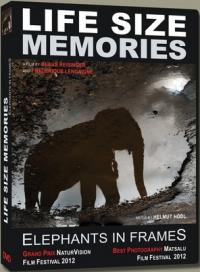
Life Size Memories
Two former photojournalists bring a large format camera to Southeast Asia to portray Asian elephants living in captivity and to record their biographies.
Two former photojournalists bring a large format camera to Southeast Asia to portray Asian elephants living in captivity and to record their biographies.
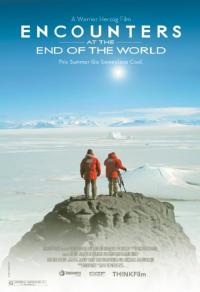
In this Oscar-nominated documentary, Werner Herzog travels to the Antarctic community of McMurdo Station, the hub of the US Antarctic Program, to film the life conditions of humans and animals in this extreme landscape.

Ocean Odyssey uses computer generated imagery to explore the deep oceans through the eyes of a sperm whale, the largest predator that has ever lived.

Italian botanist Stefano Mancuso presents intriguing evidence for plant intelligence.

Ron Finley recounts his experiences planting vegetable gardens in unexpected places in South Central Los Angeles.

The seminal “World Conservation Strategy” of 1980 argues for the protection of essential ecological processes and habitats, the preservation of genetic diversity, and the sustainable utilization of species and ecosystems.
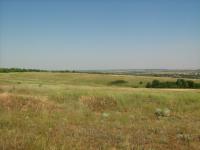
This Arcadia article is about how camels used, until recently, to be a central feature of the steppe landscape of Southern Ukraine.
The aim of this paper is to encourage conservation and prevent further deterioration around the traditional villages of Tlajomulco, Mexico by making more widely known the rich cultural landscape and the know-how of the inhabitants that has contributed to its conservation.
The interview with Piero Bevilacqua touches on a broad range of subjects: From the use of pesticides to the “Green Revolution”; from GMOs to biodynamic and biological agriculture, and the respect of biodiversity; from modern farming’s wasteful use of water to Common Agricultural Policy with its nonsustainable exploitation of farmland.
Following the establishment of the world’s first national park at Yellowstone (USA) in 1872, the concept was rapidly transferred to Australia, New Zealand and Canada. This article examines this second wave of adoption—and adaption—focussing on five case studies from Australia and New Zealand.