


Arcadia
Struggles over Water Rights and Legitimacy in Nairobi
In the face of neglect and exclusion, Nairobi slum dwellers have found ways to provide for themselves, diverting water from the grid and selling it to other residents.
In the face of neglect and exclusion, Nairobi slum dwellers have found ways to provide for themselves, diverting water from the grid and selling it to other residents.

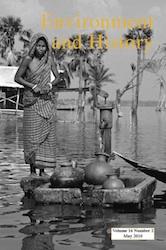
This editorial note introduces the four major conference themes of the 5th International Water History Association (IWHA) Conference ‘Pasts and Futures of Water’ in June 2007: (i) water, health and sanitation; (ii) water, food and economy; (iii) water and the city; and (iv) water governance and policy.
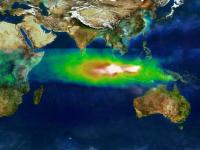
In 1997 and 1998 peat swamp forests burned in Borneo, Indonesia, spewing big amounts of carbon dioxide into the atmosphere.
In the United States, debate over the responsibilities of different levels of government are framed within our system of constitutional federalism, which divides sovereign power between the central federal administration and regional states. Dilemmas about devolution have been erupting in all regulatory contexts, but environmental governance remains uniquely prone to federalism discord because it inevitably confronts the core question with which federalism grapples—“who gets to decide?”— in contexts where state and federal claims to power are simultaneously at their strongest.

The film examines the social and ecological consequences of the Turkey’s South-East-Anatolia-Project (GAP), designed to enable energy production and irrigation on a huge scale.

In this episode from the New Books Network podcast, Evan Friss is interviewed on his book, The Cycling City: Bicycles and Urban America in the 1890s.
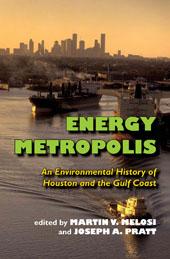
A comprehensive history of the development of Houston, examining the factors that have facilitated large-scale energy production and unprecedented growth—and the environmental cost of that development.

The St. Petersburg flood of 1824, in which the level of the river Neva rose to the 4 meter 20 centimeter mark, is the greatest in the history of the city. The city did not recover from the destructive effects of the flood until the mid-1830s.