The Power of Waste | The Life of Waste
This chapter from the virtual exhibition “The Life of Waste” considers the ways in which waste relates to power. It aligns with power structures, can be an empowering feature, or possess power in and of itself.
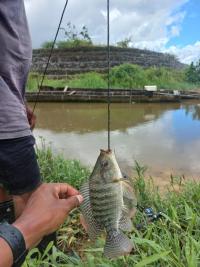
Indonesian state experts introduced invasive species into West Papua, a deliberate ecological disruption that advances a colonial agenda disguised as development.
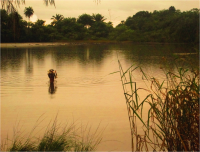
Once a benefit to humanity but now a scourge, the environment of the Niger Delta has been transformed into a haven for violence, militancy, and criminality.
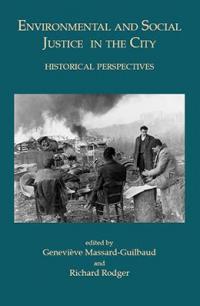
The world is full of environmental injustices and inequalities; yet few European historians have tackled these subjects head on, nor have they explored their relationships with social inequalities.
Beschädigte Vegetation und sterbender Wald traces the history of the environmental problem of air pollution and its damaging effects on forests in Germany.
Two broad themes taken up in the literature will be the focus of this essay: how far colonialism was an ecological watershed, and how producers responded to new pressures. The third issue is of what we can or should learn (or unlearn) from the colonial experience.
In the United States, debate over the responsibilities of different levels of government are framed within our system of constitutional federalism, which divides sovereign power between the central federal administration and regional states. Dilemmas about devolution have been erupting in all regulatory contexts, but environmental governance remains uniquely prone to federalism discord because it inevitably confronts the core question with which federalism grapples—“who gets to decide?”— in contexts where state and federal claims to power are simultaneously at their strongest.

A nuanced treatment of the relation between peasant protests and environment with reference to a broad range of examples from Mediterranean Europe, Latin America, Asia, and Africa.
This chapter from the virtual exhibition “The Life of Waste” sheds light on what people think waste is and is not, the cultural and normative conceptions of waste, and forms and landscapes of waste.
The article focuses on the role of militants in compounding the problem of environmental degradation in the Niger Delta region in Nigeria.