


Show search results for
Exhibition chapter
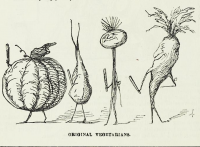
“You Are What You Eat”: Stupid Vegetables and the Charm of the New | Satirical Glimpses of the Cultural History of Vegetarianism
While English satire magazines mocked vegetarianism since the 1840s, the first German caricatures appeared some 30 years later. Early drawings often imagined that a vegetarian would gradually transform into a plant. Other recurring topics are the assumed correlation between (meatless) nutrition and (peaceful, fragile) physical appearance and character, as well as the debate over whether a meat-rich or a meat-free diet was better for human health.
Multimedia | journal
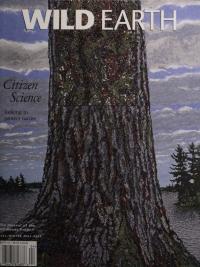
Wild Earth 11, no. 3/4
Wild Earth 11, no. 3/4, on defining citizen science: its protagonists, sources, relevance and results, as well as a selection of new and old programs.

Arcadia
Engaging Religion in the Fight for Environmental Justice: Jesuits and Conservation in the Palni Hills of South India
This article introduces a case for engaging with religious worldviews which can support the cause for environmental justice.
Exhibition chapter
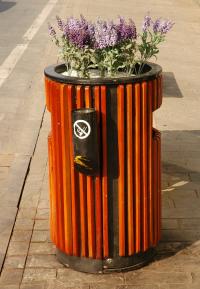
Hazardous Hope | Toxic Relationships
Chapter 6 of the virtual exhibition Toxic Relationships: Uncovering the Worlds of Hazardous Waste.
Multimedia | journal
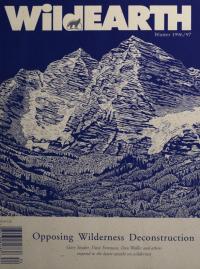
Wild Earth 6, no. 4
Wild Earth 6, no. 4 features essays opposing wilderness deconstruction. Gary Snyder writes on nature as a social construction, Dave Foreman contributes a piece on the conservation opposition’s underlying views, and Don Waller discusses the evolution of wilderness concepts.
Multimedia | journal
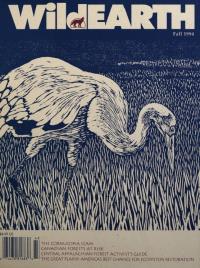
Wild Earth 4, no. 3
Wild Earth 4, no. 3 features Canadian forests at risk, an activist’s guide to Central Appalachian forests, citizen involvement in mining issues, a proposal for a Thoreau Regional Wilderness in northern Maine.
Multimedia | journal
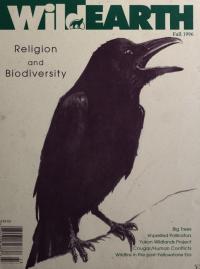
Wild Earth 6, no. 3
In Wild Earth 6, no. 3 Max Oelschlaeger discusses religion and the conservation of biodiversity, Christopher Genovali reflects on the Alberta oil rush, Joseph P. Dudley writes about biodiversity in Southern Africa, and A. Kent MacDougall considers thinking of humans as a cancer.
Multimedia | journal
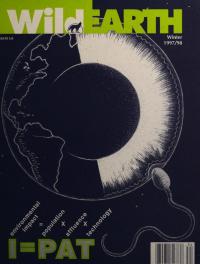
Wild Earth 7, no. 4
Wild Earth 7, no. 4 features provocative essays on population extinction and the biodiversity crisis, how immigration threatens America’s natural environment, the costs of affluence and consumption, and a technological imperative.
Multimedia | journal
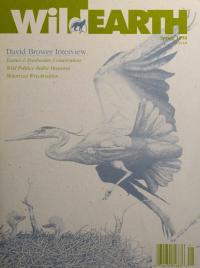
Wild Earth 8, no. 1
Wild Earth 8, no. 1 features essays on protection strategies for old growth forests, the problems of non-indigenous species for freshwater conservation, and using direct democracy to defend nature.