


Perspectives Article
History and Audacity: Talking to Conservation Science
This article argues in favour of “audacity”: employing the practice of history fully to tell a complex story involving conservation science.
This article argues in favour of “audacity”: employing the practice of history fully to tell a complex story involving conservation science.

With examples ranging form poetry to novels, literary scholar Hsu Hsuan presents a selection of literature on militarized landscapes. This is a chapter of the virtual exhibition “Representing Environmental Risk in the Landscapes of US Militarization.”
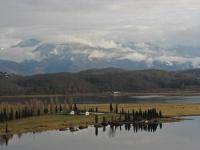
In 1969, the Georgian resort of Pitsunda and its beach were severely damaged by a storm. This was largely due to an ongoing process of coastal erosion caused by anthropogenic influences.
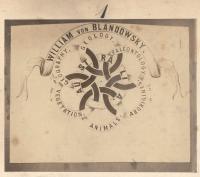
In 1862, Wilhelm von Blandowski produced The Encyclopedia of Australia as a large visual atlas of 142 plates dedicated to a comprehensive representation of the continent Australia.

This article blurs the boundaries of literature, agriculture, public history, grassroots political activism, and public policymaking in order to problematize the current eco-cosmopolitan trajectory of ecocritical theory.
Mick Smith examines how a posthumanist notion of ecological community might attempt to address questions concerning extinction.
Michael Adams reviews initial research exploring non-Indigenous hunting participation and motivation in Australia, as a window into further understanding connections between humans, non-humans, and place.